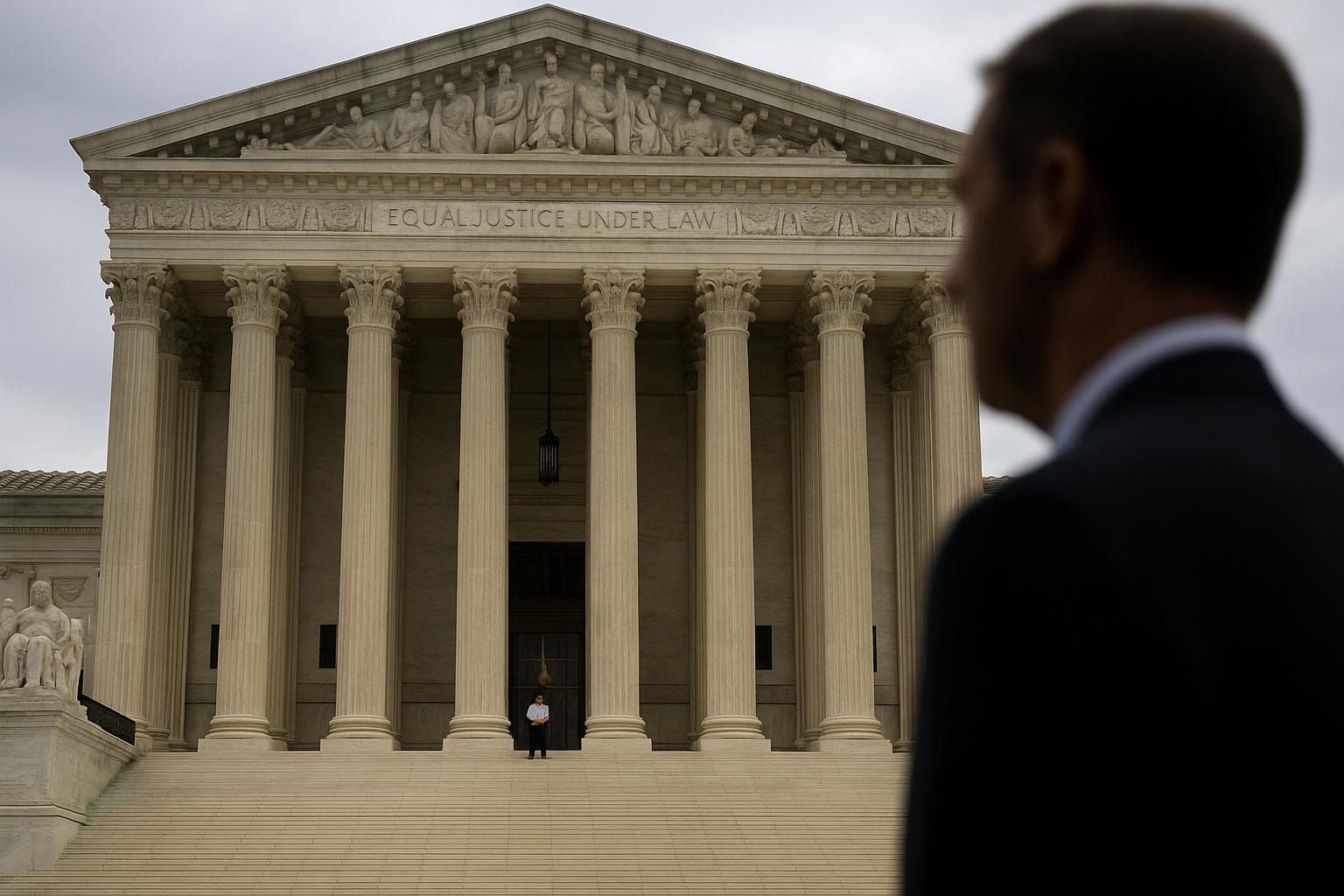
SAN FRANCISCO — A federal judge in San Francisco has temporarily barred the Trump administration from firing federal employees during the ongoing government shutdown, delivering a legal setback to the White House’s plan to reduce the federal workforce amid a tense budget standoff in Washington.
U.S. District Judge Susan Illston issued the emergency order on Wednesday, October 15, following lawsuits filed by labor unions representing thousands of federal employees. The judge’s ruling came just days after several agencies began issuing layoff notices to staff as part of the administration’s effort to downsize government operations and manage spending during the shutdown.
In her remarks from the bench, Judge Illston criticized the abrupt nature of the administration’s actions. “It’s very much ready, fire, aim on most of these programs, and it has a human cost,” she said. “It’s a human cost that cannot be tolerated.” The judge’s injunction temporarily halts all pending dismissals while the court reviews the legality of the administration’s move.
The emergency order marks the latest development in a growing confrontation between the White House and federal employee unions, who have accused the administration of exploiting the shutdown to advance political goals. The American Federation of Government Employees (AFGE), joined by several other labor organizations, argued that the planned firings represented an abuse of executive power designed to punish public servants and pressure Congress into making concessions on spending priorities.
Union leaders have denounced the proposed layoffs as a deliberate attempt to weaken the federal workforce and erode public trust in government institutions. “This is not about fiscal responsibility,” one union representative said after the ruling. “It’s about control and political leverage at the expense of workers who serve the American public every day.”
Court filings revealed that more than 4,100 employees across eight federal agencies were targeted for termination. Departments affected included Health and Human Services, Education, and Interior. The unions argued that terminating employees without proper legislative authorization during a shutdown violated both labor protections and constitutional limits on executive authority.
The Trump administration defended its decision, maintaining that the court lacked jurisdiction over personnel actions taken during a government shutdown. White House attorneys contended that the move fell within the administration’s legal authority to manage federal operations and reduce costs. They argued that without the cuts, the financial burden of the shutdown would worsen.
The shutdown itself, which began on October 1 after lawmakers failed to agree on a new spending plan, is now entering its third week. The deadlock has sharply deepened partisan divisions in Washington, as Democrats insist that any budget resolution must protect funding for health care and social programs. Republican House Speaker Mike Johnson has countered that negotiations will not proceed until Democrats drop those demands.
President Donald Trump, speaking earlier this week, defended the shutdown as an opportunity to streamline government spending and eliminate programs he characterized as “wasteful Democratic initiatives.” “They’re never going to come back, in many cases,” he said, describing the situation as a chance to reshape the federal bureaucracy permanently.
Meanwhile, the effects of the shutdown are being felt across the country. Several federal agencies have slowed or suspended key operations, and millions of Americans are beginning to feel the ripple effects. One of the most notable disruptions involves the Social Security Administration, which announced that the release of the annual cost-of-living adjustment (COLA) for retirees would be delayed until October 24. The delay stems from the postponement of the September Consumer Price Index report, which is used to calculate benefit increases.
The judge’s temporary restraining order will remain in effect until a full hearing can be held to determine whether the administration’s planned layoffs violate federal law. Legal experts say the case could have far-reaching implications for executive power during government shutdowns, particularly regarding how far an administration can go in cutting or furloughing staff without congressional authorization.
For now, the ruling offers temporary relief to thousands of federal workers caught in the political crossfire. But with no immediate sign of compromise in Washington, uncertainty continues to hang over the nation’s capital — and the employees whose livelihoods depend on it.