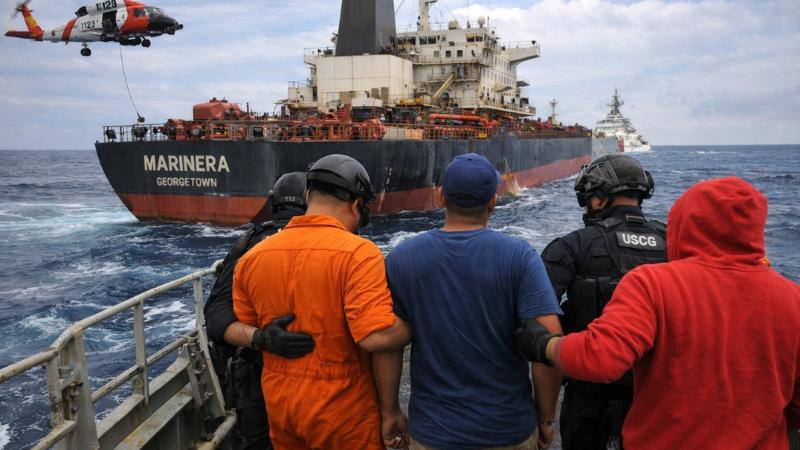
The United States intercepted and seized a Russian-flagged oil tanker in the North Atlantic on January 7, marking a significant escalation in its global enforcement of sanctions linked to Venezuelan oil exports. The vessel, now identified as the Marinera and previously known as Bella 1, was boarded in international waters after a pursuit that extended for more than two weeks across ocean routes from the Caribbean. U.S. European Command confirmed that the operation was conducted under a judicial warrant for alleged violations of United States sanctions, specifically targeting a network of vessels identified by American authorities as part of a so-called shadow fleet evading restrictions on Venezuelan and related sanctioned crude shipments.
The Marinera had earlier defied multiple attempts by the U.S. Coast Guard to board the ship as it approached Venezuelan waters in December. During that period, the tanker reportedly altered its name and flag, flying Russian colors in a move that U.S. officials said was intended to obscure its identity and make enforcement more difficult. American tracking data indicated that the ship had slipped through a blockade imposed on sanctioned oil tankers and had traveled northward through the Atlantic Ocean before the interception.
The seizure, executed by Coast Guard personnel with support from U.S. military assets, took place in the vicinity of Iceland’s exclusive economic zone. Officials said that at no point did the operation escalate into a direct military confrontation with Russian vessels, despite reports that a Russian submarine and other naval assets had been shadowing the Marinera during parts of its transit. U.S. authorities maintained that the action was lawful under international statutes governing the enforcement of national sanctions and the status of vessels deemed stateless or in violation of a seizure order.
In an accompanying operation on the same day, the U.S. Coast Guard also interdicted a second vessel, the Panama-flagged M Sophia, described by the Southern Command as a “stateless, sanctioned dark fleet tanker” linked to Venezuelan oil trade. Homeland Security Secretary Kristi Noem stated that the coordinated interdictions demonstrated the United States’ resolve to uphold sanctions and prevent illicit oil shipments from reaching markets despite efforts to disguise or reroute tanker operations.
The multinational crew of the Marinera included personnel from several countries. According to reports, Indian, Ukrainian, Georgian, Russian and other nationalities were listed among those aboard at the time of the boarding. U.S. officials have indicated that crew members may face legal actions in connection with the vessel’s sanctions violations, and authorities are in the process of determining the next steps for the seized tanker.
The Russian government has issued strong public denunciations of the seizure, accusing Washington of breaching international maritime law and describing the boarding as an act of piracy. Russia’s transport ministry, citing provisions of the United Nations Convention on the Law of the Sea, asserted that force cannot be used against vessels lawfully registered under the jurisdiction of another state. Russian lawmakers and officials have called for accountability and the return of crew members to Russian custody with assurances of humane treatment.
Analysts say this incident underscores the growing complexity of enforcement and evasion tactics in the maritime oil trade amid geopolitical tensions. The United States has expanded its sanctions regime targeting Venezuelan crude and associated transport networks, and the creation of shadow fleets — where vessels are reflagged, renamed, or switch transponders to obscure their movements — has posed persistent challenges for international regulators. The Marinera case, involving the pursuit and boarding of a vessel under a Russian flag, highlights both the legal ambiguities and strategic consequences of such enforcement actions on the high seas.
The repercussions of the seizure are expected to influence diplomatic relations, particularly between Washington and Moscow, as well as among nations with significant stakes in oil markets and maritime law. Legal experts and government officials will likely continue debating the precedents set by this high-profile interception and its implications for future sanctions enforcement and international shipping norms.