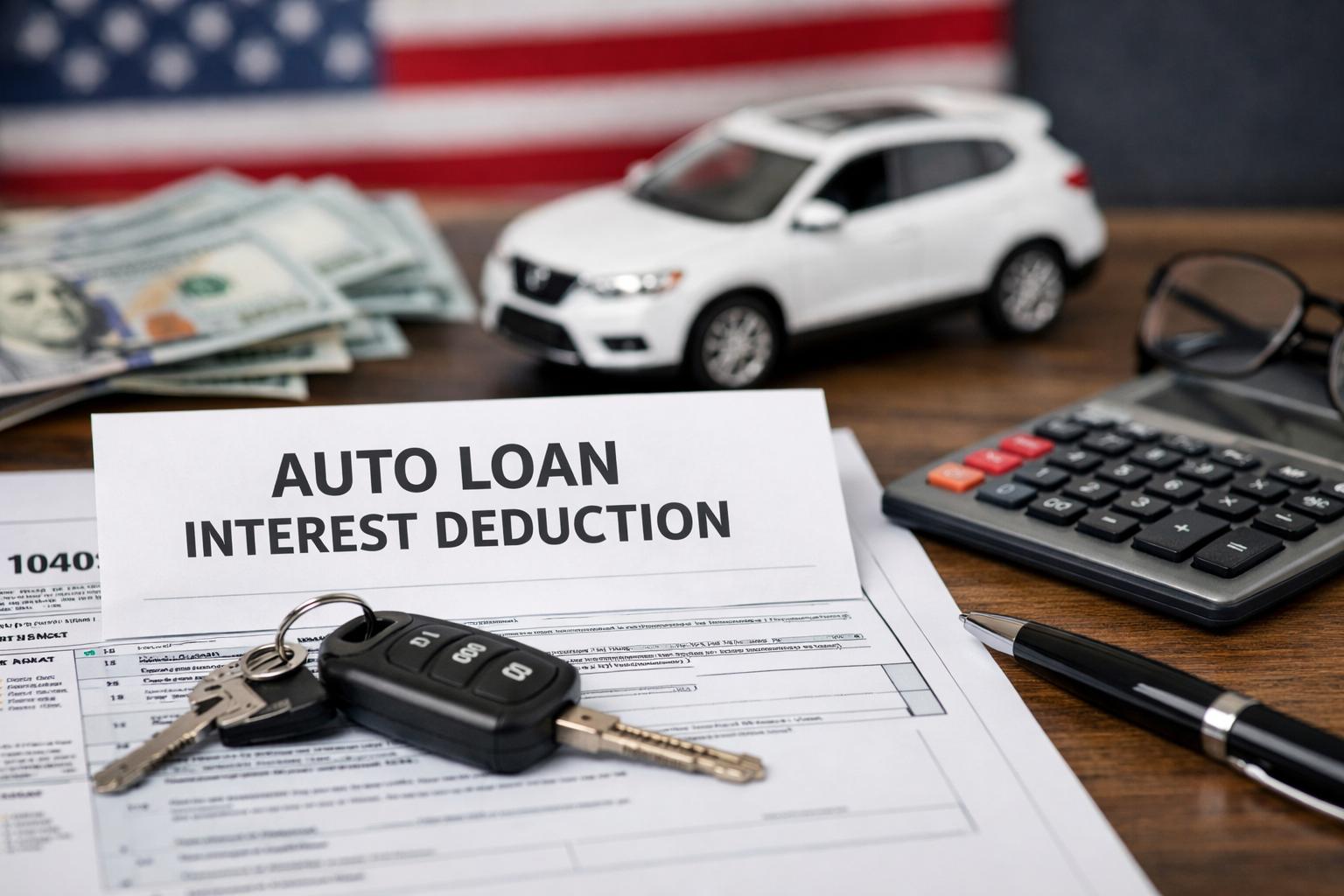
Eligible U.S. taxpayers will be able to deduct up to $10,000 in auto loan interest for the 2025 tax year under a temporary tax provision created through President Donald Trump’s One Big Beautiful Bill Act, but financial analysts say the actual benefit for most car buyers will be far smaller than the headline figure suggests. While the deduction may appear generous at first glance, typical loan structures and interest payments mean that most borrowers are unlikely to approach the maximum allowable amount.
The measure applies only to new vehicle loans originated after Dec. 31, 2024, and remains in effect for tax years 2025 through 2028. Under the policy, taxpayers who finance a qualifying vehicle for personal use may deduct the interest paid on their auto loan, reducing their taxable income. However, the deduction lowers income subject to tax rather than providing a dollar-for-dollar reduction in taxes owed, which limits the overall savings.
Industry data show that even large auto loans generally do not generate enough annual interest to reach the $10,000 threshold. Analysts estimate that a typical 72-month new-car loan on a midpriced vehicle produces only a few thousand dollars in interest during the first year. As loan balances decline over time, annual interest payments fall further, reducing the size of the deduction in later years. For many households, this translates into tax savings measured in the hundreds of dollars rather than thousands.
Eligibility requirements further narrow who can benefit. The loan must be secured by the vehicle and used strictly for personal purposes. Used vehicles do not qualify, and only cars that undergo final assembly in the United States are eligible. Covered vehicles include cars, minivans, vans, SUVs, pickup trucks and motorcycles with a gross vehicle weight rating below 14,000 pounds. Income limits also apply, with the deduction phasing out for single filers earning more than $100,000 and married couples filing jointly earning above $200,000, before disappearing entirely at higher thresholds.
Economists note that these restrictions, combined with current auto prices and elevated interest rates, mean the policy is unlikely to significantly affect vehicle affordability or market demand. To generate $10,000 in deductible interest in a single year would require an unusually large loan amount, far exceeding what most consumers finance when purchasing a new car.
Taxpayers who qualify can claim the deduction regardless of whether they itemize or take the standard deduction. The amount is reported on Schedule 1-A attached to Form 1040. Filers must include their vehicle identification number on the return and retain documentation from their lender detailing total interest paid during the year. Federal tools are also available to confirm whether a vehicle was assembled domestically, which is a key requirement for eligibility.
As the 2025 tax season approaches, financial advisers recommend that buyers carefully review the rules before assuming significant savings. While the auto loan interest deduction may provide modest relief, experts say it should not be viewed as a primary factor in deciding whether or how much to finance a new vehicle purchase.