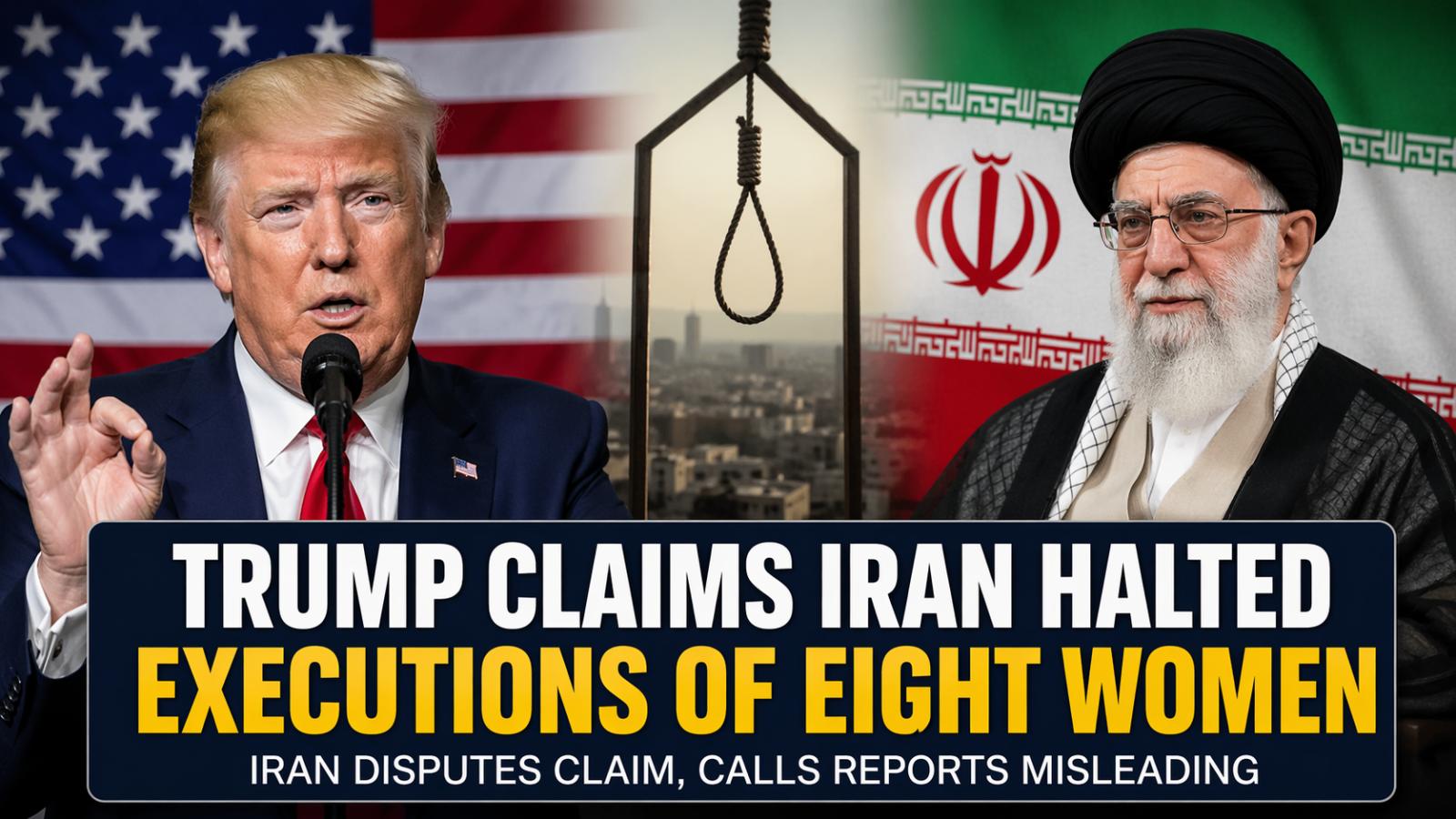
U.S. President Donald Trump said on Wednesday, April 22, 2026, that Iranian authorities had agreed to halt the execution of eight women following his direct intervention, describing the development as a humanitarian success amid rising tensions between Washington and Tehran.
In a public statement issued later that day, Trump said he had been informed that the women, identified as protesters, would not be executed. He added that four of them would be released immediately, while the remaining four would face prison sentences of approximately one month. Trump thanked Iranian leaders for what he described as their willingness to respect his request as president of the United States.
The claim emerged at a sensitive moment, with both countries facing heightened geopolitical strain and the possibility of renewed hostilities. Trump framed the outcome as evidence of diplomatic leverage and engagement, emphasizing the importance of intervention in matters involving human rights.
However, officials in Iran quickly challenged the accuracy of Trump’s statement. According to the judiciary’s official outlet, Mizan Online, reports that eight women were facing imminent execution were incorrect. The outlet stated that some of the individuals referenced had already been released, while others were facing legal charges that, if upheld, would result in imprisonment rather than capital punishment.
Mizan Online further asserted that Trump had been misled by inaccurate information circulating among activist networks, describing the initial reports as “fake news.” The conflicting accounts underscore ongoing challenges in verifying developments within Iran’s legal system, particularly in politically sensitive cases involving protest activity.
The episode highlights broader tensions in U.S.-Iran relations, where information disputes and competing narratives often complicate diplomatic and humanitarian efforts. It remains unclear whether any formal communication occurred between U.S. and Iranian officials regarding the cases in question, or whether Trump’s statement was based on indirect sources.
In a public statement issued later that day, Trump said he had been informed that the women, identified as protesters, would not be executed. He added that four of them would be released immediately, while the remaining four would face prison sentences of approximately one month. Trump thanked Iranian leaders for what he described as their willingness to respect his request as president of the United States.
The claim emerged at a sensitive moment, with both countries facing heightened geopolitical strain and the possibility of renewed hostilities. Trump framed the outcome as evidence of diplomatic leverage and engagement, emphasizing the importance of intervention in matters involving human rights.
However, officials in Iran quickly challenged the accuracy of Trump’s statement. According to the judiciary’s official outlet, Mizan Online, reports that eight women were facing imminent execution were incorrect. The outlet stated that some of the individuals referenced had already been released, while others were facing legal charges that, if upheld, would result in imprisonment rather than capital punishment.
Mizan Online further asserted that Trump had been misled by inaccurate information circulating among activist networks, describing the initial reports as “fake news.” The conflicting accounts underscore ongoing challenges in verifying developments within Iran’s legal system, particularly in politically sensitive cases involving protest activity.
The episode highlights broader tensions in U.S.-Iran relations, where information disputes and competing narratives often complicate diplomatic and humanitarian efforts. It remains unclear whether any formal communication occurred between U.S. and Iranian officials regarding the cases in question, or whether Trump’s statement was based on indirect sources.