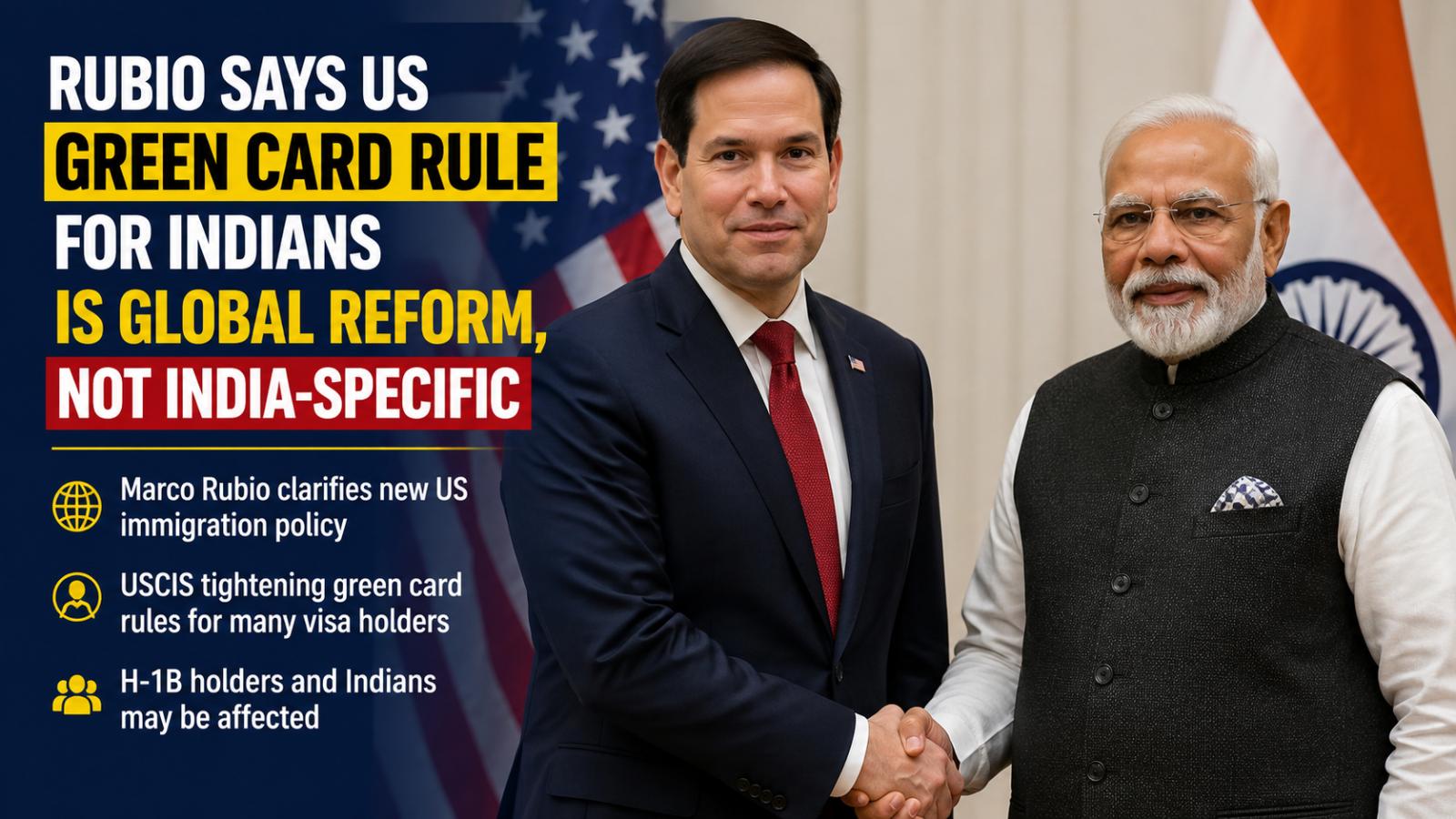
US Secretary of State Marco Rubio said the new US green card rule for Indians is not aimed specifically at India, but is part of a broader global immigration reform effort by Washington.
Speaking to NDTV after arriving in New Delhi and meeting Prime Minister Narendra Modi on Saturday, May 23, 2026, Rubio said the policy applies worldwide. He said the United States is trying to restructure its immigration system after what he described as a major migration crisis.
USCIS Green Card Change Could Affect H-1B Holders
The policy shift follows a USCIS move that treats adjustment of status inside the United States as an extraordinary and discretionary process, rather than a routine path for many applicants. AP reported that the Trump administration announced on Friday, May 22, 2026, that many foreigners in the US seeking green cards would need to apply from their home countries, except in extraordinary circumstances.
That change could affect Indians on temporary visas, including international students, researchers, and H-1B workers who planned to seek permanent residency while staying in the United States.
Rubio said the rule was not about India alone and argued that the reforms may cause disruption at first but would make the system more stable and efficient over time. USCIS has said officers will review adjustment requests case by case, while temporary visa holders are generally expected to leave the US when their authorized stay ends.
Why Indian Applicants Are Watching Closely
Indian professionals already face long green card backlogs because of high demand and country-based limits. For many H-1B holders and students, any shift toward consular processing could affect job plans, family stability, and long-term residency timelines.
During the New Delhi meeting, Rubio also conveyed President Donald Trump’s invitation for Modi to visit the White House, placing the immigration issue within a wider moment of India-US diplomatic engagement.
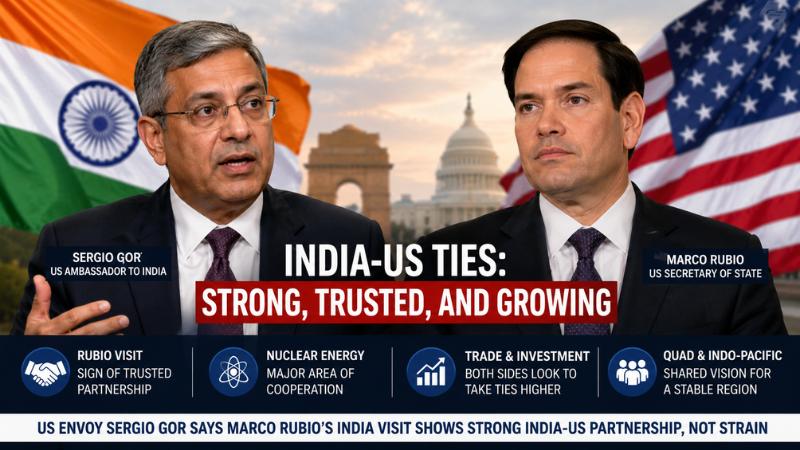
For wider diplomatic context, Rubio’s New Delhi outreach also came as US Ambassador Sergio Gor described the visit as a sign of strong India-US ties rather than strain.