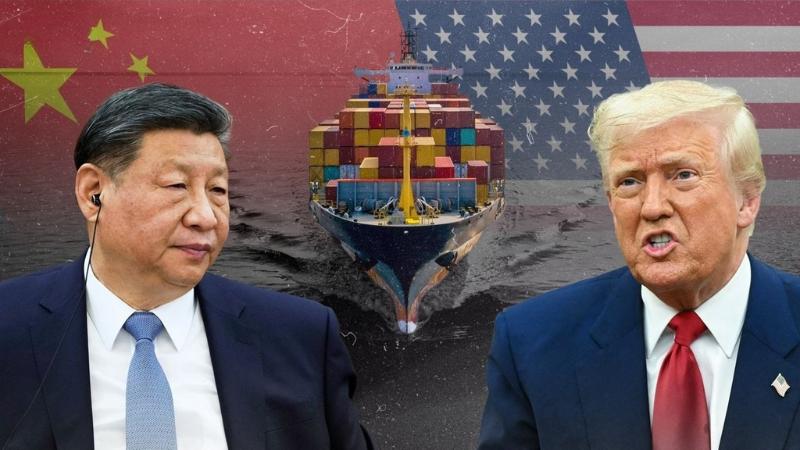
The United States and China have reached a preliminary framework agreement to revive their stalled trade truce, aiming to ease export curbs and avoid a looming tariff escalation. Following two days of high-stakes negotiations in London, both sides announced they had come to terms on steps to lift restrictions on China's rare earth mineral exports and to roll back recent U.S. controls on advanced technology goods, including semiconductor software.
The deal builds on a consensus formed during a rare call between U.S. President Donald Trump and Chinese President Xi Jinping on June 5. However, the agreement is still subject to approval by both leaders. If confirmed, it will delay the reimposition of steep retaliatory tariffs set to surge to 145% from the U.S. and 125% from China scheduled to take effect on August 10.
Commerce Secretary Howard Lutnick said the framework “puts meat on the bones” of the Geneva agreement reached last month but disrupted due to China’s curbs on critical exports. His Chinese counterpart, Vice Commerce Minister Li Chenggang, echoed the sentiment, emphasizing both nations would now present the draft framework to their respective presidents.
Despite cautious optimism, analysts warned that the fundamental trade disputes remain unresolved. The U.S. continues to challenge China’s state-driven economic model, while China pushes back against what it calls unilateral and excessive U.S. tariffs. Markets responded cautiously, with Asian shares nudging upward by just 0.2% as investors awaited concrete policy changes.
Under the framework, China is expected to resume exports of rare earth magnets vital for EV production and defense systems while the U.S. will ease recent restrictions on aviation components, chip materials, and other critical tech items. The U.S. had halted these in May after China suspended its own mineral exports. The rare earth issue has become a geopolitical flashpoint. China holds near-monopoly power in the sector, and its April ban on key minerals disrupted global supply chains. Washington responded with sweeping controls on strategic exports, further straining relations.
The World Bank has downgraded its global growth forecast for 2025 to 2.3%, citing trade tensions as a significant headwind. Though the Geneva talks and subsequent London negotiations have offered some relief, the uncertainty continues to weigh on markets and businesses.
A U.S. court ruling this week also allowed Trump’s most aggressive tariffs to remain in place, pending a legal review. These include the controversial 34% “reciprocal” tariff that initially ignited the trade standoff. Customs data show China’s exports to the U.S. plunged 34.5% in May, the sharpest decline since the COVID era, adding urgency to both sides to stabilize economic ties. The final details of the trade truce, including specific timelines for lifting restrictions and resuming trade, are expected to emerge in the coming weeks pending top-level approval.