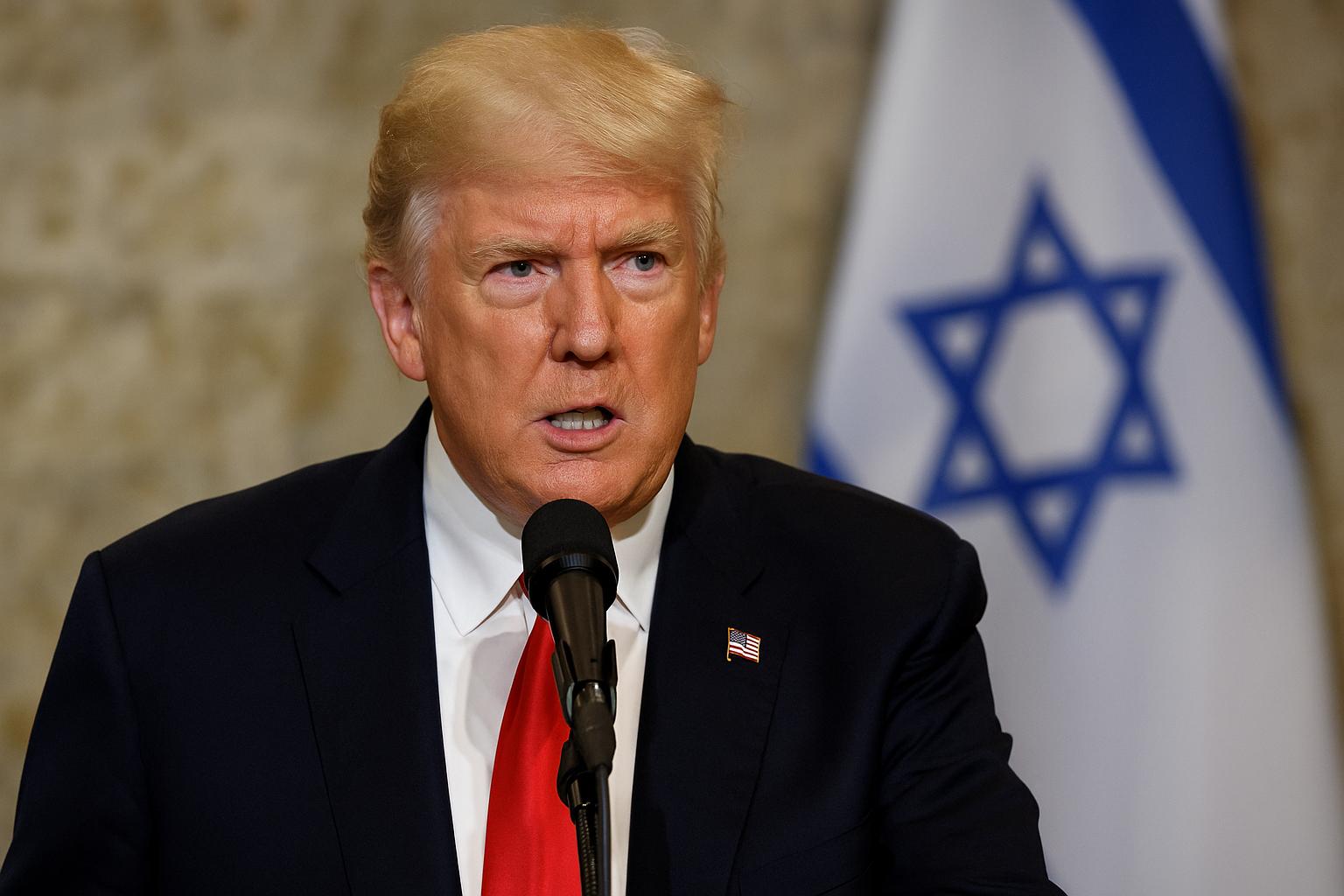
WASHINGTON — President Donald Trump issued a stark public warning aimed at Hamas on Thursday, saying that if the group continues to carry out killings in parts of the Gaza Strip “we will have no choice but to go in and kill them.” The statement, delivered on social media and reiterated in later remarks, marked a notable hardening of tone after earlier comments by the president that suggested he had permitted a period of internal violence targeting criminal elements within Gaza.
The president’s latest message followed a period of evolving public statements in which he described a complex picture of violence in the enclave. Initially, he indicated there had been some tolerance for intra-Gaza actions aimed at “very bad gangs,” language that raised questions about U.S. policy toward post-conflict violence. In subsequent remarks, however, he adopted a more explicit stance, calling for an immediate end to attacks on civilians and signaling that further action could be taken if the killings did not stop.
U.S. military leadership in the region also weighed in, with commanders urging restraint and the protection of noncombatants. A senior commander responsible for U.S. forces in the Middle East publicly called for an immediate halt to attacks targeting innocent Palestinian civilians, underscoring that protection of civilians remains a core concern for American officials operating in the theater. Those appeals came as reports circulated of vigilante violence and extrajudicial killings in some areas that had been left after recent combat operations.
The allegations of killings have been amplified by local militia leaders in southern Gaza, who say the security vacuum created by the withdrawal of Israeli combat forces has allowed armed groups to carry out lethal reprisals. Hossam al-Astal, a militia commander operating in the Khan Younis area who has received support from Israeli forces, released a video appeal urging international intervention to protect civilians from what he described as a wave of executions carried out by Hamas. Al-Astal said that after the cessation of large-scale hostilities, residents had been exposed to renewed terror, including attacks with rocket-propelled grenades and targeted killings that he claimed had murdered hundreds of noncombatants.
“We came out of a military war into a war of terrorists,” the militia leader said in his appeal, describing scenes of killings affecting children, women, youths and the elderly. He called on international actors to help move Gaza away from militant rule and toward civilian governance, portraying the effort as one aimed at restoring safety and normal life for residents. Al-Astal emphasized that his forces were not seeking to replace one authority with another but rather to remove armed rule that he said terrorized ordinary people.
The president’s use of the word “we” in warning Hamas has prompted questions about whether he was referring to direct U.S. military intervention or to intensified support for Israeli operations. Current officials and analysts note that any U.S. kinetic action in Gaza would involve complex legal and strategic considerations and likely require coordination with regional partners. For now, the most immediate operational posture from Washington has emphasized deterrence and diplomatic pressure, coupled with public statements demanding the protection of civilians wherever violence is occurring.
Humanitarian and legal advocates have warned that extrajudicial killings and reprisals must be investigated, and they urged authorities to ensure due process. Independent monitoring and transparent investigations were recommended as essential steps to address both the immediate humanitarian crisis and the longer-term political fractures that have allowed such violence to proliferate. Observers also cautioned that inflammatory rhetoric and promises of force risk escalating tensions in a fragile post-conflict environment where community grievances run deep and the rule of law remains contested.
As allegations continue to surface from multiple parts of Gaza, the situation remains fluid. U.S. officials face pressure to balance an explicit condemnation of attacks on civilians with careful diplomatic engagement aimed at stabilizing the enclave. The coming days are likely to bring further diplomatic outreach and requests for credible investigations into the reported killings, while regional actors and international institutions assess how best to prevent renewed cycles of violence and restore basic security for the civilian population.