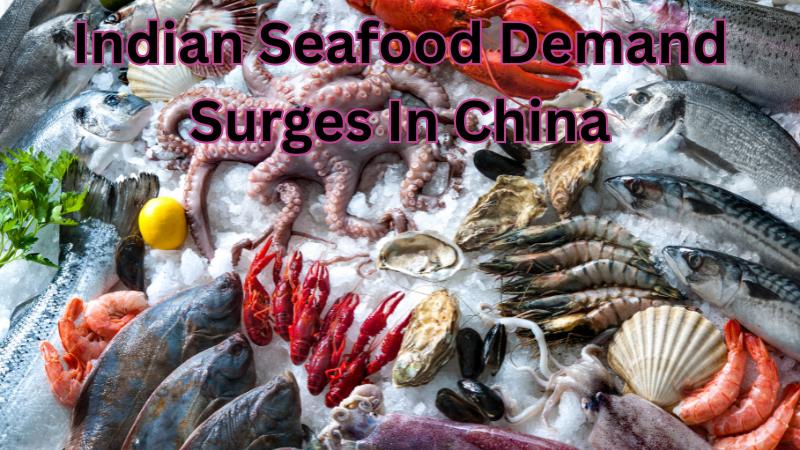
India’s seafood industry is witnessing a sharp rise in demand from China after Beijing imposed a complete ban on Japanese seafood imports. The move comes amid escalating geopolitical tensions between China and Japan, triggered by remarks linking the Taiwan conflict to Japan’s national security. As China halted all Japanese seafood imports, Indian seafood exporters experienced a significant surge in interest, marking a major shift in Asian trade patterns.
Indian seafood stocks reacted strongly to the development. Shares of Telangana-based Avanti Feeds jumped nearly 10 percent, marking their highest single-day rise in over two months. Coastal Corporation, a key Indian seafood producer and exporter, saw its shares rise by 5 percent. Coastal Corporation had already planned to increase shipments to China and Southeast Asia earlier this year to reduce dependence on the United States after steep US tariffs disrupted exports. With China’s fresh ban on Japanese products, India appears to be filling the supply void quickly.
China had only recently lifted its previous two-year ban on Japanese seafood, which was imposed after the Fukushima water release. The renewed complete ban hits Japan at a crucial time, as China historically accounted for nearly a quarter of its seafood export volumes. While seafood makes up only a small share of Japan’s overall exports, the loss of the Chinese market represents a major blow to the industry. The ban highlights China’s strategic pressure on Japan as political disputes over Taiwan intensify.
Indian seafood exporters have been diversifying their markets since the US imposed steep tariffs on Indian shrimp and fish, citing foreign policy disagreements over Russian oil imports. The higher tariff burden, in some cases reaching 50 percent, made Indian seafood less competitive in the US market, leading to a drop in export volumes. American retailers such as Walmart and Kroger, major buyers of Indian shrimp, reduced their purchase quantities in recent months.
However, India has gained new momentum in Asian markets. Reports indicate that exports to Vietnam and Thailand have also increased significantly, signaling a broader shift in regional trade dynamics. As China seeks alternative suppliers, Indian exporters are positioned to benefit from renewed demand and stronger pricing. India’s seafood exports stood at around $7.4 billion last fiscal year, with frozen shrimp and frozen fish accounting for more than 40 percent of the total value.
To support the sector, the Indian government recently approved a Rs 450.6 billion package for labor-intensive export industries, including seafood. This funding aims to enhance global competitiveness and help exporters withstand global market disruptions. In the financial year 2023-24, India recorded its highest ever seafood export volume, shipping more than 1.78 million metric tonnes worth over Rs 60,000 crore. With China, the US, the EU, and the UK among the top buyers, India’s seafood industry is entering a period of rapid realignment driven by geopolitical tensions, shifting supply chains, and growing demand in Asia’s expanding markets.