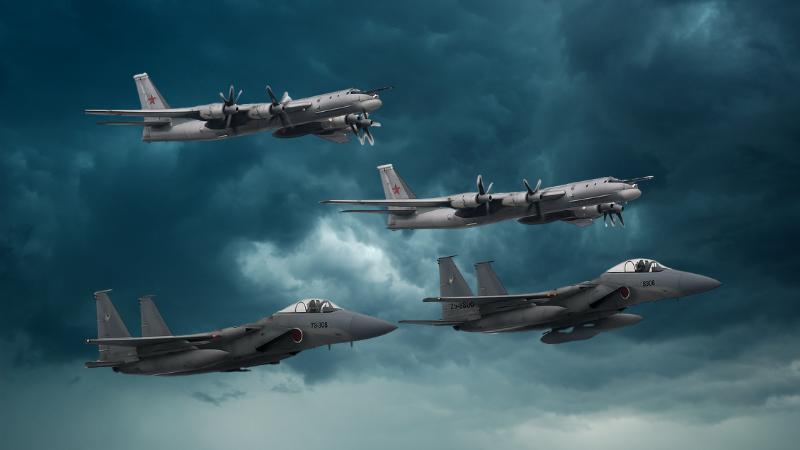
Tensions between Japan and China intensified further after a coordinated air patrol by Chinese and Russian military aircraft passed close to Japan and South Korea, prompting both Tokyo and Seoul to scramble fighter jets. According to Japan’s defence authorities, seven Russian aircraft and two Chinese aircraft briefly entered South Korea’s Air Defence Identification Zone, raising fresh concerns over the scale and frequency of joint operations by Beijing and Moscow in the Asia Pacific region. South Korea lodged diplomatic protests, while Japan cautioned that the repeated joint flights represent a steady increase in military activity directed toward Japanese territory, adding to wider national security worries as regional friction deepens.
Beijing and Moscow stated that the operation formed part of their annual strategic patrol schedule, but the timing and flight patterns immediately drew attention because they followed days of heated exchanges between Japan and China. Tokyo recently accused Chinese fighter jets of directing radar at Japanese military aircraft, an allegation that China denied. The latest encounter occurred during an already volatile phase in bilateral ties, which many analysts regard as one of the most serious diplomatic rifts between the two countries in recent years. These developments have renewed fears about the potential for miscalculation in the region, particularly around contested air and maritime zones.
The friction escalated sharply after Japanese Prime Minister Sanae Takaichi offered an example during a parliamentary debate on November 14, describing a scenario in which Beijing attempted to bring Taiwan fully under its control through military force. She said such an action could be considered a “survival-threatening situation” for Japan. Her remarks immediately triggered a strong reaction from Beijing, which argued that the statement challenged China’s sovereignty and amounted to an unacceptable intervention in the Taiwan issue. Chinese officials intensified military activities around Japan shortly afterward, and the government cancelled planned ministerial meetings intended to promote cultural cooperation between the two countries.
China’s diplomatic push extended to the United Nations, where it submitted a formal letter to the UN Secretary-General warning that any Japanese military involvement in the Taiwan Strait would be seen as an act of aggression. The growing dispute also affected civilian exchanges, with China issuing travel advisories urging its citizens to reconsider visits to Japan. In addition, an international ferry operated by Japan-China International Ferry Co., which connects Shanghai with the Japanese cities of Kobe and Osaka, halted its services amid the deteriorating climate.
Amid these developments, international actors have urged both sides to exercise restraint, cautioning that continued escalation could destabilize Asia Pacific security. A group of Japanese scholars, including former government officials and public commentators, called on Prime Minister Takaichi to retract her remarks immediately in the interest of easing tensions. However, Takaichi has stood by her position, reaffirming Japan’s concerns about regional stability and the strategic implications of China’s actions near Taiwan. As diplomatic pressure mounts and military encounters grow more frequent, the situation remains highly sensitive, with governments across the region watching closely for signs of either de-escalation or further confrontation.