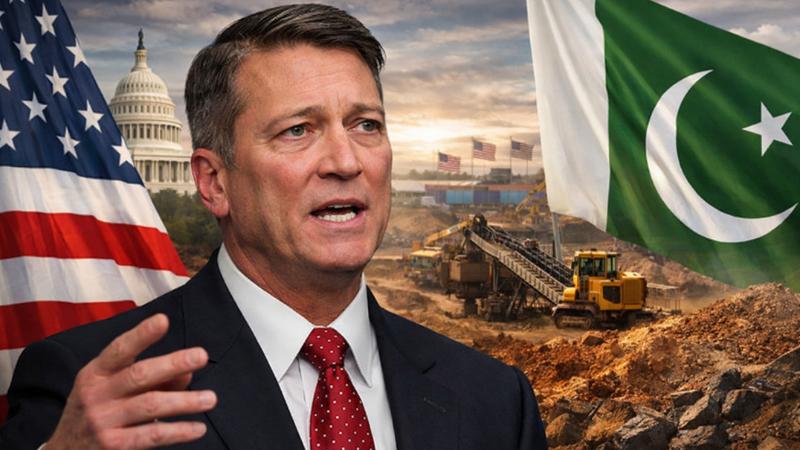
Former White House physician and retired US Navy doctor Ronny Jackson has emerged as a central figure in negotiations that led to a $500 million mining and rare earths agreement between American and Pakistani entities, according to recent disclosures filed with the US Department of Justice. The filings, submitted under the Foreign Agents Registration Act, outline Jackson’s direct engagement with Pakistani officials and detail his involvement in shaping the deal at multiple stages.
The agreement, ultimately concluded between US Strategic Metals and Pakistan’s Frontier Works Organisation, reflects months of sustained communication and coordination. Documents submitted by Javelin Advisors LLC and its subcontractor, Conscience Point Consulting, indicate that Jackson participated in a series of meetings and calls that helped advance discussions on rare earths development and formalize the proposed framework for cooperation.
According to the filings, Jackson met Pakistani officials in person on May 1 to discuss the mining initiative. The meeting took place against a backdrop of heightened regional tension following the Pahalgam terror attack. Subsequent communications continued as geopolitical concerns intensified, including a phone call on May 6 that focused on the risk of military escalation between India and Pakistan as New Delhi launched Operation Sindoor.
Further exchanges followed a ceasefire later in the month. A call on May 16 reportedly helped facilitate a private dinner meeting, which in turn opened the door for more detailed negotiations. By May 28, another phone conversation resulted in the circulation of a draft Memorandum of Understanding outlining the contours of the rare earths partnership. Additional calls and text messages in the days that followed addressed specific aspects of rare earths development and refined the proposed MoU, eventually paving the way for the finalized agreement announced in September.
Jackson’s role has drawn attention given his background and prior positions. He served as White House physician across three US administrations and later entered Congress as a lawmaker from Texas. During President Joe Biden’s administration, Jackson introduced legislation seeking to revoke Pakistan’s designation as a major non-NATO ally, a move that contrasted with his later involvement in advocating Pakistani interests tied to strategic minerals.
The filings identify Jackson as a principal point of contact for Pakistan-linked lobbying efforts in Washington, particularly through Javelin Advisors LLC, which is operated by Keith Schiller and George Sorial. Both individuals have past associations with former President Donald Trump and his business organization. Broader coordination of the lobbying campaign is attributed to Robert Seiden of Seiden Law LLP, who holds an equity stake in Javelin Advisors and engaged Conscience Point Consulting as part of the effort.
Jackson’s previous work in international mining diplomacy is also documented in the filings. He has represented interests connected to Trump-era mining initiatives in parts of Africa, including efforts that facilitated high-level diplomatic engagement between Congo and Rwanda. Those efforts culminated in a peace agreement between the two countries that was signed in Trump’s presence, underscoring Jackson’s experience operating at the intersection of resource development and foreign policy.
The disclosures further note that two additional Texas-based lawmakers and former Navy officers, Dan Renshaw and Morgan Luttrell, were involved during the period surrounding Operation Sindoor. Renshaw, in particular, produced a podcast episode highlighting the dangers of military escalation between India and Pakistan, a narrative that aligned closely with strategic concerns voiced by Pakistani authorities in Washington at the time.
Taken together, the FARA filings provide a detailed account of how a former senior US government official became deeply involved in advancing a foreign government’s strategic economic interests. The case highlights the growing importance of rare earths in global geopolitics, as well as the scrutiny surrounding lobbying activities linked to critical minerals, national security, and regional stability in South Asia.