The escalating tensions around the Strait of Hormuz are raising serious concerns for global energy markets, with analysts warning that the liquefied natural gas sector could be more severely affected than crude oil if the shipping route remains disrupted. While oil shipments have been partially redirected through alternative pipelines, LNG faces unique challenges due to its dependence on specialized tankers and highly centralized production, particularly in Qatar.
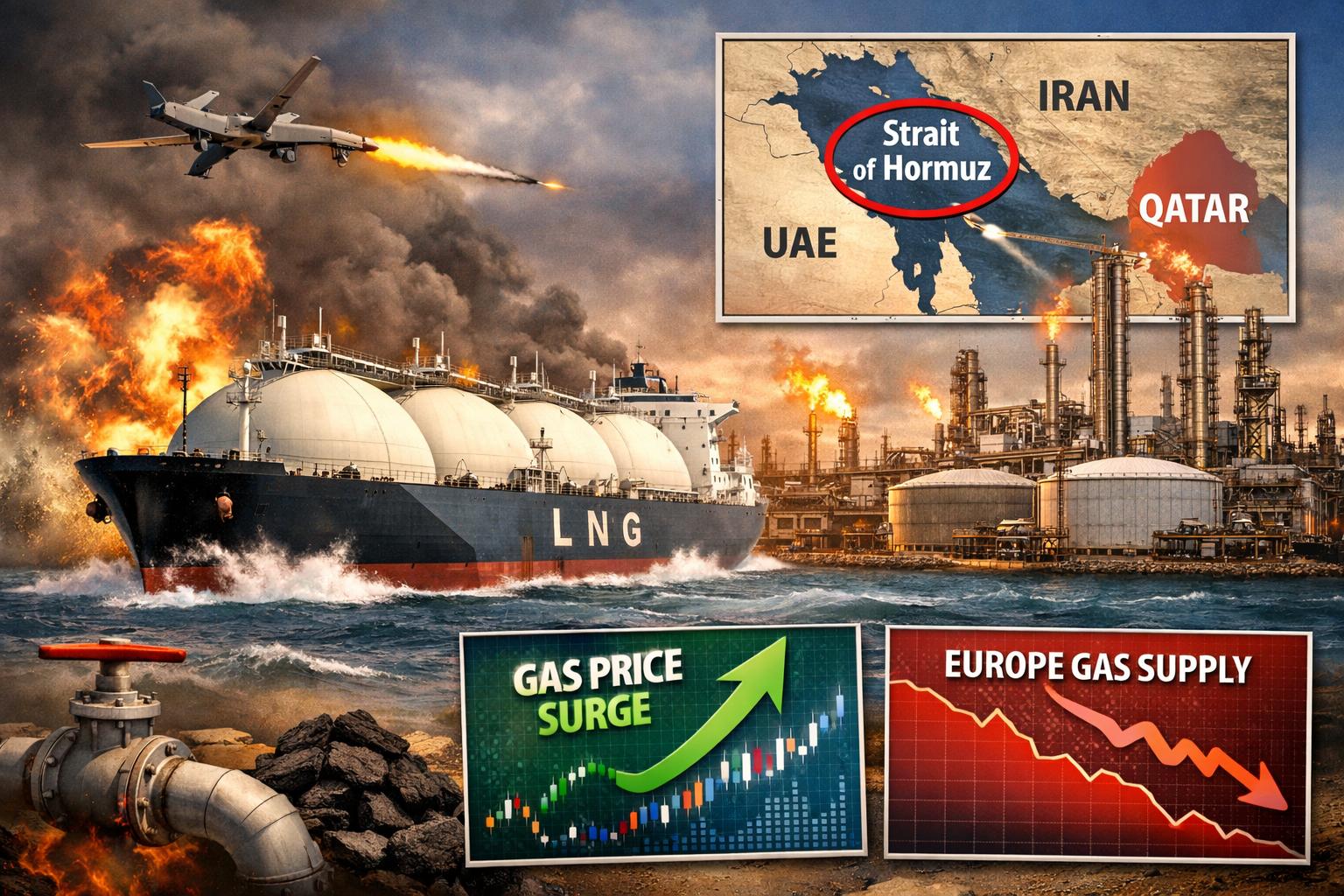
Roughly 20 percent of global LNG passes through the Strait of Hormuz, most of it originating from Qatar’s massive Ras Laffan industrial complex. Recent regional hostilities, including drone attacks, have already led to a halt in Qatari LNG production, sending natural gas prices surging worldwide. European gas prices jumped 63 percent in a single week, marking the largest percentage gain since early 2022, while Asian prices reached record levels as nations scramble to secure alternative shipments.
The logistical challenges of LNG are significant. Unlike oil, which can often be rerouted through pipelines, liquefied natural gas must travel by tanker, making it more vulnerable to maritime disruptions. The majority of Asian LNG shipments depend on Qatari exports, so with vessels being redirected from Europe to Asia to meet urgent demand, supply chains are under severe pressure.
Another concern is the concentration of production. While many Middle Eastern nations produce oil across multiple fields, LNG production is heavily centralized at Ras Laffan. This creates a single point of vulnerability: if the facility is damaged or operations are suspended for an extended period, global LNG supply could be severely constrained. Restarting LNG operations is a complex and lengthy process, requiring specialized industrial procedures to cool and liquefy natural gas before transport.
The financial and operational stakes are also high. LNG tankers are expensive assets, and operators will only risk sending ships through the Strait when safety can be assured. Insurance considerations and the technical complexity of LNG handling mean that production and exports cannot resume immediately even if maritime conditions improve. Analysts predict that LNG shipments may remain suspended until there is full certainty that the route is secure.
The United States, the world’s largest LNG exporter, is already producing near maximum capacity, leaving little room to offset supply disruptions from Qatar. As a result, global markets may be forced to rely on demand reductions or fuel substitution, such as switching to coal, to rebalance supply and stabilize prices.
Experts also warn that any further escalation in the Gulf could have long-term ramifications for LNG markets. Because Ras Laffan represents such a concentrated hub of production, additional attacks on the facility could create a global supply shock. Unlike oil, which is spread across numerous countries and facilities, LNG production has few redundancies, making the market particularly sensitive to localized disruptions.
The combination of geopolitical risk, centralized production, and the technical complexities of LNG handling means that the natural gas market could experience significant volatility in the coming months. As tensions persist in the Gulf region, global energy markets remain on high alert, closely monitoring developments to gauge potential impacts on supply, pricing, and energy security.
Roughly 20 percent of global LNG passes through the Strait of Hormuz, most of it originating from Qatar’s massive Ras Laffan industrial complex. Recent regional hostilities, including drone attacks, have already led to a halt in Qatari LNG production, sending natural gas prices surging worldwide. European gas prices jumped 63 percent in a single week, marking the largest percentage gain since early 2022, while Asian prices reached record levels as nations scramble to secure alternative shipments.
The logistical challenges of LNG are significant. Unlike oil, which can often be rerouted through pipelines, liquefied natural gas must travel by tanker, making it more vulnerable to maritime disruptions. The majority of Asian LNG shipments depend on Qatari exports, so with vessels being redirected from Europe to Asia to meet urgent demand, supply chains are under severe pressure.
Another concern is the concentration of production. While many Middle Eastern nations produce oil across multiple fields, LNG production is heavily centralized at Ras Laffan. This creates a single point of vulnerability: if the facility is damaged or operations are suspended for an extended period, global LNG supply could be severely constrained. Restarting LNG operations is a complex and lengthy process, requiring specialized industrial procedures to cool and liquefy natural gas before transport.
The financial and operational stakes are also high. LNG tankers are expensive assets, and operators will only risk sending ships through the Strait when safety can be assured. Insurance considerations and the technical complexity of LNG handling mean that production and exports cannot resume immediately even if maritime conditions improve. Analysts predict that LNG shipments may remain suspended until there is full certainty that the route is secure.
The United States, the world’s largest LNG exporter, is already producing near maximum capacity, leaving little room to offset supply disruptions from Qatar. As a result, global markets may be forced to rely on demand reductions or fuel substitution, such as switching to coal, to rebalance supply and stabilize prices.
Experts also warn that any further escalation in the Gulf could have long-term ramifications for LNG markets. Because Ras Laffan represents such a concentrated hub of production, additional attacks on the facility could create a global supply shock. Unlike oil, which is spread across numerous countries and facilities, LNG production has few redundancies, making the market particularly sensitive to localized disruptions.
The combination of geopolitical risk, centralized production, and the technical complexities of LNG handling means that the natural gas market could experience significant volatility in the coming months. As tensions persist in the Gulf region, global energy markets remain on high alert, closely monitoring developments to gauge potential impacts on supply, pricing, and energy security.