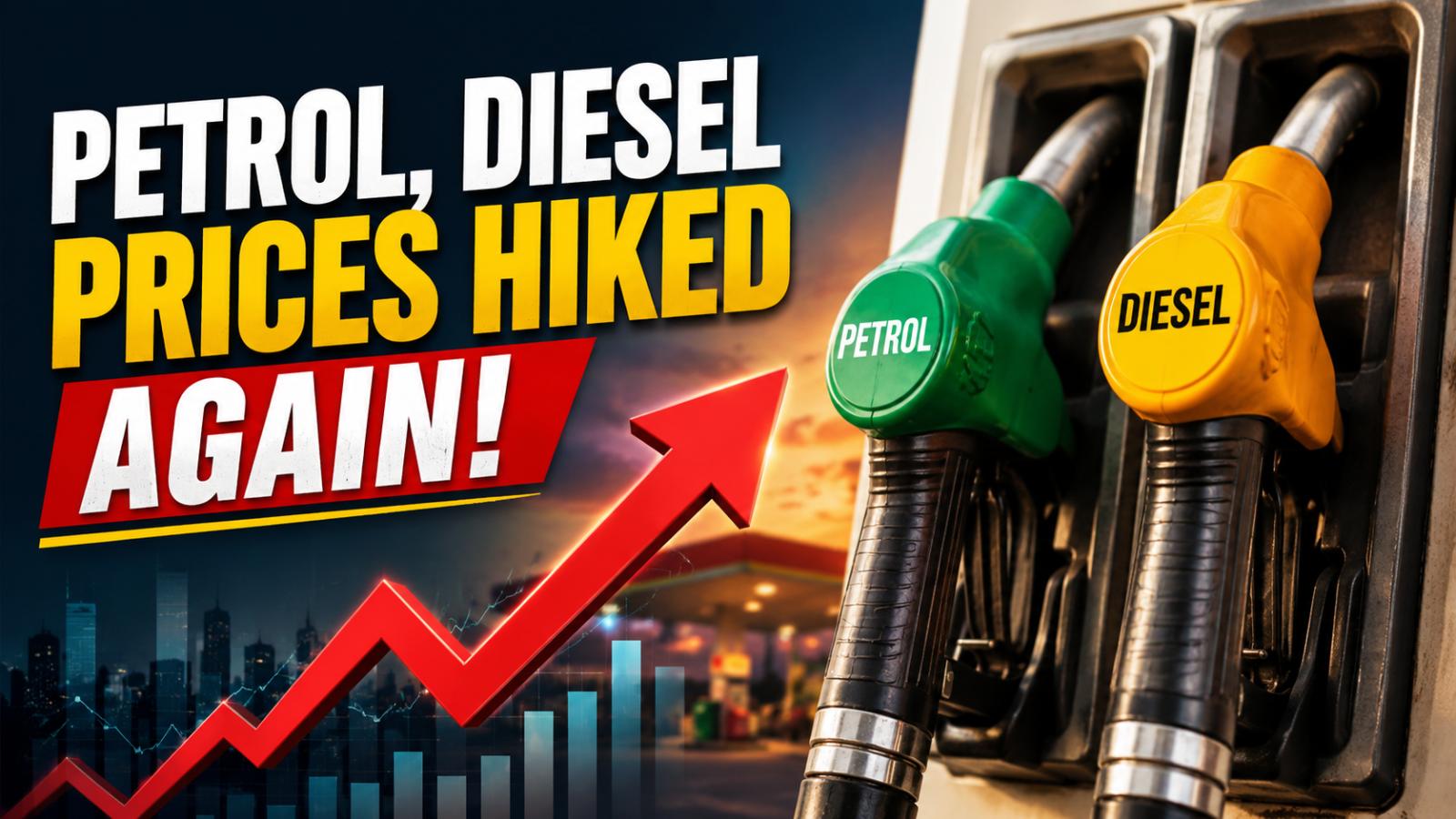
Petrol and diesel prices were increased again on Monday, May 25, 2026, marking the fourth fuel price hike in less than two weeks. Petrol has become costlier by Rs 2.61 per litre, while diesel has gone up by Rs 2.71 per litre. The new rates came into effect immediately across the country. According to current reports, Delhi’s petrol price has crossed Rs 100 per litre, while diesel prices in several major cities are now close to the Rs 100 mark. Reuters reported that India’s state-owned fuel retailers raised petrol and diesel prices for the fourth time amid rising crude oil costs linked to the Iran war and disruption concerns around the Strait of Hormuz.
City-Wise Petrol And Diesel Prices Today
| City | Petrol Price | Diesel Price |
|---|---|---|
| Delhi | Rs 102.12 per litre | Rs 95.20 per litre |
| Kolkata | Rs 113.51 per litre | Rs 99.82 per litre |
| Mumbai | Rs 111.21 per litre | Rs 97.83 per litre |
| Chennai | Rs 107.77 per litre | Rs 99.55 per litre |
| Hyderabad | Rs 112.85 per litre | Rs 99.95 per litre |
Why Petrol And Diesel Prices Are Rising
The latest fuel price hike is mainly linked to higher global crude oil prices, a weaker rupee and pressure on oil marketing companies. India imports a major share of its crude oil requirement, so any increase in international oil prices directly affects domestic fuel costs. When the rupee weakens against the dollar, oil imports become even more expensive because crude oil is traded globally in dollars.
The ongoing conflict involving Iran and the concerns over the Strait of Hormuz have increased uncertainty in global energy markets. The Strait of Hormuz is one of the world’s most important oil transit routes, and any disruption in that region can push crude oil prices higher. This creates a direct burden on Indian oil companies and eventually affects retail fuel prices.
Fuel prices had remained mostly stable for nearly four years before the recent revisions. But the fresh series of hikes shows that oil companies are now passing part of the increased cost to consumers. Reports also say petrol and diesel prices have increased by around Rs 7.5 per litre in two weeks, making this one of the sharpest short-term increases in recent years.
Impact On Common People And Businesses
The impact of this fuel price hike will not stop at petrol pumps. Higher petrol prices directly affect two-wheeler users, car owners, cab drivers and office commuters. A person who fills 40 litres of petrol will now pay over Rs 100 more in one refill compared with the previous rate. For families using private vehicles daily, the monthly fuel bill can rise quickly.
Diesel price hikes are even more serious for the wider economy. Trucks, buses, delivery vans, tractors and many commercial vehicles run on diesel. When diesel becomes costlier, transport and logistics companies may increase freight charges. This can raise the prices of vegetables, groceries, packaged goods, construction materials and other daily-use items. In simple terms, a diesel price hike can quietly increase the cost of living even for people who do not own a vehicle.
Small businesses may also feel the pressure. Restaurants, retailers, delivery services, schools, travel operators and manufacturers depend on transportation in some form. If diesel prices remain high, operating costs may rise. Some businesses may absorb the increase for a short period, but many may pass the cost to customers through higher service charges or product prices.
The government may come under pressure to provide relief if prices keep rising. One possible option is a reduction in central excise duty or state-level taxes, but that would reduce government revenue. The more practical concern now is inflation. Repeated fuel price hikes can make transport, food, travel and essential goods more expensive.
For now, consumers should expect higher spending on fuel and transport. Unless global crude oil prices cool down or the rupee strengthens, fuel prices may remain under pressure in the coming days. The real risk is not just today’s petrol or diesel rate, but the chain reaction it can create across household budgets, business costs and inflation.