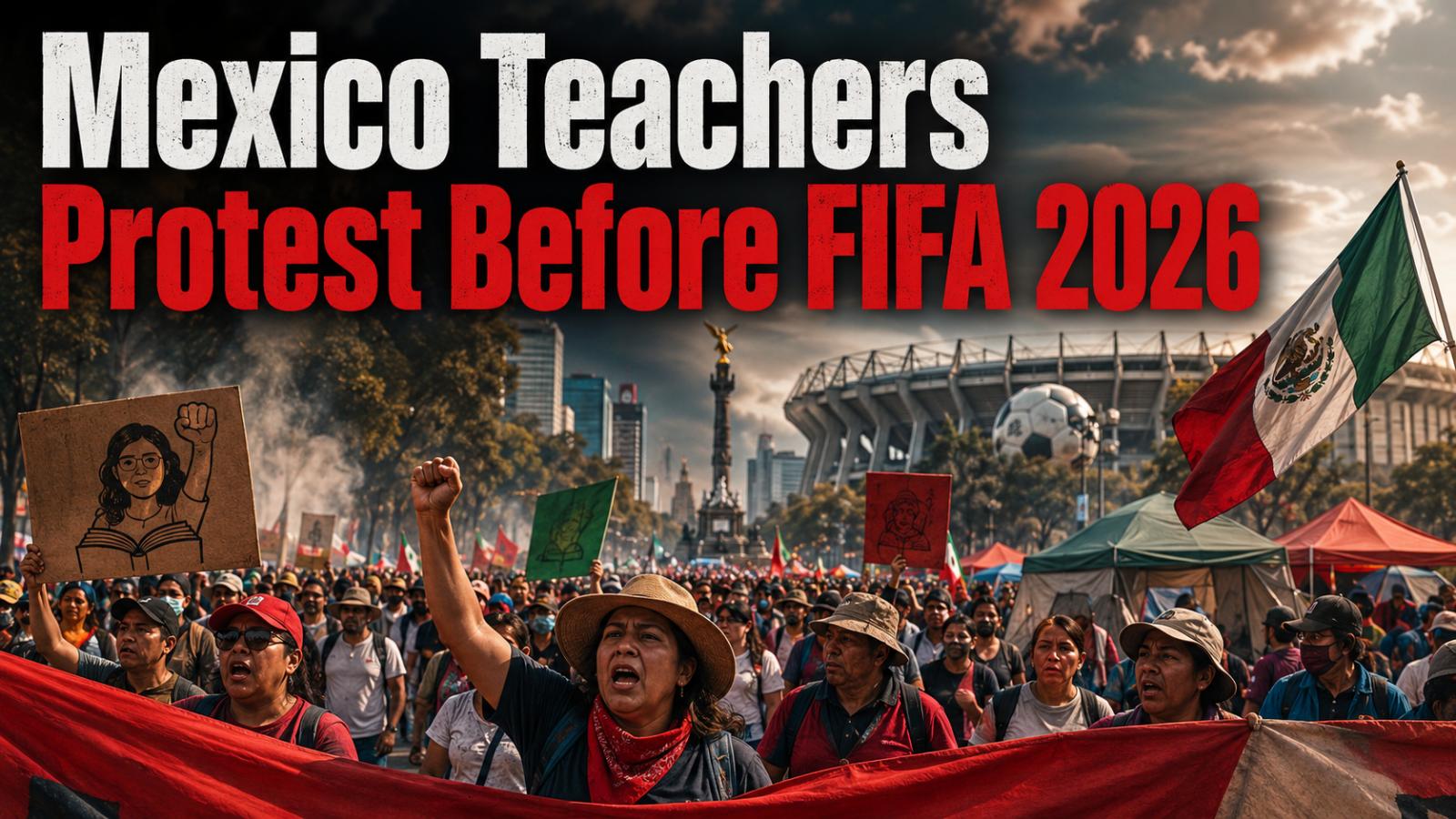
Mexico is preparing for one of the biggest sporting moments in its history, but the excitement around the FIFA World Cup 2026 opener has been mixed with growing public unrest in Mexico City.
Thousands of teachers linked to the National Coordination of Education Workers, known as CNTE, have intensified protests in the capital just days before Mexico hosts the opening match of the tournament. The FIFA World Cup 2026 opener is scheduled for June 11, 2026, with Mexico facing South Africa at Mexico City Stadium, also known as Estadio Azteca.
For the protesting teachers, the World Cup has become more than a football event. It has become a global stage to question government priorities.
Why Mexico Teachers Are Protesting ?
The teachers say their protest is not against football or fans. Their anger is aimed at what they see as years of neglect toward public education workers.
Their main demands include better salaries, changes to pension rules, and stronger government attention to schools and teachers. Many educators argue that the cost of living has increased sharply while their wages have failed to keep up.
The protest movement has also focused heavily on the 2007 ISSSTE pension reform, which affected public sector workers. Teachers say the reform weakened retirement security and moved many workers away from a more stable pension system toward individual retirement accounts.
For many teachers, the issue is simple: they want to retire with dignity after years of service.
CNTE Demands Higher Wages and Pension Reform
CNTE-linked teachers are demanding a major wage increase, with reports saying the union has pushed for a 100 percent rise in base salary along with the repeal of the ISSSTE reform. Some estimates say around 12,000 teachers have been camped in Mexico City as part of the movement.
Their message is direct: if the government can invest time, security, and public resources into preparing the city for the World Cup, it should also address the needs of educators who serve the country every day.
This is why the protest has used football symbols. Demonstrators have held actions near major roads and public areas, using the World Cup atmosphere to draw attention to their demands.
Mexico City Faces Pressure Before Global Event
The timing of the protest is politically sensitive. Mexico City is expected to welcome thousands of international fans, media teams, football officials, and tourists for the opening match.
The government wants the city to look organized, safe, and festive. Protesters know this gives them leverage.
That is the uncomfortable reality: the World Cup gives teachers a louder microphone than they would normally have. Without the tournament, their demands might not receive the same level of international attention.
Government Offers Dialogue, But Deadlock Continues
President Claudia Sheinbaum’s government has said it is open to dialogue and wants to avoid direct confrontation with teachers. Officials have also offered salary increases and some retirement-related concessions.
However, CNTE leaders have rejected the offer as insufficient. They argue that small adjustments will not solve the deeper problems caused by pension changes, low salaries, and long-term underinvestment in public education.
The government faces a difficult balancing act. Fully reversing the pension reform could create financial pressure on public budgets, but ignoring the teachers risks turning a global sporting celebration into a political embarrassment.
Why the Protest Matters Beyond Football ?
The Mexico teachers protest is not only about wages. It reflects a larger conflict over how governments choose priorities during major international events.
World Cups bring tourism, branding, infrastructure upgrades, and global attention. But they can also expose domestic frustrations. In Mexico, teachers are using the tournament spotlight to ask a tough question: why is the country ready to impress the world, but not ready to protect its educators?
That question is what gives this protest real political weight.
What Could Happen Next ?
If talks fail, protests may continue during the opening days of the FIFA World Cup 2026. This could create traffic disruptions, security concerns, and negative international headlines for Mexico.
But for the teachers, disruption is part of the strategy. They believe peaceful pressure during a high-visibility event is one of the few ways to force serious negotiations.
The World Cup opener is supposed to be a celebration of football. For Mexico’s protesting teachers, it is also a chance to demand respect, fair wages, and a secure retirement future.