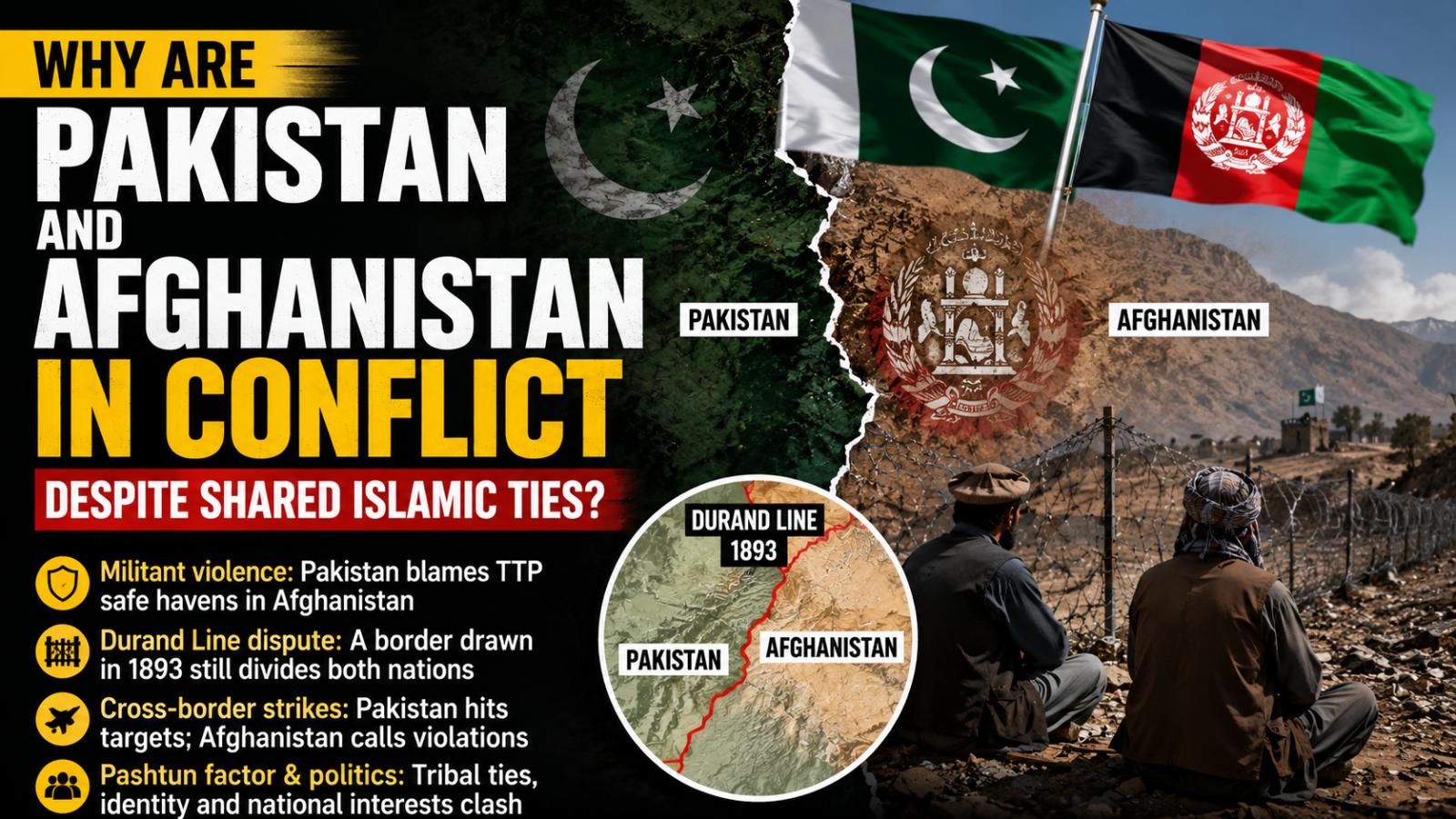
Pakistan and Afghanistan are both Muslim-majority countries with deep cultural, religious and economic connections. However, their escalating conflict is not primarily about religion. It is driven by border disputes, militant violence, sovereignty and competing national-security interests.
The latest tensions intensified after Pakistan carried out military operations and airstrikes targeting what it described as militant positions inside Afghanistan. Afghan authorities disputed that account, reporting civilian casualties and accusing Pakistan of attacking residential areas.
Pakistan-Afghanistan Conflict Explained
The immediate source of tension is the Tehreek-e-Taliban Pakistan, or TTP, commonly known as the Pakistani Taliban.
The TTP fights the Pakistani government and has carried out attacks against Pakistani security forces and civilians. Although it shares ideological and historical connections with Afghanistan’s Taliban, the two are separate organizations.
Pakistan says TTP leaders and fighters operate from safe havens inside Afghanistan. Kabul’s Taliban government denies allowing Afghan territory to be used for attacks against Pakistan.
When militant attacks occur inside Pakistan, Islamabad has increasingly responded by striking suspected hideouts across the border. Afghanistan considers those operations violations of its sovereignty.
The Durand Line Border Dispute
The conflict also has roots in the Durand Line, the border established between British India and Afghanistan in 1893.
Pakistan recognizes the Durand Line as the international border. Afghanistan has historically challenged its legitimacy, partly because the boundary divided Pashtun communities and tribal territories.
Border fencing, military posts and restrictions at crossings such as Torkham have repeatedly caused disputes between Pakistani and Afghan forces.
Why Shared Religion Does Not Prevent Conflict
Religious ties do not eliminate disagreements between governments. Pakistan and Afghanistan have different territorial claims, security priorities and political interests.
Pakistan views cross-border militancy as a direct threat to its soldiers and civilians. Afghanistan argues that Pakistan cannot enter its territory without permission, regardless of its security concerns.
The result is a recurring cycle: militants attack inside Pakistan, Pakistan strikes suspected targets in Afghanistan, Kabul condemns or retaliates, and border tensions increase.
Why the Conflict Matters
Further escalation could endanger civilians, disrupt trade and force families to leave border communities. It could also destabilize a region already facing militancy, economic hardship and humanitarian pressures.
The Pakistan-Afghanistan confrontation is therefore not a religious war. It is a security and sovereignty dispute shaped by the TTP, the contested border and decades of political mistrust.