- globetrotter
- 10 Jun 2026
- #pakistan #india #china #satellites #space #defense #isro #surveillance #kashmir
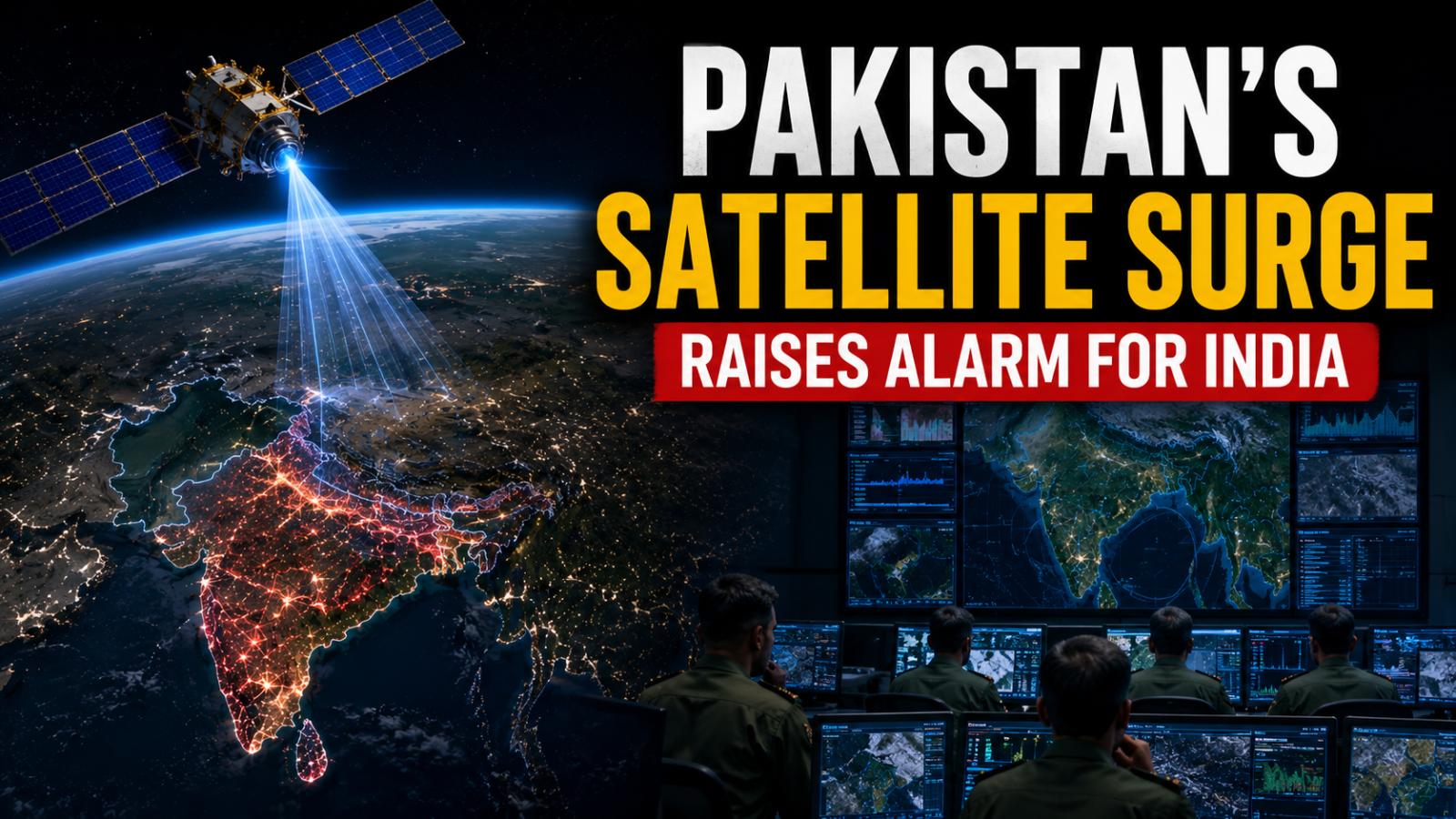
Pakistan’s rapid satellite expansion with Chinese support is raising fresh security concerns in India, as analysts warn that the South Asian rivalry is increasingly moving into space.
More than a year after India launched Operation Sindoor on Wednesday, May 7, 2025, following the Pahalgam terror attack on Tuesday, April 22, 2025, a quieter contest is unfolding hundreds of kilometers above Earth.
Pakistan Expands Earth-Observation Satellite Network
According to reporting by ThePrint, Pakistan launched six Earth-observation satellites in a short span beginning in January 2025, marking a major shift for a space program that had historically moved slowly under SUPARCO.
The satellites include electro-optical, hyperspectral and remote-sensing platforms. While such systems can support civilian work such as agriculture, disaster response and environmental mapping, they can also help monitor military infrastructure, border activity, roads and strategic zones.
China’s Role Draws Attention
China has played a central role in Pakistan’s recent satellite push. Pakistan’s PRSC-EO3 satellite was launched on Saturday, April 25, 2026, aboard a Chinese Long March-6 rocket from the Taiyuan Satellite Launch Center. PRSC-EO2 was launched earlier on Thursday, February 12, 2026.
Analysts say the concern is not only the number of satellites, but what they can do together. Advanced Earth-observation systems can capture high-resolution images, detect ground changes and help identify camouflaged or unusual activity.
Why India Is Watching Closely
ThePrint reported that PRSC-EO3’s orbit may allow repeated observation over South Asia, including northern India and Jammu and Kashmir. That could give Pakistan more frequent imagery of sensitive regions during a crisis.
India remains far ahead of Pakistan in overall space capability, with major achievements in launch vehicles, lunar missions, navigation and Earth observation. But the concern is narrower: Pakistan, with Chinese support, may be building a focused surveillance network designed around India-specific monitoring.
For defense planners, the message is clear. Future conflicts may not depend only on aircraft, drones, missiles or troops. They may also depend on who can see first, process information faster and act with better intelligence from space.
As Pakistan’s orbital footprint expands, the India-Pakistan rivalry is entering a new domain — one where the next major contest may begin far above the border.