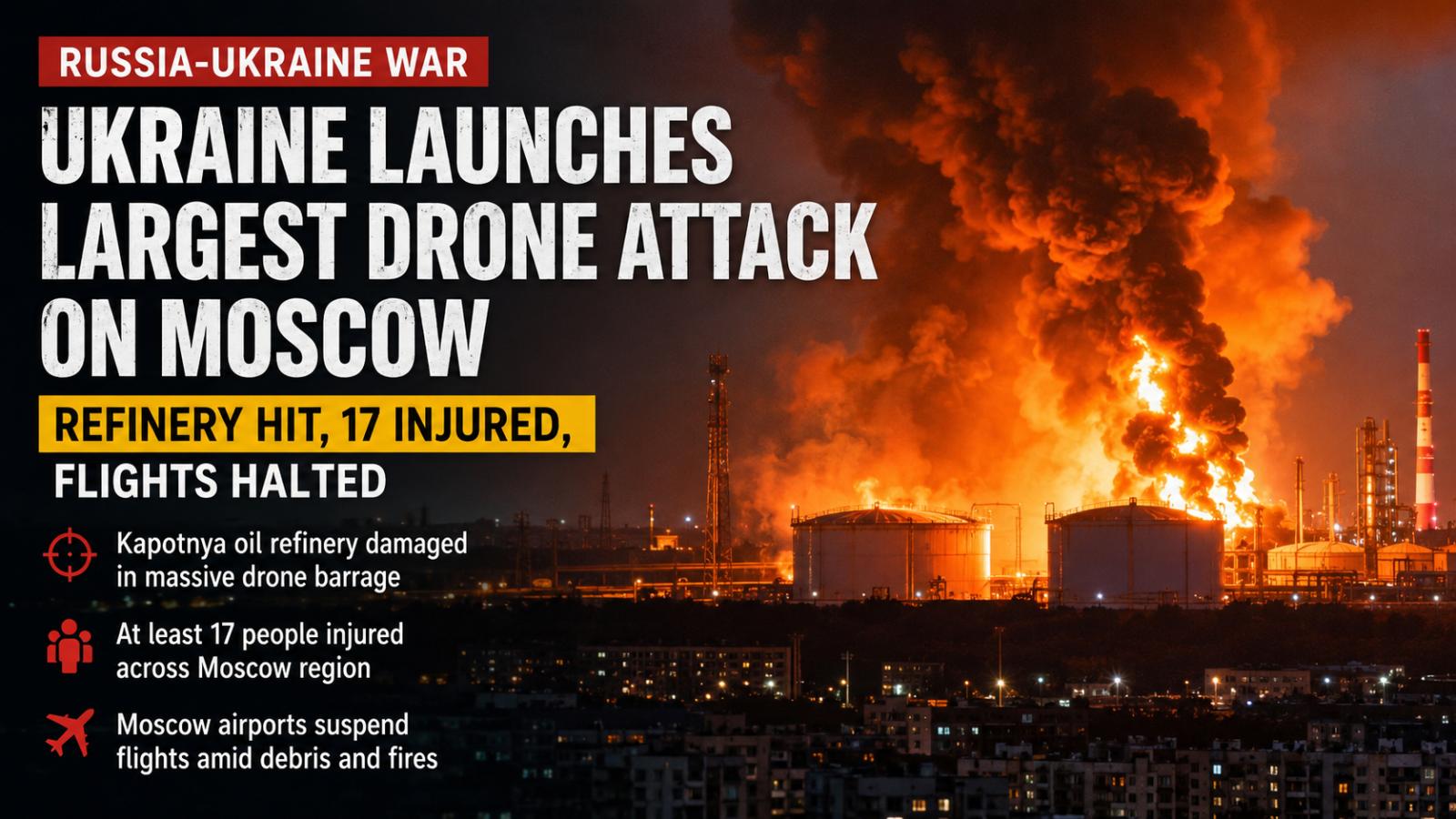
A Moscow oil refinery drone attack damaged a fuel facility, injured at least 17 people and temporarily disrupted flights at airports serving the Russian capital. Ukrainian forces carried out what the report described as their largest drone offensive against Moscow since the full-scale war began.
Moscow oil refinery drone attack hits Kapotnya
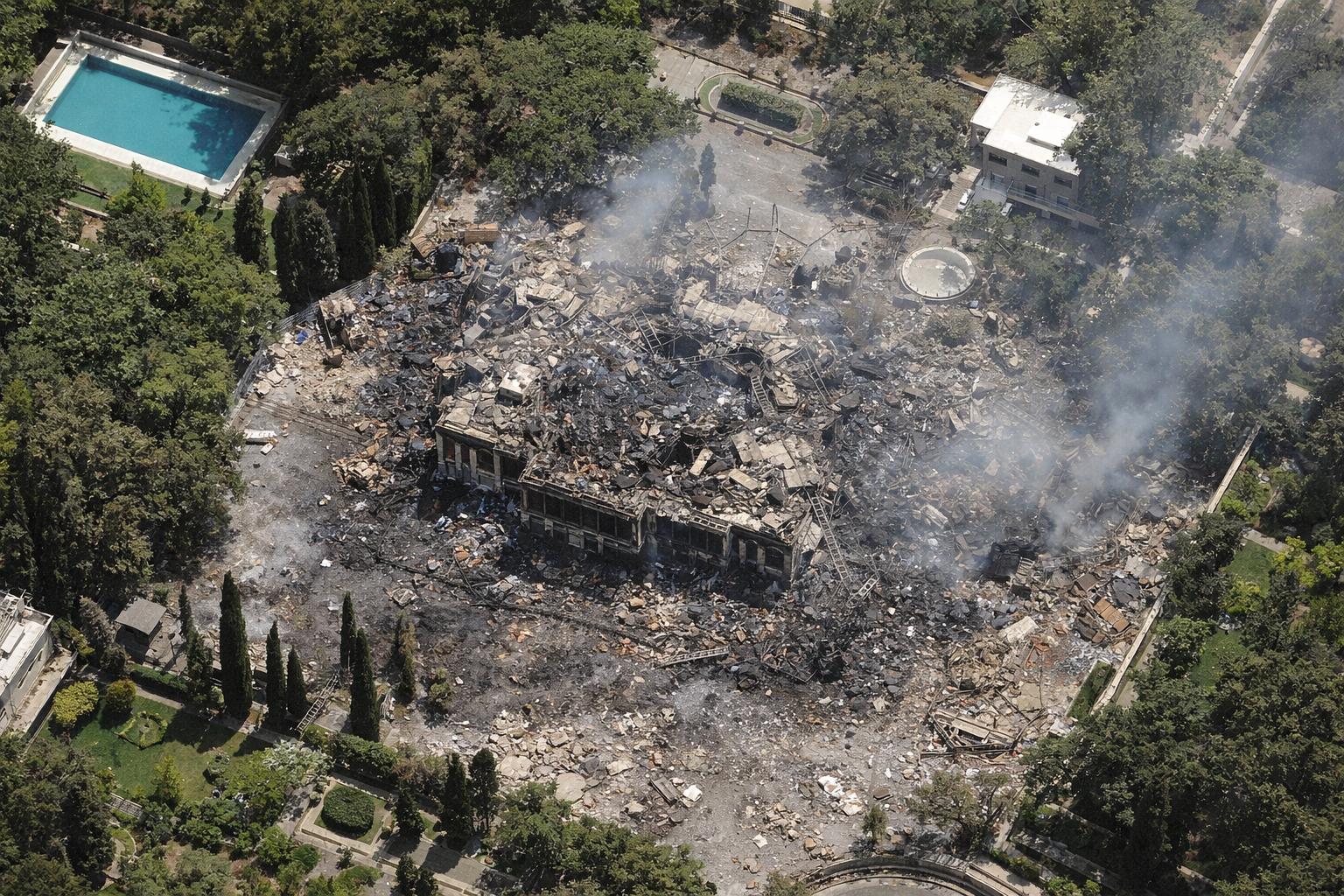
The Moscow Oil Refinery in Kapotnya, about 9 miles southeast of the Kremlin, was among the main sites affected. Videos from the area showed thick black smoke, a large explosion and damage to a fuel tank. The refinery had also been struck earlier in the week.
Moscow Mayor Sergei Sobyanin said Russian air defenses intercepted at least 194 drones heading toward the capital. Russia’s Defense Ministry said nearly 1,000 drones were intercepted across a wider area, including over the Sea of Azov.
At least 17 people were injured during the barrage, while operations at Moscow airports were temporarily suspended.
Residents reported repeated explosions, shaking buildings, heavy smoke and a strong burning smell. Images shared by residents appeared to show dark, sooty droplets on cars and windowsills.
Russian authorities denied reports of “oil rain” but advised residents to limit their time outdoors because of soot.
Zelensky describes attack as response to Russian strikes
Ukrainian President Volodymyr Zelensky called the offensive a justified response to Russian attacks, including damage to a historic monastery complex in central Kyiv. He said Ukraine did not seek the war but would continue responding to destruction inside the country.
Russia later launched seven missiles and 239 drones at Ukraine, according to the Ukrainian Air Force. The strikes damaged a private home, energy infrastructure, a hangar and oil-related facilities in the Kyiv and Poltava regions.
Ukraine has increasingly targeted Russian refineries, oil depots, terminals and military sites. The Moscow attack matters because it demonstrates the expanding reach of Ukraine’s drone campaign and increases pressure on infrastructure connected to Russia’s war effort and oil-dependent state revenue.