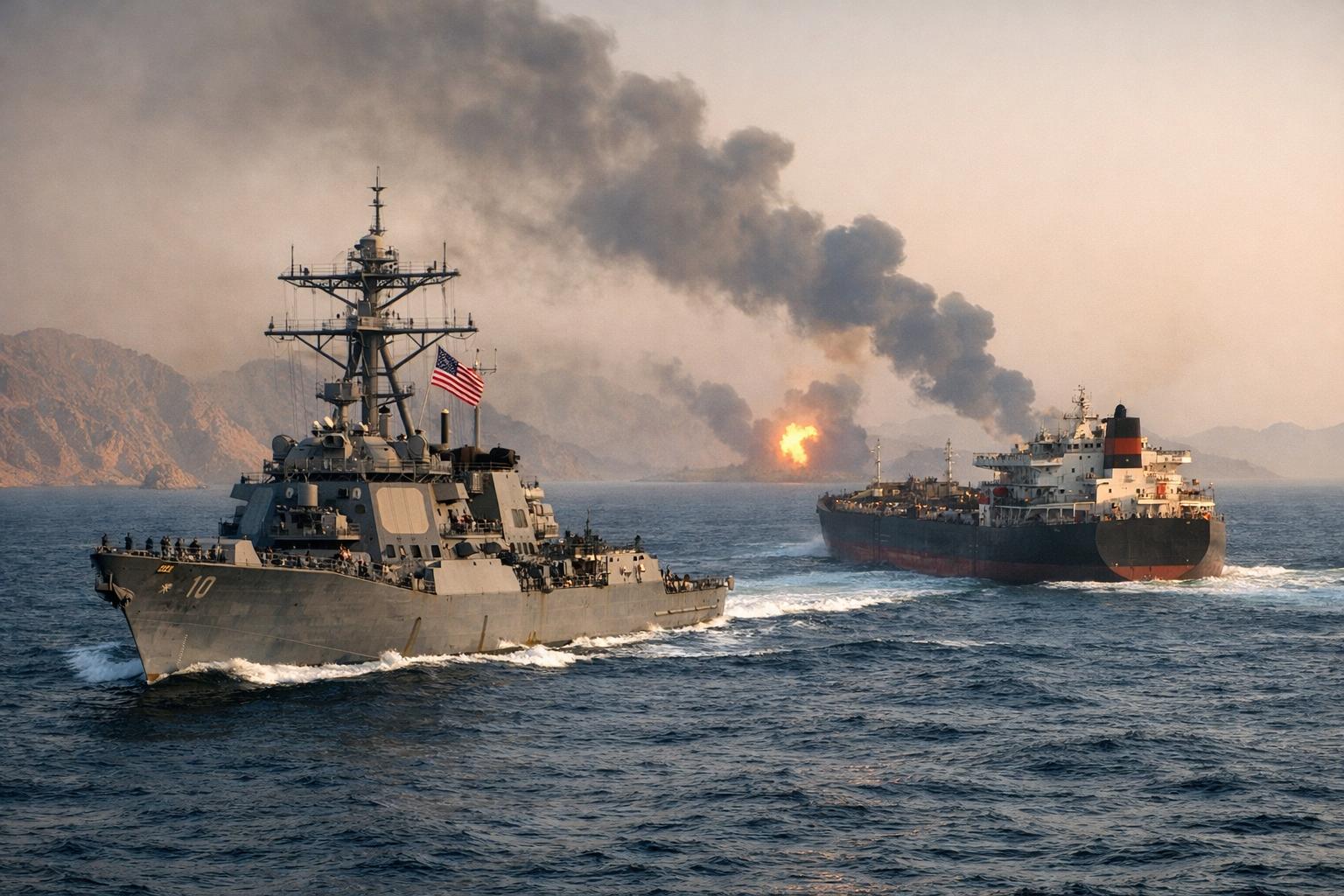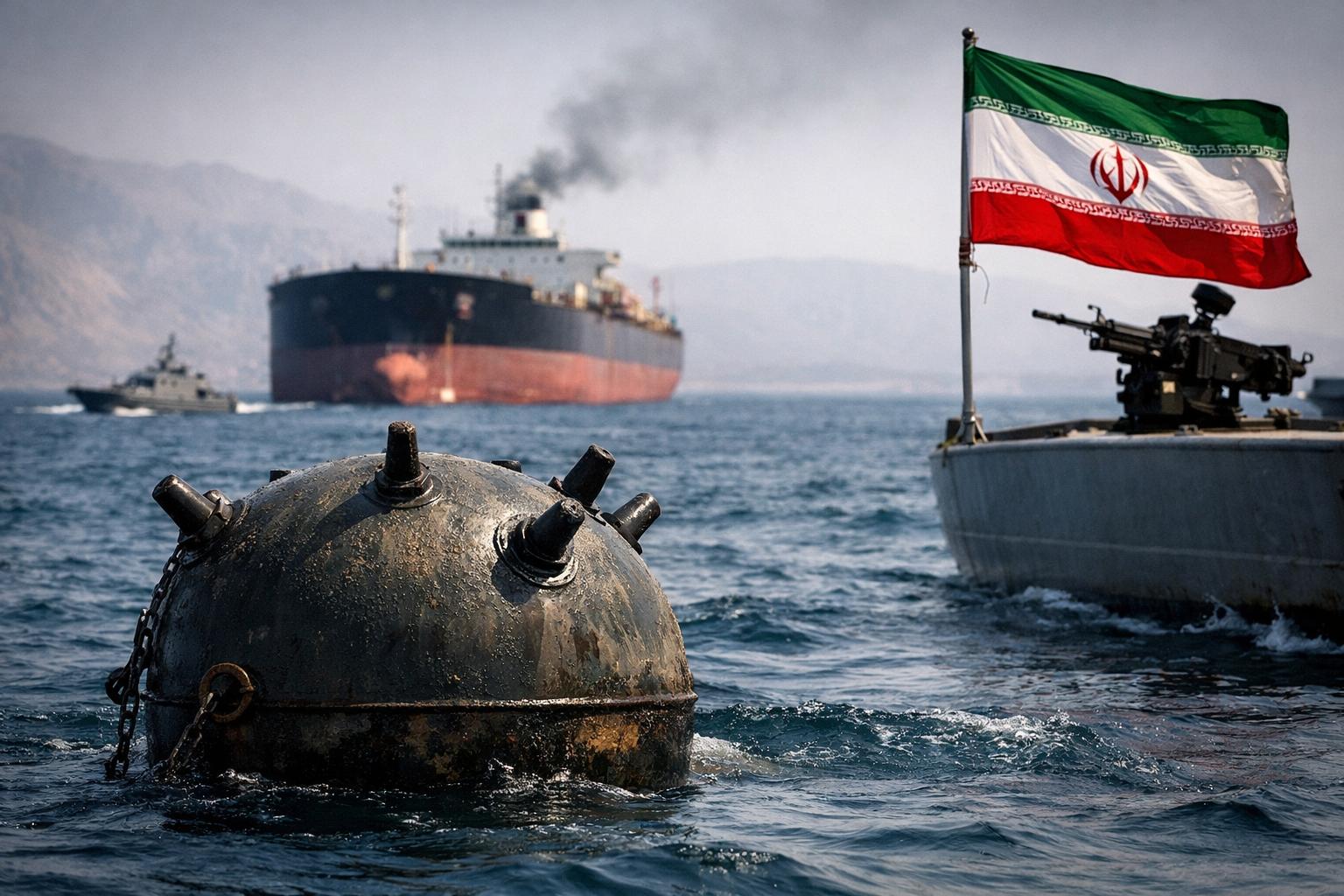
The reopening of the strategically critical Strait of Hormuz is expected to face further delays as Iran encounters challenges in locating and clearing sea mines reportedly deployed during recent hostilities, according to U.S. officials cited in a report by The New York Times.
Officials indicated that Iran’s limited capacity to track and safely remove the mines has become a major obstacle to restoring maritime traffic, even after a fragile two-week pause in conflict. The waterway, a vital route for global oil shipments, has remained closed for more than a month, intensifying concerns over energy supply disruptions worldwide.
According to U.S. officials, Iran may not have accurately documented the placement of all mines. In cases where locations were recorded, shifting ocean currents may have caused some devices to drift, complicating detection and removal efforts. The uncertainty surrounding the mines has effectively halted shipping activity due to safety risks, including potential drone or missile threats in the region.
The issue has taken on added diplomatic urgency as U.S. Vice President JD Vance arrived in Islamabad over the weekend for scheduled peace discussions with Iranian representatives. The status of the Strait is expected to be a central topic in the negotiations, which are being facilitated with the involvement of Pakistan.
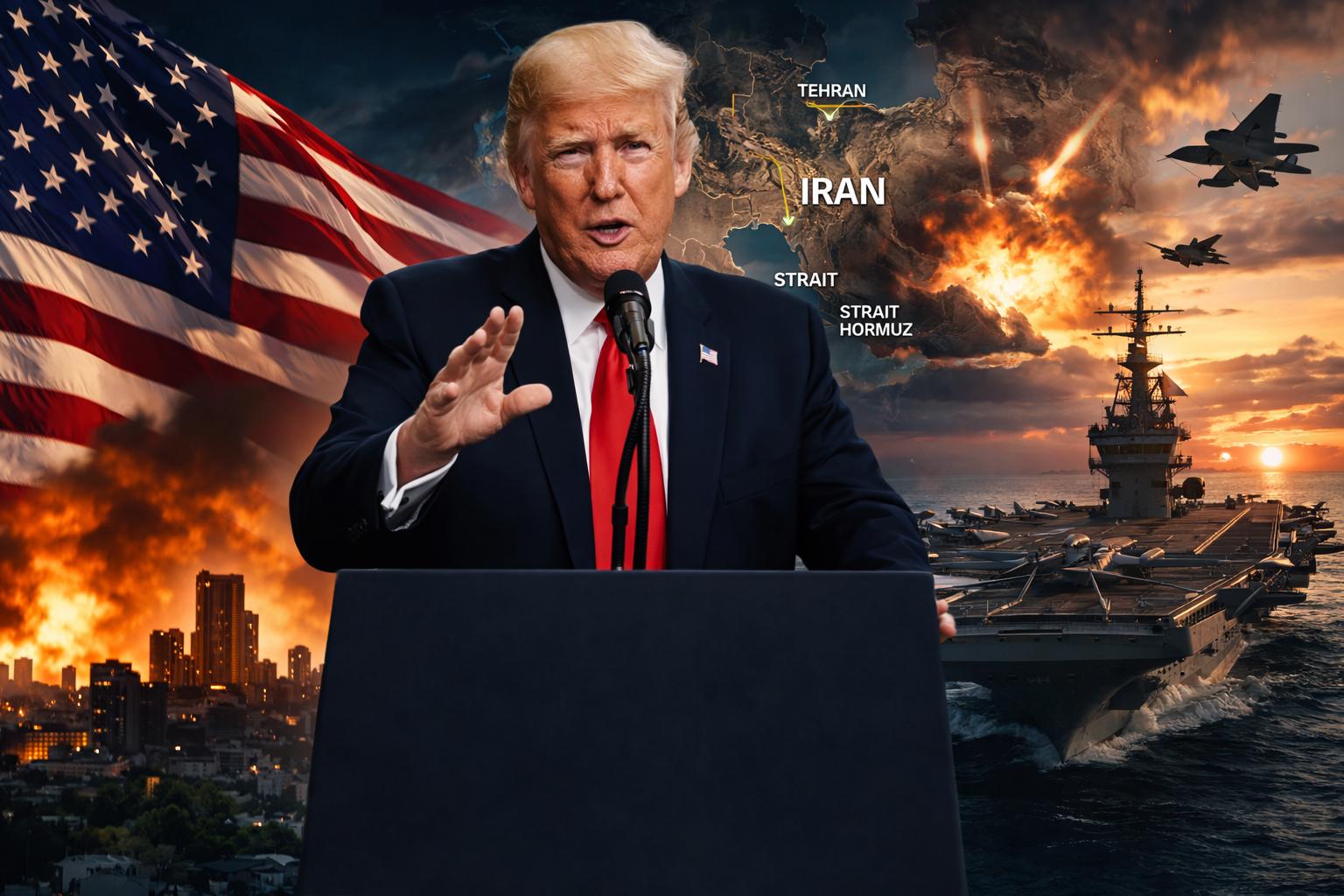
The United States has pushed for an immediate reopening of the waterway, with President Donald Trump reportedly making it a key condition in broader de-escalation efforts. In contrast, Iran has proposed maintaining control over the Strait as part of a broader framework, according to reports from Agence France-Presse.
The Strait of Hormuz remains one of the world’s most important maritime chokepoints, carrying a substantial share of global oil exports. The continued disruption has strained energy markets and impacted countries dependent on Gulf oil supplies.
Mine clearance operations present significant technical challenges, even for advanced militaries. U.S. forces rely on specialized vessels and systems to conduct such operations, highlighting the difficulty Iran faces in removing the devices quickly. With the waterway still blocked, the issue is likely to remain a major sticking point in ongoing diplomatic efforts.
Officials indicated that Iran’s limited capacity to track and safely remove the mines has become a major obstacle to restoring maritime traffic, even after a fragile two-week pause in conflict. The waterway, a vital route for global oil shipments, has remained closed for more than a month, intensifying concerns over energy supply disruptions worldwide.
According to U.S. officials, Iran may not have accurately documented the placement of all mines. In cases where locations were recorded, shifting ocean currents may have caused some devices to drift, complicating detection and removal efforts. The uncertainty surrounding the mines has effectively halted shipping activity due to safety risks, including potential drone or missile threats in the region.
The issue has taken on added diplomatic urgency as U.S. Vice President JD Vance arrived in Islamabad over the weekend for scheduled peace discussions with Iranian representatives. The status of the Strait is expected to be a central topic in the negotiations, which are being facilitated with the involvement of Pakistan.
The United States has pushed for an immediate reopening of the waterway, with President Donald Trump reportedly making it a key condition in broader de-escalation efforts. In contrast, Iran has proposed maintaining control over the Strait as part of a broader framework, according to reports from Agence France-Presse.
The Strait of Hormuz remains one of the world’s most important maritime chokepoints, carrying a substantial share of global oil exports. The continued disruption has strained energy markets and impacted countries dependent on Gulf oil supplies.
Mine clearance operations present significant technical challenges, even for advanced militaries. U.S. forces rely on specialized vessels and systems to conduct such operations, highlighting the difficulty Iran faces in removing the devices quickly. With the waterway still blocked, the issue is likely to remain a major sticking point in ongoing diplomatic efforts.