Indian Vessel Attack off Yemen: 14 Seafarers Rescued
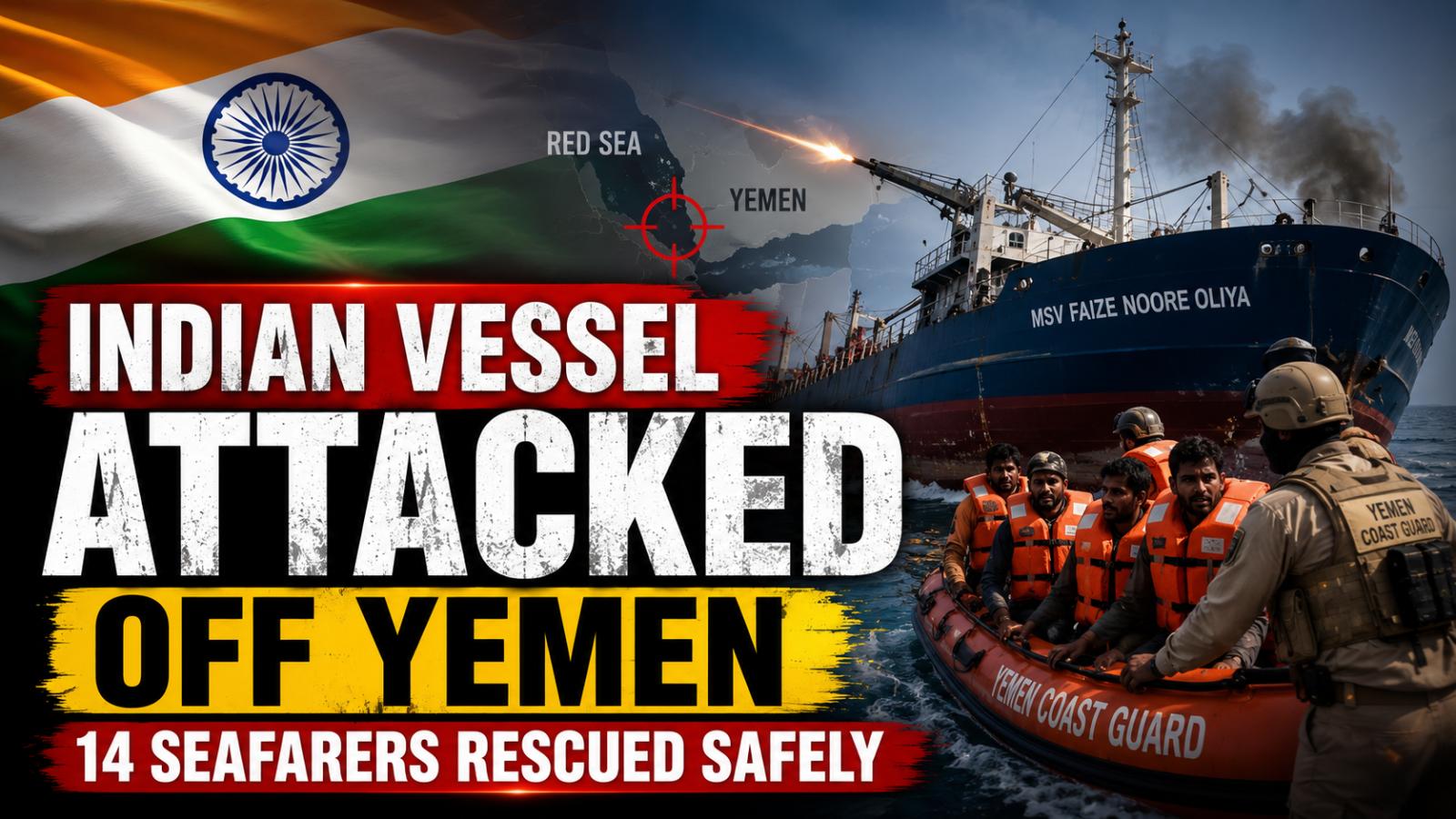
The Indian vessel attack off Yemen sank MSV Faize Noore Oliya after a projectile strike in the Red Sea. The Yemen Coast Guard rescued all 14 seafarers, including 13 Indians, as New Delhi condemned threats to commercial shipping.
Red Sea ship attack sinks Indian vessel
India has strongly condemned an attack on the Indian-flagged commercial vessel MSV Faize Noore Oliya, which capsized and sank in the Red Sea off Yemen on August 4, 2026, after being struck by an unidentified projectile.
Union Minister for Ports, Shipping and Waterways Sarbananda Sonowal said the mechanised sailing vessel was hit near Yemeni waters. He described the incident as an unprovoked attack on a defenceless commercial vessel and stressed that protecting Indian seafarers remained the government’s highest priority.
Officials have not disclosed what type of projectile struck the vessel, where it was launched from or which group carried out the attack. No government or armed organisation had publicly claimed responsibility when the official statements were issued.
Fourteen sailors rescued by Yemen Coast Guard
All 14 people aboard the vessel survived. The crew included 13 Indian nationals and one seafarer of another nationality. Yemen’s Coast Guard rescued the group and transported them safely to the Port of Mokha on Yemen’s western coast.
Sonowal thanked the Yemeni authorities for conducting the rescue and confirmed there were no reported casualties. The successful operation prevented the attack from turning into a major loss of life despite the vessel capsizing and sinking.
The Ministry of External Affairs said Indian officials were coordinating with the Indian Embassy in Riyadh and relevant regional authorities. New Delhi is expected to continue monitoring the rescued crew and seek further information about the circumstances surrounding the strike.
India condemns threats to commercial shipping
The Ministry of External Affairs described the attack as deeply concerning and called for an end to the targeting of commercial vessels in regional waters. It said free and uninterrupted navigation through international waterways must be restored in accordance with international law.
The statement was carefully worded and did not accuse the Houthis, Iran, the United States or any other party of carrying out the strike. Until investigators establish responsibility, reports should avoid linking the attack to a particular military force without verified evidence.
Commercial ships operating near Yemen have faced growing risks from missiles, drones, naval mines and exchanges of fire involving regional forces. Mechanised sailing vessels are particularly vulnerable because they often lack the defensive systems, speed and structural protection found on larger naval or commercial ships.
Bab al-Mandeb shipping risks increase
The waters near Yemen form part of a critical trade route connecting the Red Sea with the Gulf of Aden and the Indian Ocean through the Bab al-Mandeb Strait. Disruption in this corridor can delay cargo, raise insurance costs and force shipping companies to use longer routes around Africa.
Security conditions have worsened amid wider regional hostilities and continued threats against commercial shipping. The Houthis recently denied reports that they planned to charge vessels for passing through the strait, although they had announced measures targeting Saudi-linked maritime activity.
However, that broader context does not prove Houthi involvement in the MSV Faize Noore Oliya attack. The projectile’s origin remains unknown, and an investigation is necessary before assigning responsibility.
Maritime safety concerns grow after attack
The sinking highlights the danger faced by Indian sailors working on vessels crossing conflict-affected waters. India’s response places equal emphasis on the safe return of the crew and the principle that civilian shipping should not become a target during regional conflicts.
The immediate priority will be supporting the rescued seafarers, gathering evidence and determining what struck the vessel. The wider challenge is restoring safe commercial navigation while preventing attacks that could further destabilise one of the world’s most important maritime corridors.