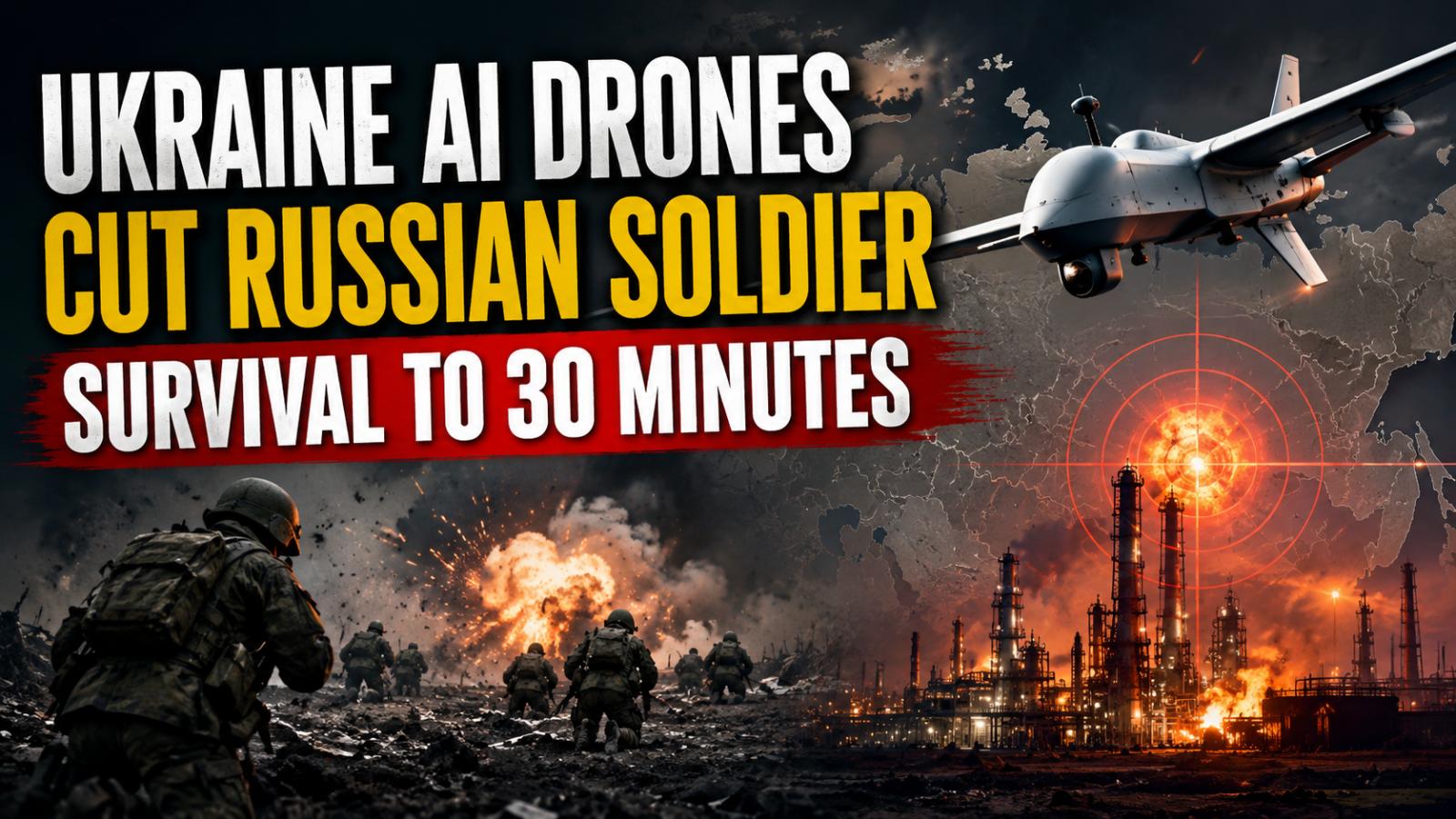
Ukraine's AI drones are changing the battlefield, according to CIA Director John Ratcliffe, who said Russian soldiers arriving at the front are surviving only 20 to 30 minutes on average. The remarks highlight how low-cost drone technology and long-range strikes are reshaping the war between Ukraine and Russia.
CIA Director Highlights AI Warfare
CIA Director John Ratcliffe said at the Pennsylvania Defense and Innovation Summit that US intelligence supports reports suggesting newly deployed Russian soldiers often survive only 20 to 30 minutes after reaching the battlefield. He described Ukraine's AI-powered drones as specialized, low-cost weapons that have significantly challenged Russia's numerical advantage.
Ratcliffe said Ukraine has relied on rapid innovation rather than manpower, using advanced drone systems to slow Russian advances and increase battlefield pressure. While Russia continues to field larger forces, drone technology has become one of Kyiv's most effective military tools.
Russian Soldiers Face Growing Drone Threat
The latest assessment reflects how drones have become central to the conflict. Artificial intelligence helps improve navigation, target identification and mission planning, allowing Ukraine to conduct attacks with greater precision while reducing operational costs.
Military analysts have increasingly noted that inexpensive unmanned systems can achieve results once reserved for expensive missile platforms. This shift has forced both sides to adapt tactics as drones dominate reconnaissance and strike missions across the front.
Siberia Strike Hits Oil Refinery
Ukraine demonstrated its long-range capabilities when an FP-1 drone reportedly flew around 2,500 kilometres over approximately 12 hours before striking the Gazprom Neft oil refinery in Omsk, Siberia. The attack marked one of the longest-range Ukrainian drone operations since the war began.
According to available reports, the FP-1 drone features a lightweight plywood structure, foam wings and a two-cylinder piston engine, with an estimated production cost of about $55,000. The strike reportedly damaged the CDU-10 crude distillation unit and disrupted critical network systems supporting another major processing unit, temporarily affecting refinery operations.
Oil Refinery Damage Adds Pressure on Russia
The Siberia attack followed earlier Ukrainian strikes targeting Russia's energy infrastructure, including Moscow's largest oil refinery. Reports indicate those attacks have reduced Russia's refining capacity by hundreds of thousands of barrels per day, increasing pressure on the country's energy sector.
The conflict continues to impose heavy human and economic costs. Russian authorities have not publicly confirmed the casualty estimates cited by Ratcliffe, while both sides continue to release competing battlefield assessments. Official figures remain difficult to verify independently because of the ongoing war.
Ukraine's continued investment in AI drones and long-range strike capabilities demonstrates how emerging technologies are reshaping modern warfare. The latest operations suggest that unmanned systems will remain a defining feature of the conflict as both countries adapt to a battlefield increasingly driven by innovation rather than conventional military strength.