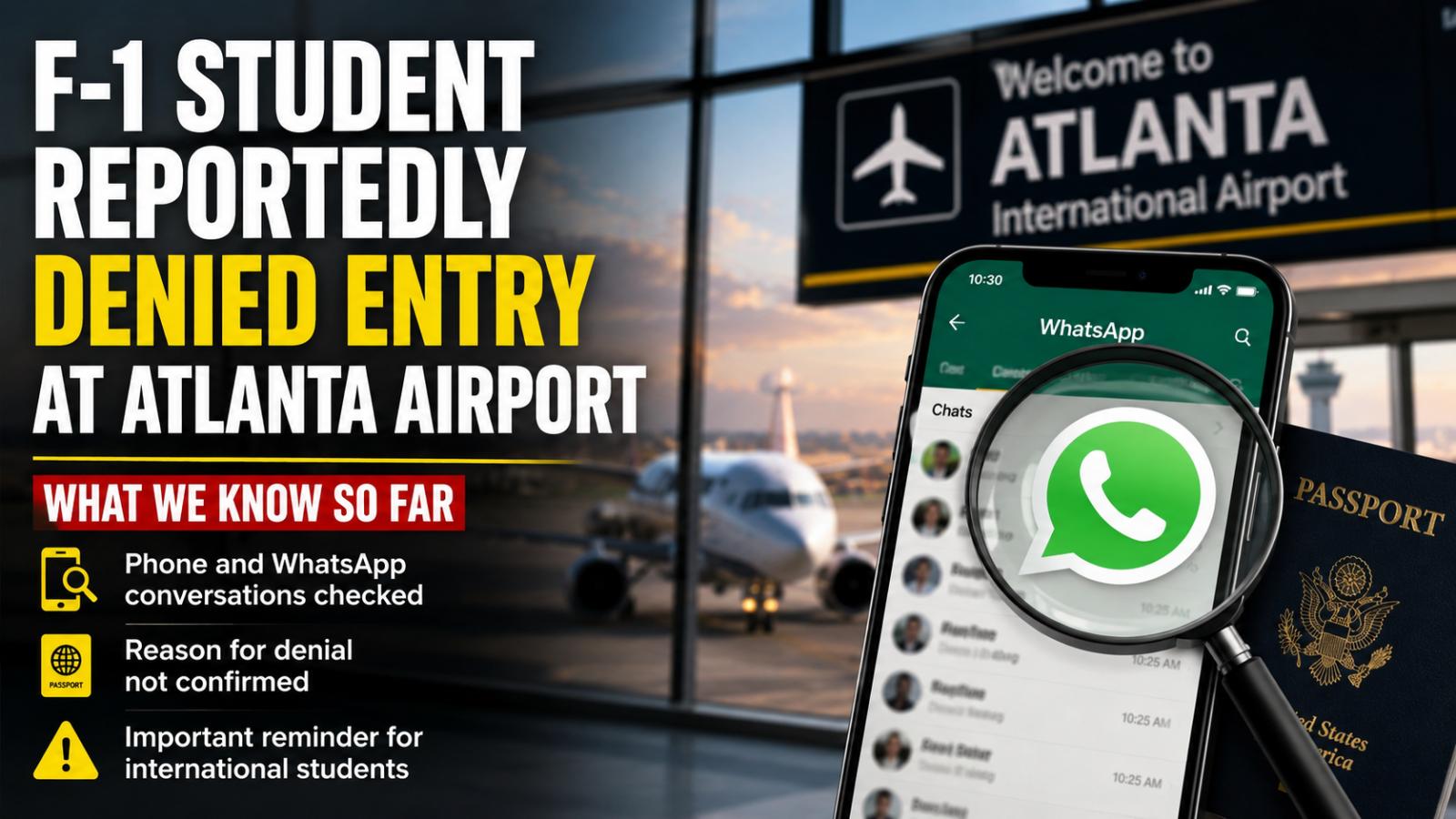
A viral post claims an F-1 student was denied entry at Atlanta airport after U.S. border officers examined his phone and reviewed WhatsApp conversations. The account has not been independently verified, and the post does not establish that group membership caused the reported decision.
F-1 Student Reportedly Denied Entry at Atlanta Airport
The post, discussed in a Times of India report published on Thursday, July 2, 2026, says the student was returning to the United States from India after a summer visit.
It alleges that officers inspected his phone and saw a WhatsApp group containing ride-related information and assignment-related content. The report did not identify the student, provide official documents or include a statement from U.S. Customs and Border Protection.
Because those details remain unconfirmed, the incident should not be described as proof that joining a WhatsApp group automatically leads to denial of entry. The officer and traveler may have had additional information that is not public.
What CBP Says About Phone Searches
CBP says all travelers entering the United States are subject to inspection. The agency also says officers may, on rare occasions, search mobile phones, computers and other electronic devices during the inspection process.
A valid F-1 visa does not guarantee admission. The State Department says a visa allows a traveler to request entry at a port of entry, while CBP officers decide whether the person may be admitted.
What F-1 Students Should Check Before Traveling
U.S. Immigration and Customs Enforcement advises continuing F-1 students to consult their designated school official before international travel. Students generally should carry a current passport, valid visa, endorsed Form I-20 and evidence of sufficient funds. Individual circumstances differ, and CBP makes the final decision.
Students should know what is shared in messaging and social-media groups, avoid illegal or academically improper activity, and answer immigration questions honestly. Anyone concerned about a specific travel or status issue should speak with a DSO or qualified immigration attorney.
The claim is a useful reminder about border screening, but it must be shared with clear disclaimers. Until official records or direct confirmation emerge, the alleged WhatsApp connection remains unverified.