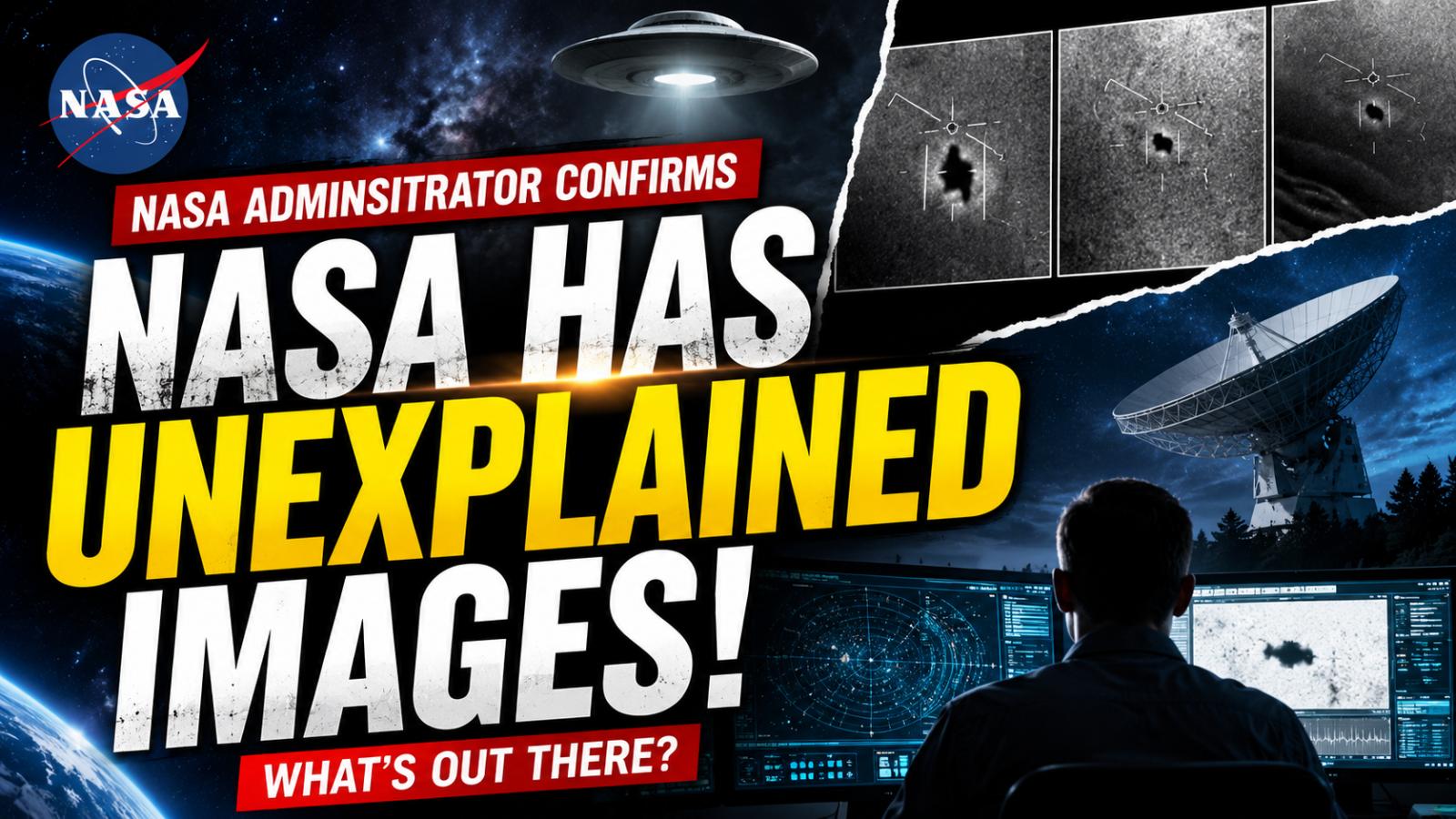
Speaking during an interview on The Jack Gordon Podcast, Isaacman said NASA had captured imagery containing objects that could not be identified using the available data. He did not say that scientists had ruled out ordinary explanations such as reflections, unusual viewing angles, atmospheric effects or human-made objects.
Isaacman noted that cameras are now widespread, increasing the number of unusual images recorded by satellites, aircraft and members of the public. Limited data can make an object impossible to classify even when it has a conventional origin.
His comments refer to unidentified anomalous phenomena, commonly called UAPs. The term describes observations that remain unidentified after an initial review; it does not mean the object came from another planet.
Isaacman rejects crashed alien spacecraft claims
Isaacman directly rejected more extreme UFO conspiracy theories. He said he had seen no evidence that the United States possesses crashed extraterrestrial spacecraft or alien bodies.
NASA has also maintained that it has not found credible evidence showing UAPs have an extraterrestrial origin. A NASA-commissioned independent study concluded in 2023 that the lack of consistent, high-quality observations makes many incidents difficult to investigate properly.
The agency’s position remains clear: some observations are unexplained because the available information is incomplete, not because alien activity has been established.
Isaacman became NASA’s 15th administrator in December 2025 after receiving Senate confirmation. His remarks came amid renewed government efforts to release more files involving unexplained aerial encounters.
Mars samples could reveal signs of ancient life
Isaacman also discussed a separate and more scientifically grounded possibility: evidence of ancient microbial life on Mars.
NASA’s Perseverance rover has collected rock and soil samples from Jezero Crater, an area believed to have contained a river and lake billions of years ago. Scientists selected the samples because they may preserve evidence of ancient habitable conditions or possible biological activity.
One sample collected from a rock known as Cheyava Falls contains features NASA has described as potential biosignatures. That classification does not confirm past life. Scientists must eliminate non-biological explanations before reaching such a conclusion.
Returning the samples to Earth would allow researchers to study them with laboratory equipment far more advanced than instruments carried by a rover. NASA describes Mars Sample Return as a future campaign, meaning the samples are still on Mars and no definitive biological evidence has been confirmed.
NASA continues search for alien life
The search for life remains one of NASA’s major scientific goals. Researchers are examining Mars, distant planets and icy moons such as Europa and Enceladus for environments that may have supported life.
Isaacman said he believes humanity could eventually learn that life is more common throughout the universe than previously assumed. That statement reflects a personal scientific expectation rather than proof that extraterrestrial organisms have been found.
The important distinction is straightforward: NASA has unidentified imagery, but it has not confirmed alien spacecraft. Mars samples may contain clues about ancient microbial life, but those clues require careful testing. Until stronger evidence emerges, claims that NASA possesses proof of aliens remain misleading.