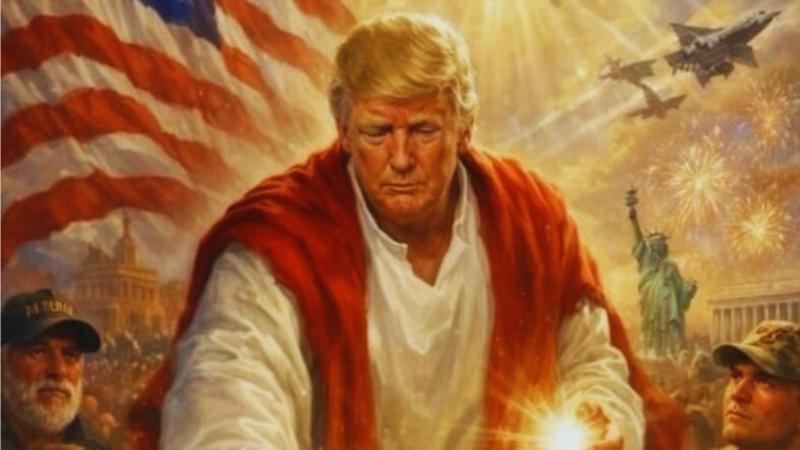
President Donald Trump faced significant backlash over a social media post featuring an image of himself styled in a manner reminiscent of Jesus Christ. The controversial image quickly spread across platforms, sparking outrage among various groups who accused Trump of attempting to portray himself as a religious figure. Critics were vocal in their disapproval, arguing that the post was disrespectful to both religious beliefs and the figure of Jesus Christ.
In response to the mounting criticism, Trump took swift action by deleting the post, though not without addressing the matter. When questioned about the image, Trump vehemently denied any intent to portray himself as Jesus. He claimed that the post was simply a harmless attempt at humor or self-promotion, not a religious statement. Despite his denial, the damage was already done, with many followers and critics alike taking to social media to express their dismay.
The incident raises important questions about the fine line between humor, self-promotion, and cultural sensitivity, particularly when public figures like Trump use their social media platforms. As the debate continues, the post and its aftermath highlight the complexities of navigating online media in an age where every action is scrutinized and can have far-reaching consequences.
Though Trump’s team has since made efforts to distance him from the controversy, the deleted post remains a point of discussion in both political and religious circles. As this story develops, it serves as a reminder of the power and impact social media can have on shaping public perception and sparking societal debates.