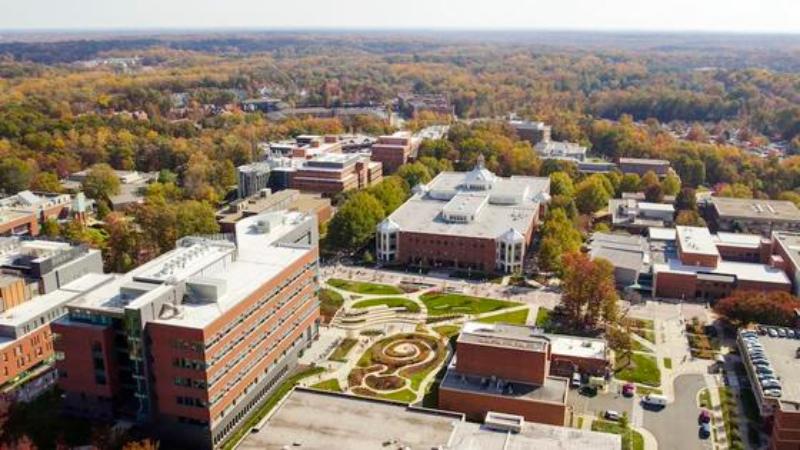
George Mason University President Gregory Washington will continue to lead the institution after the Board of Visitors voted to retain him in his role and approved a 1.5 percent salary increase, bringing his annual compensation to $823,452. The decision came during a closed-door board meeting held on Friday in Fairfax, Virginia, which coincided with protests by students, faculty, and community members opposing what they called political interference in university governance.
The demonstration, labeled a “Day of Action,” was organized in response to concerns that political influence from state leaders could pressure the board into removing Washington. The university, Virginia’s largest public institution, is currently facing four federal investigations into its diversity, equity, and inclusion policies, two of which relate to allegations of racial discrimination in hiring practices. Washington, the first Black president of George Mason University, has been at the center of these inquiries. In July, the Department of Justice sent a letter accusing him of using race and sex to guide hiring decisions as part of diversity goals. Washington defended the university’s efforts, asserting that long-standing initiatives to promote inclusivity and mentorship are being unfairly reinterpreted as unlawful.
Despite the federal scrutiny, the board’s vote to retain Washington was met with applause from many supporters. Faculty members such as Professor Benjamin Manski praised the decision, stating that it demonstrated the community’s ability to defend public institutions against external political pressure. Washington, during a presentation ahead of the board meeting, highlighted the university’s accomplishments under his leadership. He noted that George Mason has successfully raised hundreds of millions of dollars in state appropriations, increased student enrollment, and enhanced auxiliary enterprise revenues. This growth, he said, allowed the university to prevent a tuition hike for students.
Washington also pointed out that GMU currently holds a $38 million budget surplus, though it remains underfunded by up to $6,000 per student, equating to a shortfall of approximately $150 million compared to other universities. His future plans include expanding capital projects, fostering stronger public-private partnerships, integrating artificial intelligence into academics and operations, and better preparing students for economic uncertainties.
Following the board’s decision, Vice Rector Michael Meese simply stated, “The vote speaks for itself,” when asked whether the board has full confidence in Washington. The university released a statement describing the day as an inspiring display of unity and reaffirming the importance of George Mason University to the families and economy of northern Virginia. Administrators emphasized their focus on welcoming the incoming class of 2025, described as the largest, most diverse, and among the most qualified in the school’s history.
However, the protests also highlighted broader concerns. Organizers criticized what they described as a “hostile Trump-Youngkin takeover,” accusing Virginia Governor Glenn Youngkin of exerting undue influence over higher education institutions. Professor Tim Gibson, president of the Virginia Conference of the American Association of University Professors, underscored that public universities must remain independent from political interference, particularly when it comes to decisions about hiring and policy development.
Not everyone within the university shares Washington’s vision or supports the DEI policies under investigation. Economics Professor Bryan Caplan, a known critic of diversity initiatives, expressed his belief that the federal allegations hold merit. He argued that informal pressure to make race-based hiring decisions has existed at GMU and pointed to written documents as evidence. Caplan also noted a culture of self-censorship among faculty members who fear backlash for expressing similar viewpoints.
The ongoing federal investigations continue to cast a shadow over the university’s diversity policies, but the board’s decision indicates a vote of confidence in Washington’s leadership. For many, the episode reflects broader debates over the role of diversity programs in higher education and the balance between institutional autonomy and political oversight.
As George Mason University prepares for the start of the academic year, the community is turning its attention back to education, research, and innovation, even as the controversies surrounding DEI policies remain unresolved. The outcome of the federal investigations could still have significant implications for the university’s future, but for now, Gregory Washington remains at the helm, steering GMU through a period of both challenge and opportunity.