Denmark and Greenland reject takeover rhetoric
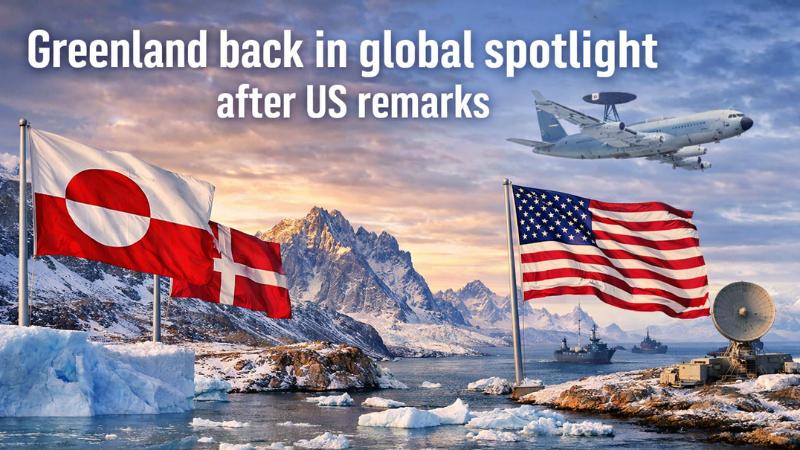
Denmark, which is responsible for Greenland’s defense, reacted firmly to the remarks. Prime Minister Mette Frederiksen said discussions about the United States taking over Greenland made no sense and stressed that Washington has no right to annex any part of the Danish kingdom. Greenland’s Prime Minister Jens-Frederik Nielsen also condemned the rhetoric, calling it disrespectful and reiterating that the island is not for sale. Political unity on the issue remains strong, with all parties in Greenland’s parliament having previously rejected any proposal to join the United States.
Arctic shipping routes boost Greenland’s importance
Greenland’s location places it near several emerging Arctic shipping corridors that are gaining importance as sea ice retreats. These include the Northwest Passage along Canada’s Arctic coast, Russia’s Northern Sea Route, and the future Transpolar Route across the central Arctic Ocean. As these routes become increasingly viable for commercial shipping, Greenland’s proximity to them enhances its strategic and economic relevance in global trade.
Critical role in the GIUK gap
Greenland sits within the Greenland-Iceland-United Kingdom gap, a vital maritime corridor connecting the Atlantic Ocean with the Arctic. European security assessments describe the GIUK gap as essential for monitoring naval traffic between North America and Europe. Control of this area enables NATO to safeguard sea lanes, detect underwater threats, and respond to growing Russian naval and hybrid activities. In a conflict scenario, the corridor would be key to the rapid deployment of allied forces across the Atlantic.
A long-standing NATO and US defense presence
Greenland has been part of NATO for decades and has maintained a defense agreement with the United States through Denmark since 1951. The island hosts the Pituffik Space Base, a critical installation supporting missile defense, space surveillance, and early warning systems. Its Arctic position is particularly valuable for operating polar-orbiting satellites used for intelligence, navigation, and missile detection, reinforcing NATO’s deterrence capabilities in the High North.
Vast mineral wealth beneath the ice
Greenland’s untapped natural resources are another major factor driving international interest. Geological studies show the island contains large deposits of critical minerals, including rare earth elements, lithium, and graphite, all of which are essential for modern technologies and energy transitions. European and US assessments indicate Greenland holds a significant share of minerals considered vital for economic stability and national security. While development has been limited by environmental concerns and harsh conditions, competition over critical mineral supply chains has elevated Greenland’s strategic value.
Colonial history and sovereignty debates
Greenland was a Danish colony until 1953, when it became part of the Danish state. Expanded self-rule in 2009 granted the island the right to pursue independence in the future, although it remains financially dependent on Danish support. Issues of sovereignty, self-determination, and economic sustainability continue to shape Greenlandic politics and influence how external interest is viewed by its population.
Political messaging fuels diplomatic tension
The controversy intensified after a social media post by Katie Miller, wife of Trump’s deputy chief of staff, showed Greenland colored like the US flag with the word “soon.” The image drew sharp criticism and added to diplomatic unease. Danish and Greenlandic leaders have since emphasized respect for international law and territorial integrity.
Strategic interest set to persist
While Denmark and Greenland have firmly rejected any suggestion of annexation, the renewed focus highlights Greenland’s rising importance in global security, Arctic navigation, and resource competition. As climate change reshapes the Arctic and great-power rivalry intensifies, Greenland is likely to remain a strategic focal point in international geopolitics.