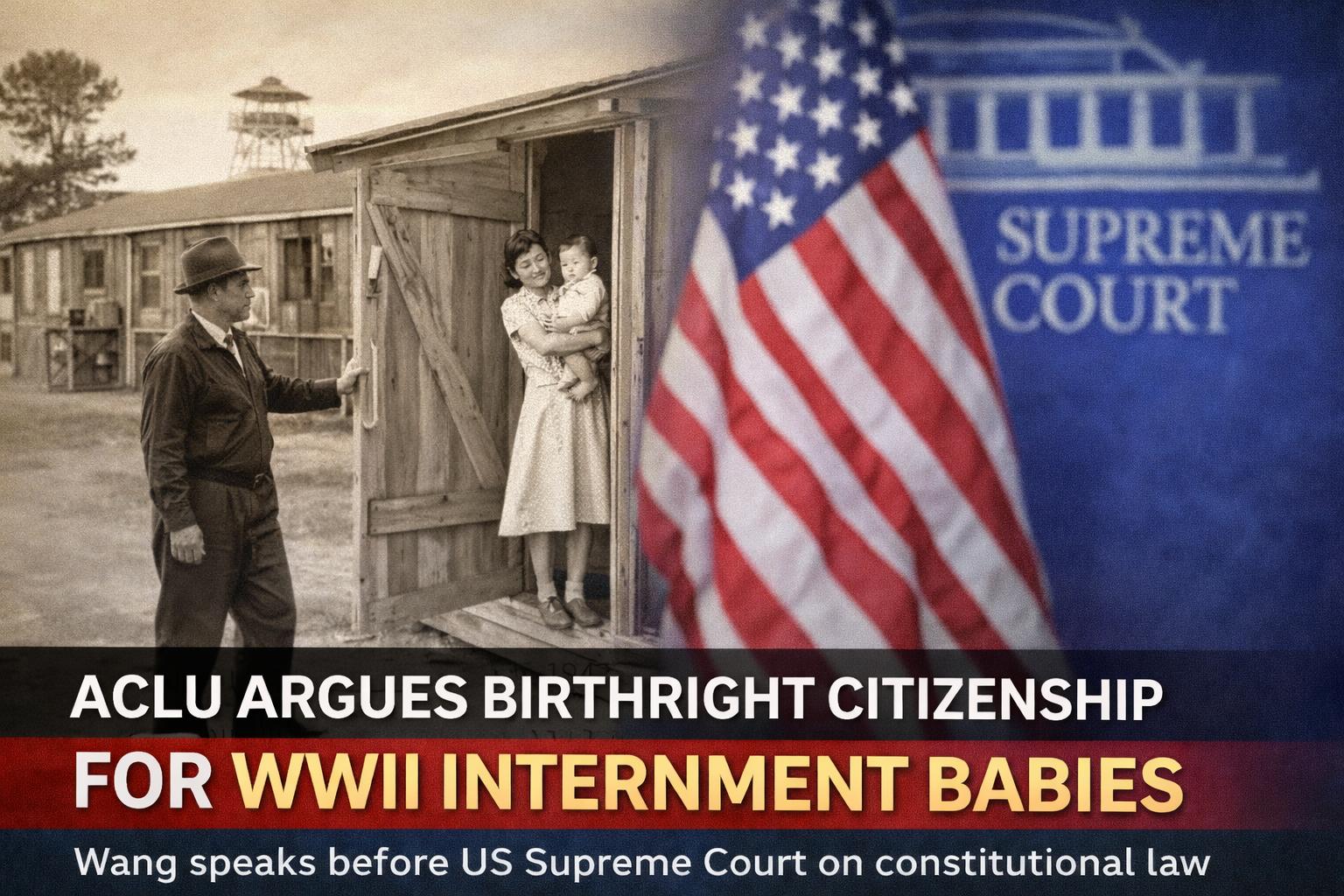
An attorney for the American Civil Liberties Union argued before the U.S. Supreme Court that historical precedent supports granting citizenship to individuals born on American soil, referencing births during World War II-era Japanese internment as a key example. During an exchange with Justice Amy Coney Barrett, ACLU lawyer Wang pointed to the treatment of children born in U.S. detention camps, emphasizing that such individuals were widely recognized as American citizens under existing law.
Wang explained that even at a time when Japanese nationals were detained as enemy aliens, the legal system maintained a clear distinction regarding citizenship for children born within the United States. According to her argument, there was broad agreement that those children automatically received U.S. citizenship, reinforcing the principle of birthright citizenship rooted in the 14th Amendment. She noted that some of those individuals later went on to serve in various roles within the U.S. government, further underscoring their recognized status as citizens.
The argument was presented as part of a broader legal discussion about the interpretation of citizenship laws and constitutional protections. Wang used the historical example to highlight consistency in how the United States has applied the concept of citizenship by birth, even during periods of national conflict and heightened security concerns.
In addition to the internment example, Wang addressed the unique legal status of Native American tribes at the time the 14th Amendment was adopted. She described tribal nations as having a “constitutionally unique status,” noting that they were historically treated as quasi-foreign nations within the U.S. legal framework. This distinction, she suggested, reflects the complexity of citizenship law and its evolution over time.
The discussion before the court focused on how constitutional principles, legal history, and prior interpretations shape current debates over citizenship and immigration law. By referencing both wartime policies and the legal position of Native American tribes, Wang sought to provide a broader context for understanding how birthright citizenship has been applied across different periods in U.S. history.
The exchange highlights the continuing importance of constitutional interpretation in shaping modern legal debates, particularly on issues tied to civil rights, immigration, and national identity.