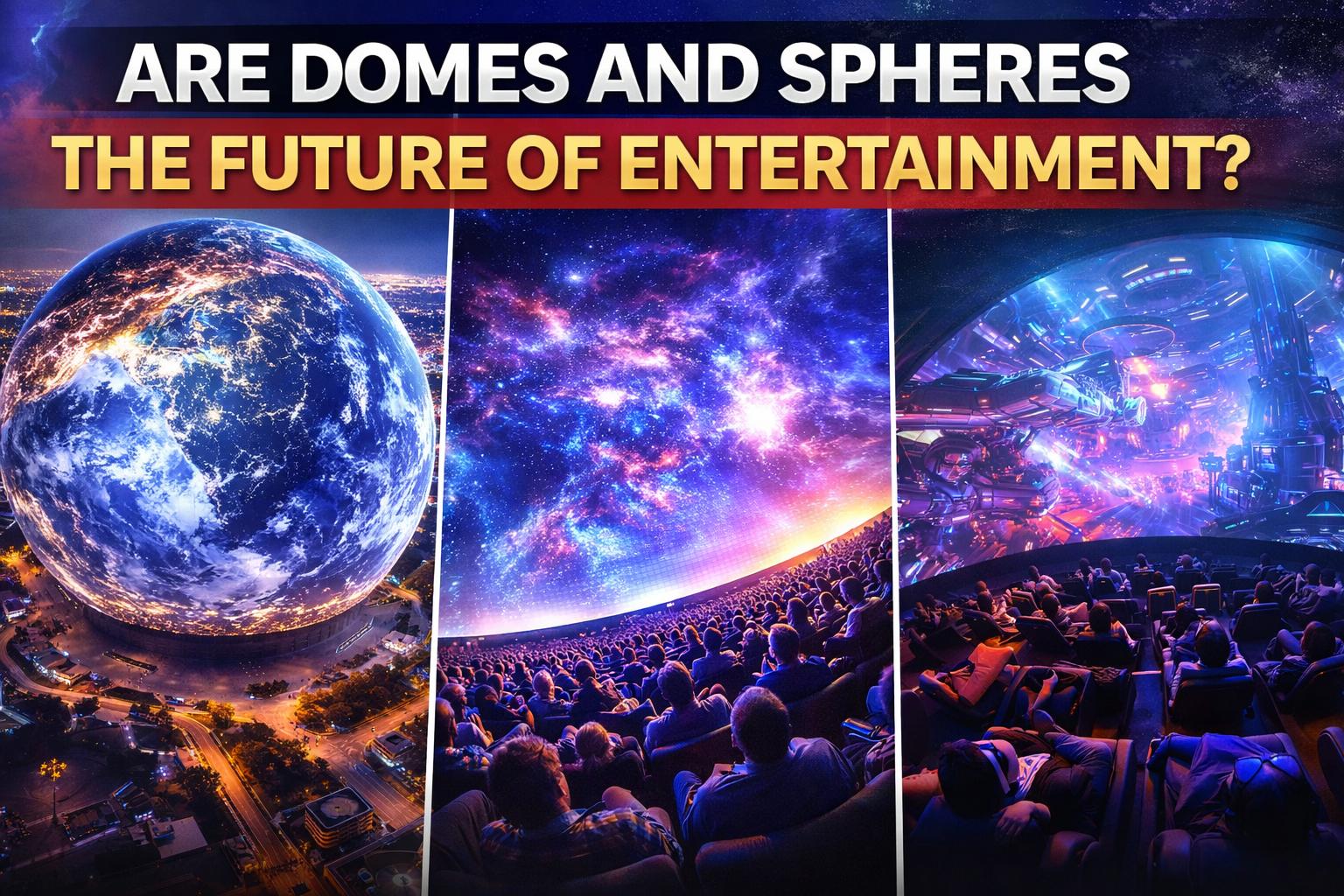
Entertainment in the United States is rapidly evolving as audiences seek more immersive and engaging experiences beyond traditional movie theaters. A growing trend in this shift is the rise of domes and spherical venues, designed to surround viewers with 360-degree visuals and advanced sound systems. These spaces transform passive viewing into an interactive environment where audiences feel part of the content.
One of the most recognized examples is the Sphere in Las Vegas, a large-scale venue that combines curved screens with spatial audio to create a fully immersive setting. In such environments, visuals extend across the entire field of view, while sound is delivered from multiple directions, enhancing realism and engagement.
The increasing popularity of immersive domes and sphere venues is driven by demand for unique entertainment formats. Concerts, gaming, and live events are being redesigned to take advantage of these technologies, offering audiences experiences that traditional screens cannot replicate. Educational institutions are also adopting dome-based systems to create interactive learning environments, particularly in science and space-related fields.
Despite their advantages, dome theaters and spheres face challenges, including high construction costs and the need for specialized content. These factors may limit widespread adoption in the short term. However, as technology advances and production becomes more accessible, these immersive venues are expected to expand across major cities.
While they may not replace conventional theaters, domes and spheres represent a significant step forward in entertainment innovation. Their ability to combine technology, storytelling, and audience interaction suggests they will play an important role in shaping the future of entertainment in the United States.