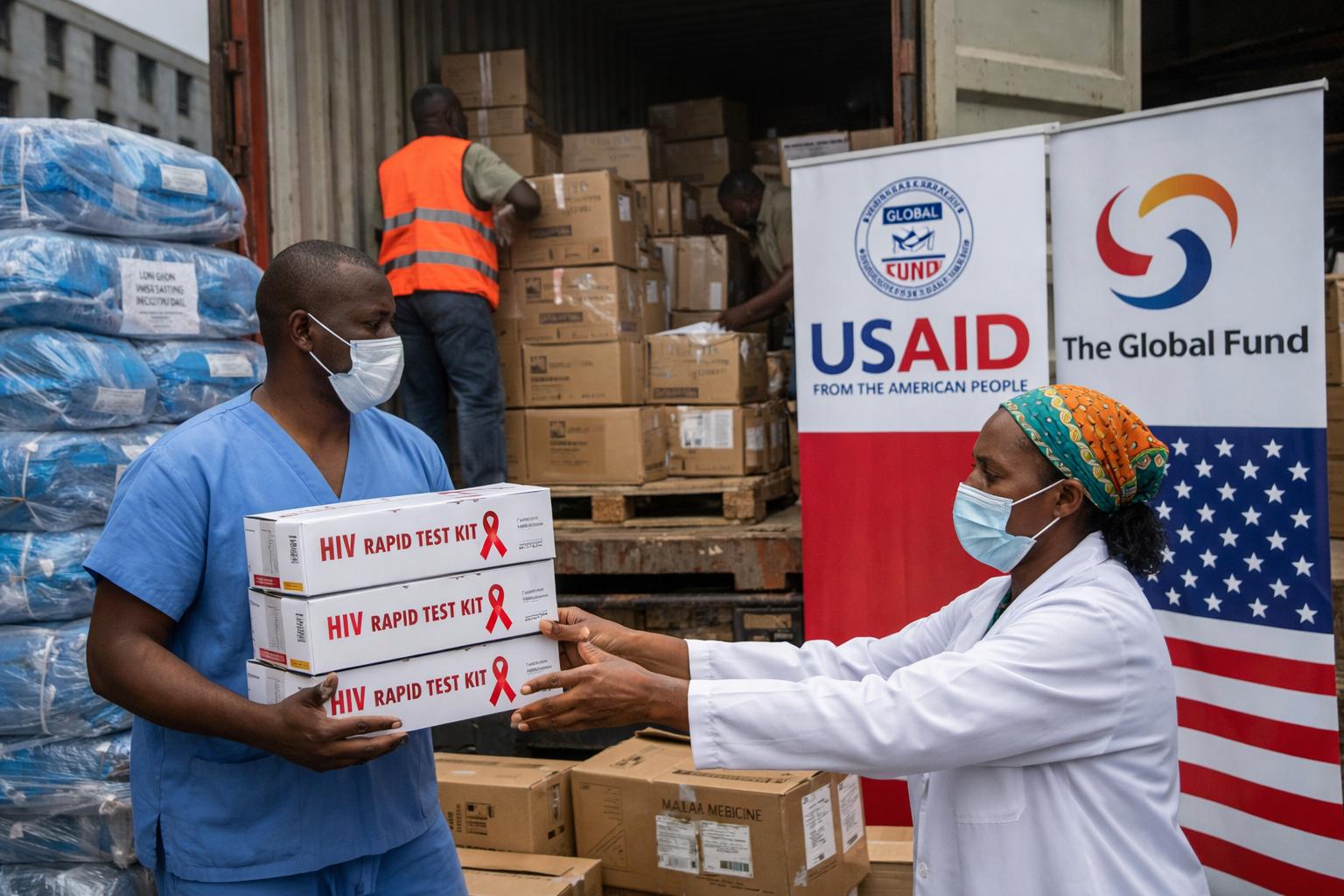
NAIROBI/LONDON — Friday, April 3, 2026 — The United States is restructuring how it delivers critical medical supplies for diseases such as HIV and malaria to lower-income countries, a move that officials and experts warn could disrupt life-saving services across multiple regions.
For nearly a decade, the U.S. managed its medical aid through the Global Health Supply Chain Program, overseen by private contractor Chemonics. Between 2016 and 2024, the program distributed more than $5 billion worth of HIV and malaria treatments and prevention tools to roughly 90 countries, primarily in sub-Saharan Africa and parts of Asia.
That system was first disrupted in January 2025, when President Donald Trump halted international aid on the first day of his presidency. The decision left large quantities of medical supplies stranded in ports and warehouses, including antiretroviral drugs and insecticide-treated bed nets. Although a waiver later allowed the resumption of some life-saving shipments, uncertainty has persisted.
The latest shift comes as the administration reduces foreign aid spending, dismantles the U.S. Agency for International Development (USAID), and transitions away from contractor-led programs toward direct agreements with recipient governments. According to multiple sources, the U.S. State Department instructed staff in 17 African countries and Haiti via an internal email sent on Tuesday, April 1, 2026, to begin phasing out the current supply program by Friday, May 30, 2026.
The same communication noted that the Chemonics contract would end on Tuesday, September 30, 2026, aligning with broader USAID program closures. However, officials cautioned that a rushed transition could create immediate risks to service continuity, potentially leading to shortages of essential medicines.
Experts familiar with the process say the timeline is particularly challenging because procuring and delivering medical products to remote regions can take up to a year. Rapid changes could therefore interrupt treatment for patients relying on consistent access to HIV medications and malaria prevention tools.
The U.S. government is reportedly exploring collaboration with the Global Fund to Fight AIDS, Tuberculosis and Malaria, which already manages approximately $2 billion in annual health procurement. Still, negotiations remain unclear, and earlier discussions had anticipated a transition closer to November 2027.
The administration’s broader “America First” global health strategy emphasizes direct funding to national governments and increased use of private logistics firms. Officials argue the previous system was inefficient and costly, while critics warn that abrupt structural changes could weaken established supply chains.
Recent bilateral agreements have been signed with several countries, including Kenya, Rwanda, and Uganda, though implementation details are still under negotiation. Legal and administrative challenges in some regions continue to delay progress, adding to concerns about potential disruptions in critical healthcare delivery systems.


 Joyful
0%
Joyful
0%
 Cool
0%
Cool
0%
 Thrilled
0%
Thrilled
0%
 Upset
0%
Upset
0%
 Unhappy
0%
Unhappy
0%