Last Updated: July 18, 2026
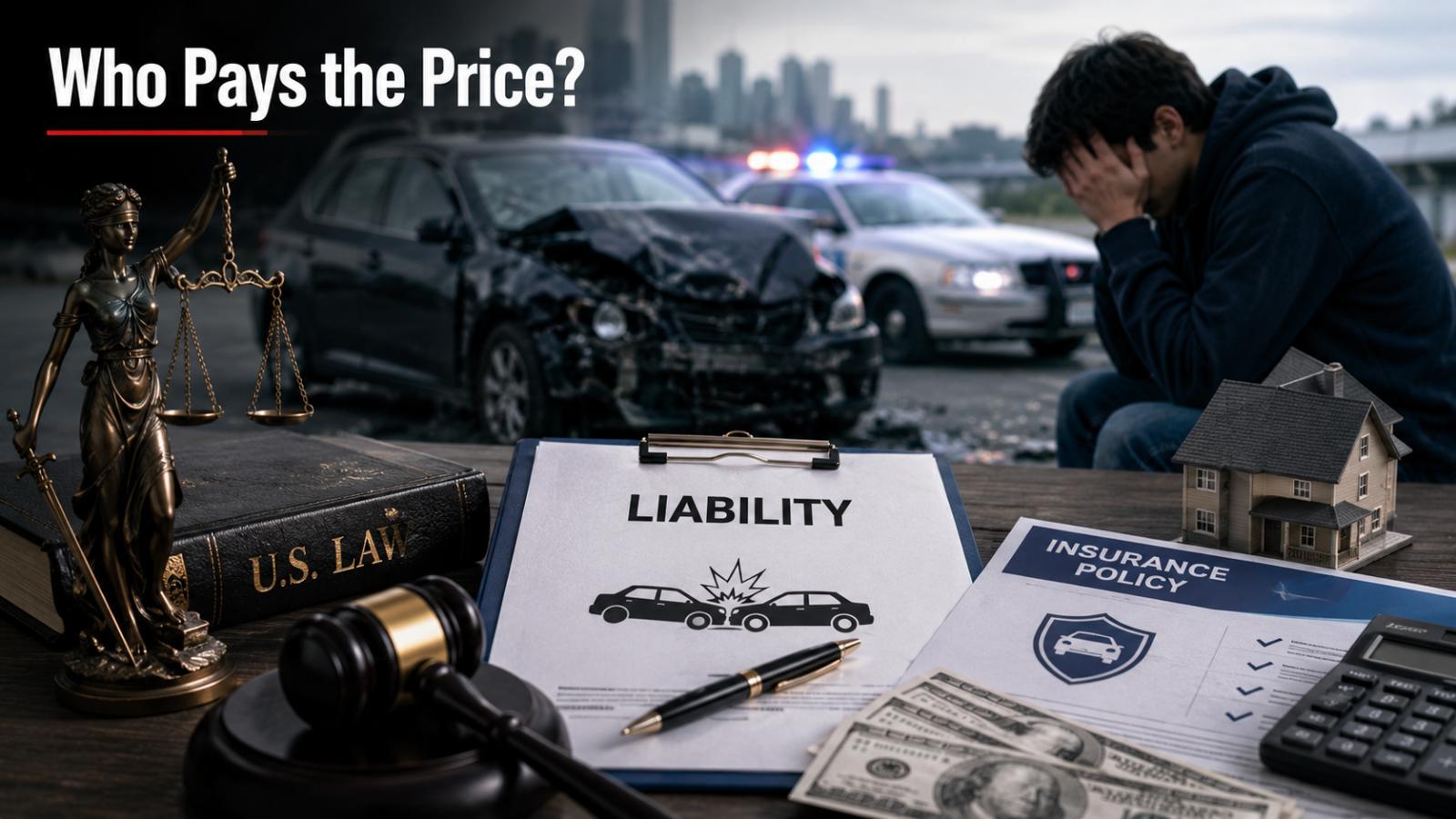
If an international student causes a fatal car crash in the United States, responsibility depends on the investigation, insurance coverage and state law. This guide explains liability insurance, claims against the student's estate, wrongful-death lawsuits, family responsibility and what happens when there is little or no insurance.
If an international student is found responsible for a fatal car crash in the United States, financial responsibility does not automatically fall on the student's family. Instead, liability is generally determined through the insurance policy, the student's estate and applicable state laws.
The outcome depends on the official investigation, available insurance and the circumstances of the collision.
Families may first need to understand what happens when an Indian student dies in a U.S. car crash before dealing with insurance and liability claims.
Auto Insurance Is Usually the First Source of Payment
If the student had valid auto insurance, the insurer generally handles covered claims within the policy limits. Liability insurance may compensate injured people or the families of those who died, subject to the terms and coverage limits of the policy.
If another person caused the collision instead, the family may have different rights to compensation after a U.S. student car crash.
If damages exceed those limits, additional legal claims may still be possible.
Can the Student's Estate Be Held Responsible?
Yes. If insurance does not fully cover the losses, claimants may seek compensation from the deceased student's estate. An estate generally includes the person's assets and legal interests that remain after death.
Separate student, travel or accidental-death policies may also provide benefits. Families should check whether Indian students in the U.S. have insurance and what those policies cover.
Whether compensation is available depends on the estate's value, state law and the outcome of any legal proceedings.
Are Parents Personally Liable?
In most situations, parents or family members are not personally responsible simply because they are related to the student.
However, liability could differ if a family member separately guaranteed a financial obligation, jointly owned property involved in the claim or had another independent legal responsibility. These situations are fact-specific and depend on applicable law.
What Happens If There Is No Insurance?
If the student had no applicable insurance or the coverage was insufficient, injured parties or the families of those who died may pursue claims against the student's estate.
When the crash involves a hired vehicle, responsibility may also depend on the rental agreement and optional protection. Read the rental car insurance guide for Indian students in the U.S. for details.
Recovery may be limited if the estate has few or no assets. In some situations, other insurance policies or uninsured or underinsured motorist coverage may also become relevant.
Criminal and Civil Proceedings
A fatal crash may involve both civil and criminal investigations. Civil claims focus on financial compensation, while criminal proceedings examine whether any traffic or criminal laws were violated.
If the student dies in the crash, criminal prosecution against that person generally does not continue. Civil insurance and estate matters, however, may still proceed where permitted by law.
Why the Investigation Matters
Police investigators, insurance companies and, where necessary, the courts determine responsibility based on evidence gathered after the crash. Until those findings are complete, it is inappropriate to assume who was legally at fault or who must pay compensation.
Families arranging the return of a deceased student should also check whether student insurance covers repatriation to India, because health insurance alone may not include this benefit.
Understanding how insurance, estate law and liability work can help families better navigate a difficult legal process without making incorrect assumptions about their financial obligations.