Trump Unveils Anti-Drone Technology Incubator Initiative
The Trump anti drone technology initiative seeks to accelerate next-generation counter-drone systems through partnerships with private companies. The program aims to strengthen US battlefield readiness and homeland security as drone attacks become an increasingly significant global threat.
US Counter-Drone Program
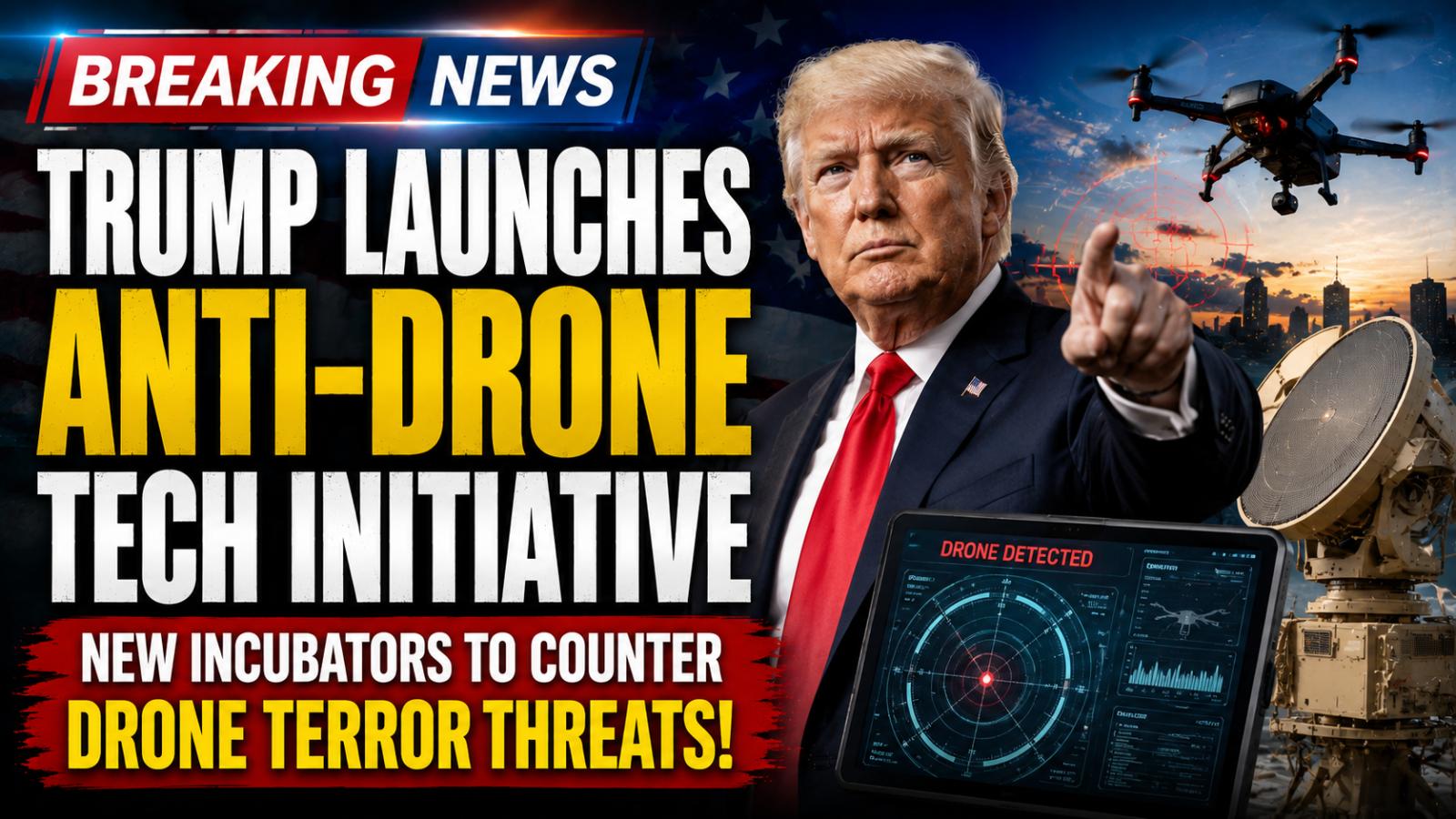
President Donald Trump has highlighted a new effort to strengthen America's ability to counter hostile drones by encouraging innovation through private-sector technology incubators. Although Trump did not make a formal announcement, he shared a news report on Truth Social outlining the administration's strategy to support companies developing advanced drone and counter-drone capabilities.
The initiative reflects growing concern within the US government over the rapid spread of inexpensive unmanned aerial systems that can be used for surveillance, precision strikes and attacks on civilian infrastructure. Officials say the goal is to ensure that the United States develops both offensive and defensive drone technologies domestically rather than relying on foreign suppliers.
Dr. Sebastian Gorka, Senior Director for Counterterrorism at the National Security Council, said the administration wants to act as a catalyst by bringing together innovative private companies capable of producing the next generation of drone technology for American warfighters.
Private Drone Incubators
According to administration officials, private-sector incubators will compete to develop solutions that improve battlefield awareness and rapidly defeat hostile drones. The concept focuses on identifying emerging technologies before they reach large-scale production and accelerating their deployment through government partnerships.
One company highlighted in the initiative is Space Eyes, whose Morpheus Counter-Unmanned Aerial System combines artificial intelligence, advanced radio-frequency processing and quantum-resistant cybersecurity to detect, identify and neutralise drone threats within seconds.
Derek Gordon, President of National Security at Space Eyes, said the growing use of drones at major public events demonstrates why governments need faster and more adaptable defence technologies. He noted that inexpensive commercial drones can create significant security challenges while requiring costly resources to counter.
Drone Warfare Preparedness
The administration argues that recent conflicts have transformed the nature of modern warfare. During the Russia-Ukraine war, both sides extensively used first-person-view drones for reconnaissance and precision attacks, while long-range drones became an important tool for striking military infrastructure.
Similarly, Hamas used drones during the October 2023 attacks on Israel for surveillance and explosive delivery, highlighting how relatively inexpensive systems can play a major role in large-scale conflicts.
Lawmakers have also called for defence spending to better reflect changing threats. Representative Glenn Grothman said Congress should ensure future defence budgets prioritise counter-drone capabilities rather than outdated procurement programmes. He also suggested additional funding for state and local governments to improve protection against drone-related threats.
Homeland Drone Security
Officials say the challenge extends beyond overseas battlefields. The FBI recently announced that it disrupted an alleged plot involving explosive-laden drones targeting a major public event in Washington, reinforcing concerns that unmanned aircraft could be used in future attacks on US soil.
Authorities are also reporting increased attempts to use drones for smuggling drugs, mobile phones and weapons into correctional facilities. Prison systems across the United States have responded by deploying drone detection systems, physical barriers and expanded restricted airspace around sensitive locations.
Security experts believe these incidents demonstrate that counter-drone technology is becoming essential not only for military operations but also for protecting public events, government facilities, transportation infrastructure and critical services.
As drone capabilities continue to evolve, the Trump administration hopes partnerships with private industry will accelerate innovation and keep the United States ahead of emerging aerial threats. Officials argue that combining government investment with commercial expertise could produce faster, more cost-effective solutions than traditional defence procurement alone.