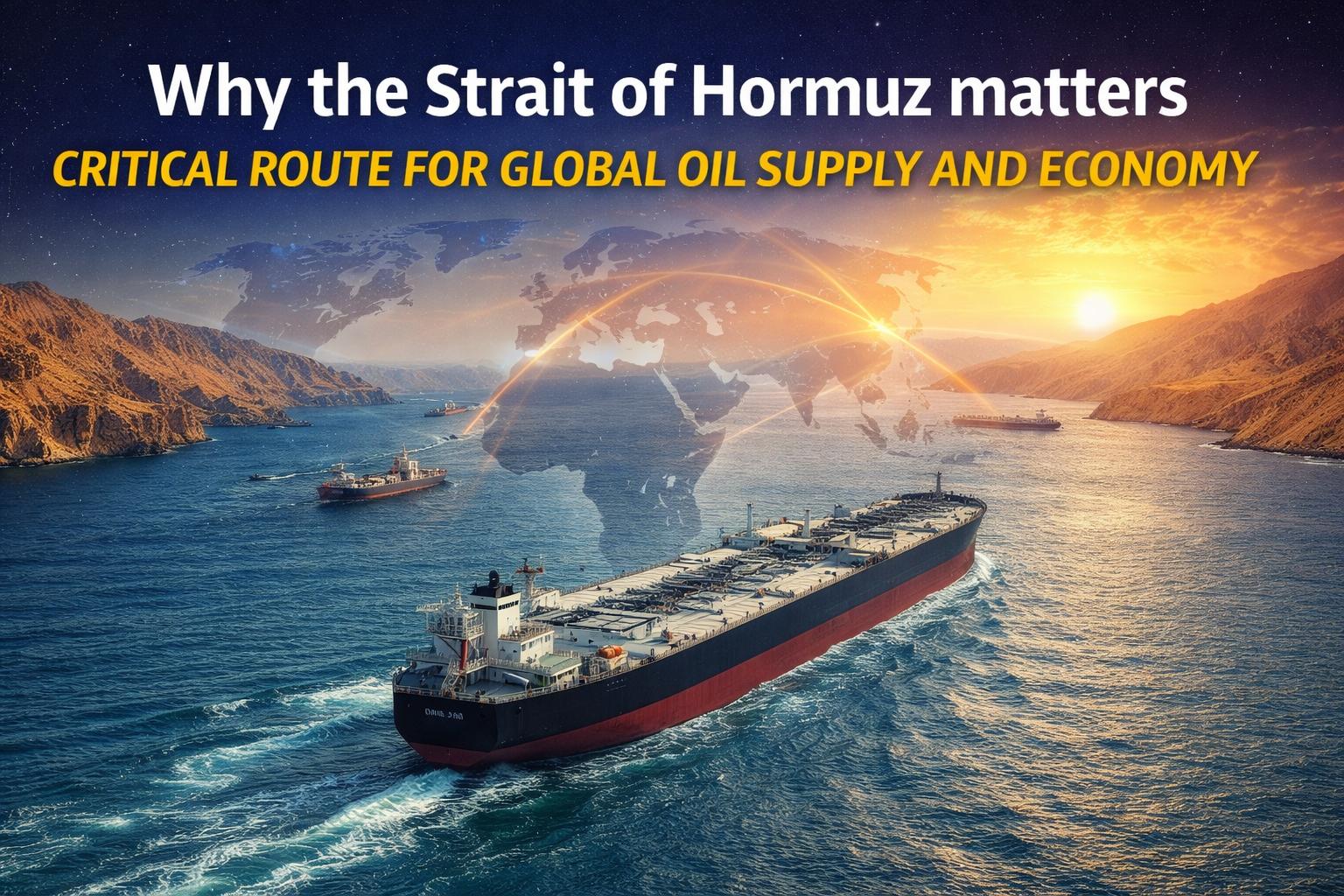
The Strait of Hormuz, a narrow waterway connecting the Persian Gulf to the open ocean, remains one of the most strategically important routes in the global economy. Located between Iran and Oman, this passage serves as a critical channel for transporting oil from major producing countries to markets around the world.
A significant portion of the world’s oil supply moves through this route each day, making it essential for maintaining stable energy markets. Because many countries rely heavily on imported oil, any disruption in the Strait of Hormuz can have immediate and widespread economic consequences. Even a temporary slowdown in shipping traffic can reduce supply and push oil prices higher.
Rising oil prices often lead to increased costs for fuel, transportation, and goods, affecting businesses and consumers alike. This impact is felt globally, including in the United States, where higher fuel costs can influence everything from travel expenses to grocery prices. As a result, the stability of this waterway is closely monitored by governments and industries worldwide.
The region surrounding the strait has long been marked by geopolitical tensions, which adds to its vulnerability. Concerns about potential conflicts or security threats can quickly create uncertainty in global markets. Even without direct disruptions, the possibility of instability can drive price fluctuations and increase economic pressure.
Unlike land-based routes, there are limited alternatives for transporting such large volumes of oil, making the Strait of Hormuz uniquely important. Its role in global trade highlights how interconnected modern economies are, where events in one region can influence financial conditions across continents.
As countries continue to explore alternative energy sources, the importance of this route remains central for now. The Strait of Hormuz continues to function as a vital lifeline for global energy supply, underscoring its influence on both regional stability and the broader world economy.