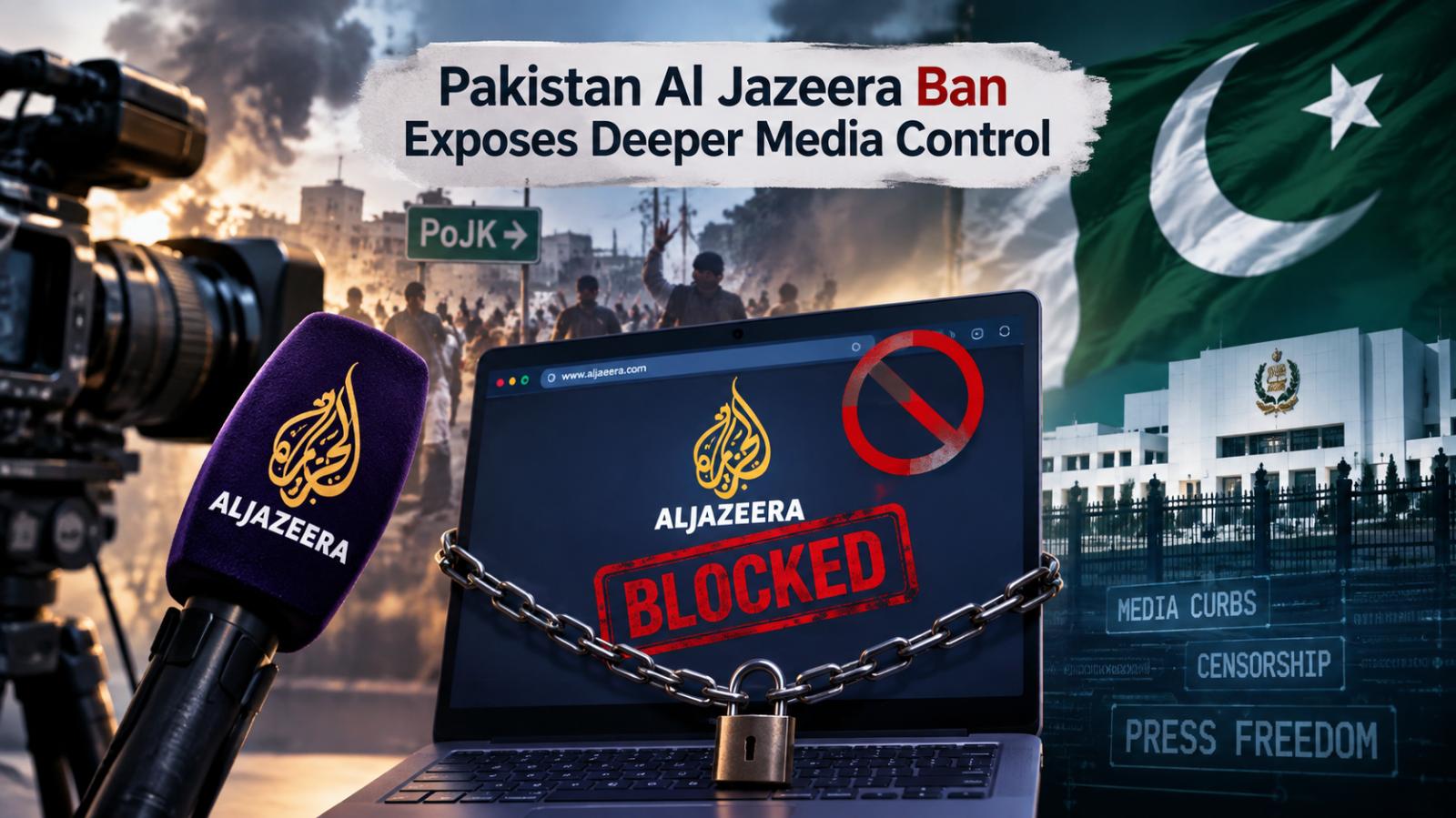
Pakistan’s criticism of Al Jazeera over its coverage of election-related violence in Pakistan-occupied Jammu and Kashmir has exposed a deeper issue: the dispute appears less about religion and more about scrutiny. The episode has renewed concerns about media freedom and digital censorship.
PoJK unrest raises difficult questions
The controversy followed unrest and allegations of electoral irregularities in PoJK. Pakistan’s Ministry of Information and Broadcasting accused Al Jazeera of using selected polling stations and scripted statements in its coverage. Instead of directly answering questions about the violence, public anger and conduct of authorities, the official response focused on the broadcaster’s motives.
A stronger response would have presented evidence and permitted independent verification. Criticising the channel does not explain why residents protested, whether security forces used proportionate force or whether the election process met credible standards.
New Delhi maintains that Jammu and Kashmir, including the areas under Pakistan’s control, remains an integral part of India. Pakistan disputes that position and presents the territory as part of the wider Kashmir dispute.
Media curbs weaken the religious argument
The episode also challenges Pakistan’s use of religious rhetoric in regional politics. Army spokesperson Lieutenant General Ahmed Sharif Chaudhry recently used the term “kafirs” while criticising Afghanistan’s developing relationship with India.
However, Al Jazeera operates from Qatar, a Muslim-majority country that has maintained close diplomatic relations with Pakistan. The contradiction suggests the issue is not the religion or identity of the critic. It is criticism that challenges the state’s preferred account of events.
Religious framing may serve political messaging when disputes involve India, but it becomes harder to sustain when questions come from an influential media organisation based in Doha.
Web block reports need transparency
Users in Pakistan reported difficulty accessing Al Jazeera’s website after the government’s criticism. However, no publicly notified prohibition from the Pakistan Telecommunication Authority or the information ministry was visible at the time of reporting. Without a formal order, the cause and legal basis of the reported restriction remain difficult to verify.
Pakistan’s online content rules allow authorities to order the removal or blocking of material under Section 37 of the Prevention of Electronic Crimes Act. The PTA’s published regulations confirm that it can exercise blocking powers under this provision.
Such powers require transparent procedures, clear reasons and meaningful avenues for appeal. Websites disappearing without public orders make it difficult for journalists, readers and digital-rights groups to establish who authorised a restriction or why.
Press risk goes beyond one channel
Pakistan’s media environment has faced criticism over legal pressure, military influence, restricted access and online controls. Reporters Without Borders ranks Pakistan 153rd among 180 countries in its 2026 World Press Freedom Index, with a score of 32.61.
The concern extends beyond Al Jazeera. Local and foreign journalists have faced difficulties covering politically sensitive territories, security operations and unrest. Blocking or limiting access to critical reporting may reduce immediate public attention, but it also damages institutional credibility and encourages speculation.
Scrutiny is the real faultline
Governments uncomfortable with independent journalism often question reporters’ motives, invoke national security and restrict information instead of answering difficult questions.
In this case, the religious argument weakens because the criticism came from a Qatari broadcaster rather than a country Pakistan could portray as hostile to Islam. The more convincing conclusion is that Pakistan’s establishment is not resisting criticism because of the critic’s religion. It is resisting scrutiny and the inconvenient questions created by independent reporting.