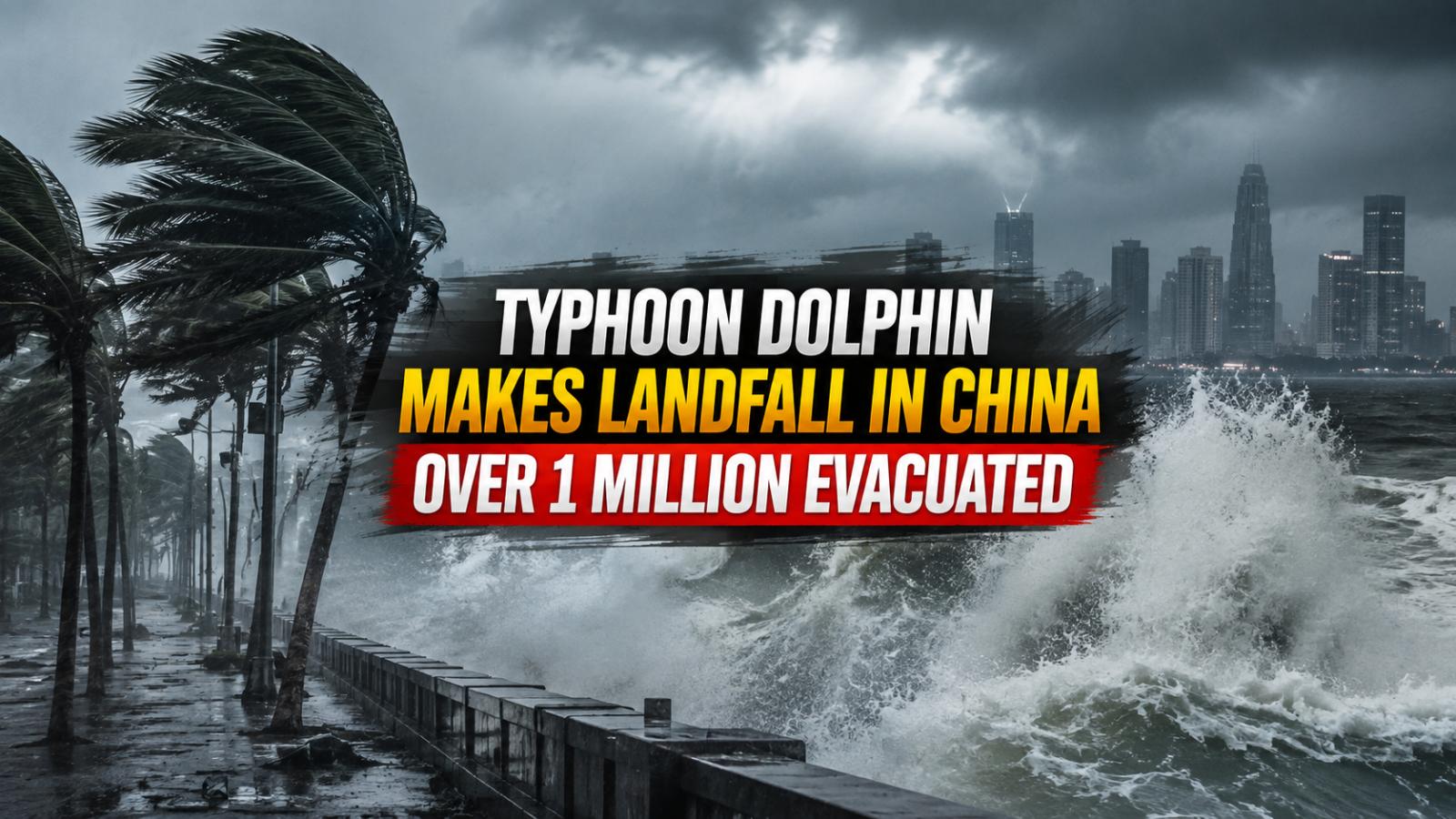
Typhoon Dolphin China landfall brought destructive winds and torrential rain to Zhejiang, forcing more than one million evacuations. Shanghai flights faced major disruption as authorities warned of flooding, landslides and prolonged heavy rain while the cyclone moved inland.
Typhoon Dolphin China Landfall Hits Zhejiang
Typhoon Dolphin made landfall near Yuhuan in Zhejiang province at about 5:30 p.m. local time on Sunday, August 9, according to China’s National Meteorological Center. The storm carried maximum sustained winds of about 42 metres per second, or 151 kmph, near its centre at landfall.
Chinese authorities described Dolphin as the strongest tropical cyclone to strike the country so far in 2026. The system later made a second landfall at Yueqing in Zhejiang at around 6:40 p.m., where sustained winds near the centre reached about 38 metres per second.
China Evacuations Expand as Flood Risk Rises
More than one million people were evacuated from threatened areas as officials prepared for severe rainfall, flooding and landslides. Authorities moved offshore workers to safety, ordered vessels back to port and increased inspections of reservoirs, mountain streams, construction sites and landslide-prone areas.
The National Meteorological Center had issued its highest red typhoon alert as Dolphin approached the eastern coast. Zhejiang and surrounding regions faced some of the greatest risks as the storm pushed inland and continued drawing moisture across eastern China.
Shanghai Flights Face Major Typhoon Disruption
Air travel was heavily affected ahead of and during the storm. Reports placed Shanghai flight cancellations at more than 1,300, with some tracking data later indicating totals approaching 1,500 as conditions worsened. Ferries and other coastal transport services were also suspended in threatened areas.
Authorities halted offshore work and moved construction vessels toward sheltered waters as high winds and rough seas spread across the coast. The disruption showed how the storm’s impact extended beyond Zhejiang into one of China’s most important transport and commercial regions.
Heavy Rain and Landslide Threat Moves Inland
Forecasters expected Dolphin to move westward and weaken after landfall, but the loss of wind strength did not immediately remove the danger. Heavy rain was forecast across a broad area of eastern and central China, creating continued risks along smaller rivers and in mountainous terrain.
The storm’s slow inland movement could prolong rainfall even after its tropical winds weaken. Flooding, swollen waterways and landslides therefore remain key hazards for communities well beyond the immediate landfall zone.
Before reaching mainland China, Dolphin also affected Japan’s Okinawa region, where six people were reported injured and power was cut to more than 50,000 buildings.
For internal linking, connect this report naturally to your Weather News or World News category, previous China extreme-weather coverage, Japan weather reports and related typhoon or flood stories.