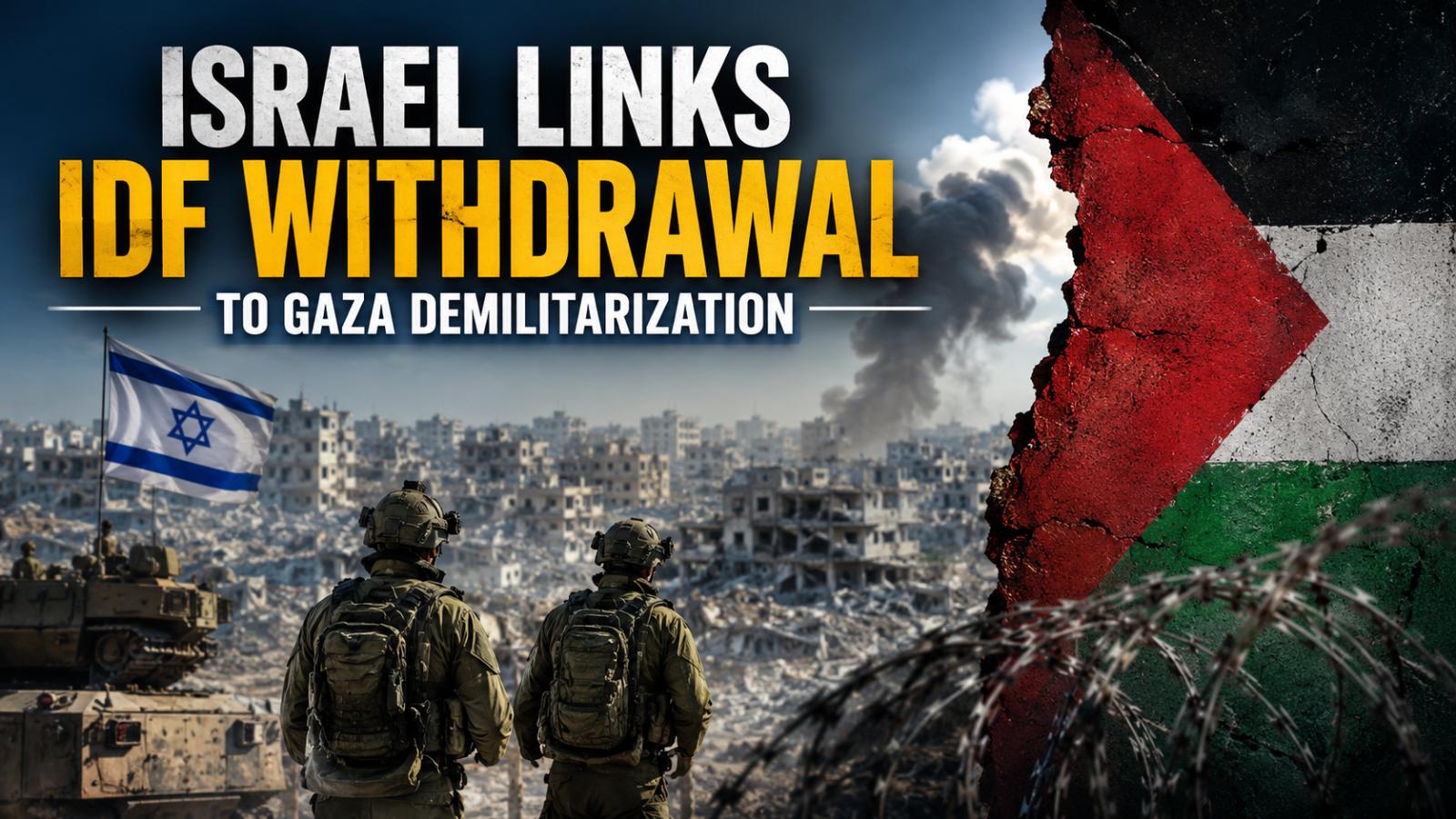
Israel has tied a complete IDF withdrawal from Gaza to verified demilitarization, including the removal of weapons and militant infrastructure. The position adds pressure to ceasefire talks, postwar governance plans and international security arrangements.
Gaza Demilitarization Before IDF Withdrawal
Israel says it will not completely withdraw its military forces from the Gaza Strip until the territory is demilitarized and no longer poses a security threat. The Israeli position focuses on dismantling militant tunnels, removing weapons and preventing Hamas or other armed groups from rebuilding their operational capabilities.
Under this approach, an IDF presence could remain in parts of Gaza while security conditions are assessed. Israeli officials have repeatedly argued that withdrawing before militant infrastructure is dismantled could allow armed groups to reorganize, recruit fighters and restore their weapons networks.
The demand places Gaza demilitarization before IDF withdrawal at the centre of negotiations over the territory’s future. However, major questions remain over who would verify disarmament, how weapons would be collected and what would happen if armed factions refused to cooperate.
Hamas Disarmament Shapes Gaza Ceasefire Talks
United Nations Security Council Resolution 2803, adopted in November 2025, endorsed a process for Gaza’s demilitarization under independent monitoring. The plan includes permanently placing weapons beyond use through an agreed decommissioning system.
A May 2026 report submitted to the Security Council said Hamas had not accepted verified decommissioning or relinquished coercive control in Gaza. The report described that refusal as a principal obstacle to implementing the wider ceasefire and transitional plan.
Israel views verified Hamas disarmament as essential to any lasting Gaza ceasefire. The issue is not limited to rockets or firearms. It also covers command centres, underground tunnels, weapons-production facilities and supply routes that could support renewed attacks.
The practical challenge is enforcement. International monitors may verify declared weapons sites, but hidden stockpiles and underground infrastructure would be harder to identify. Any disarmament process would therefore require cooperation from local authorities, sustained inspections and clear consequences for violations.
Gaza Security and International Forces
The diplomatic roadmap links Israeli withdrawal with the proposed deployment of an International Stabilization Force. United Nations officials have said the broader process should include the disarmament of Hamas and other armed groups, the withdrawal of Israeli forces and the transfer of administrative responsibilities to a Palestinian-led committee.
These steps are intended to happen through coordinated and verified stages rather than through an immediate military exit. A July 2026 briefing on the roadmap described reciprocal measures that would be reviewed by an implementation committee before each stage proceeded.
Israel is likely to demand firm guarantees that any international force has the authority and capacity to prevent rearmament. A symbolic monitoring mission would not satisfy Israeli security concerns. The effectiveness of the proposed force would depend on its mandate, participating countries, access to suspected weapons sites and ability to respond to violations.
Postwar Gaza Governance Remains Unresolved
Security arrangements cannot be separated from the question of who will govern Gaza. Current proposals involve a Palestinian technocratic administration responsible for public services, civil institutions and reconstruction, while international bodies oversee security and funding.
The United Nations has said demilitarization must support transitional governance and a Palestinian-led recovery process. It has also stressed that humanitarian assistance must increase as political and security negotiations continue.
Without a credible governing authority, Gaza could face a power vacuum even after weapons are removed. That would weaken reconstruction, policing and the delivery of essential services. It could also allow armed factions, criminal networks or competing political groups to regain influence.
Israel’s refusal to commit to a full IDF exit before demilitarization shows that security remains the immediate priority in its Gaza policy. Diplomatic progress will depend on whether negotiators can create a verifiable disarmament system, establish effective Palestinian governance and provide security guarantees strong enough to support a phased Israeli withdrawal.