Bilibili global push is taking China’s major long-form video platform into new international markets with easier sign-ups, creator recruitment and localization. But India is notably absent from its early expansion map, highlighting how the country’s restrictions on Chinese apps continue to shape global platform strategies.
Bilibili global push expands beyond China
Bilibili is stepping up its international ambitions after relaunching its global app and beginning a wider campaign aimed at overseas creators. The company’s creator-facing account said on August 19 that the international app had launched globally with easier registration and no identity verification, with additional localization and market expansion planned.
The company is entering the push with considerable scale. Bilibili reported more than 376 million monthly active users during the first quarter of 2026, alongside 115 million daily active users and average daily engagement approaching two hours.
The international product is already available through mobile app stores, while Bilibili is also reported to be preparing a broader English-language web presence. Recent app updates have steadily added more language support.
Creator expansion targets major global cities
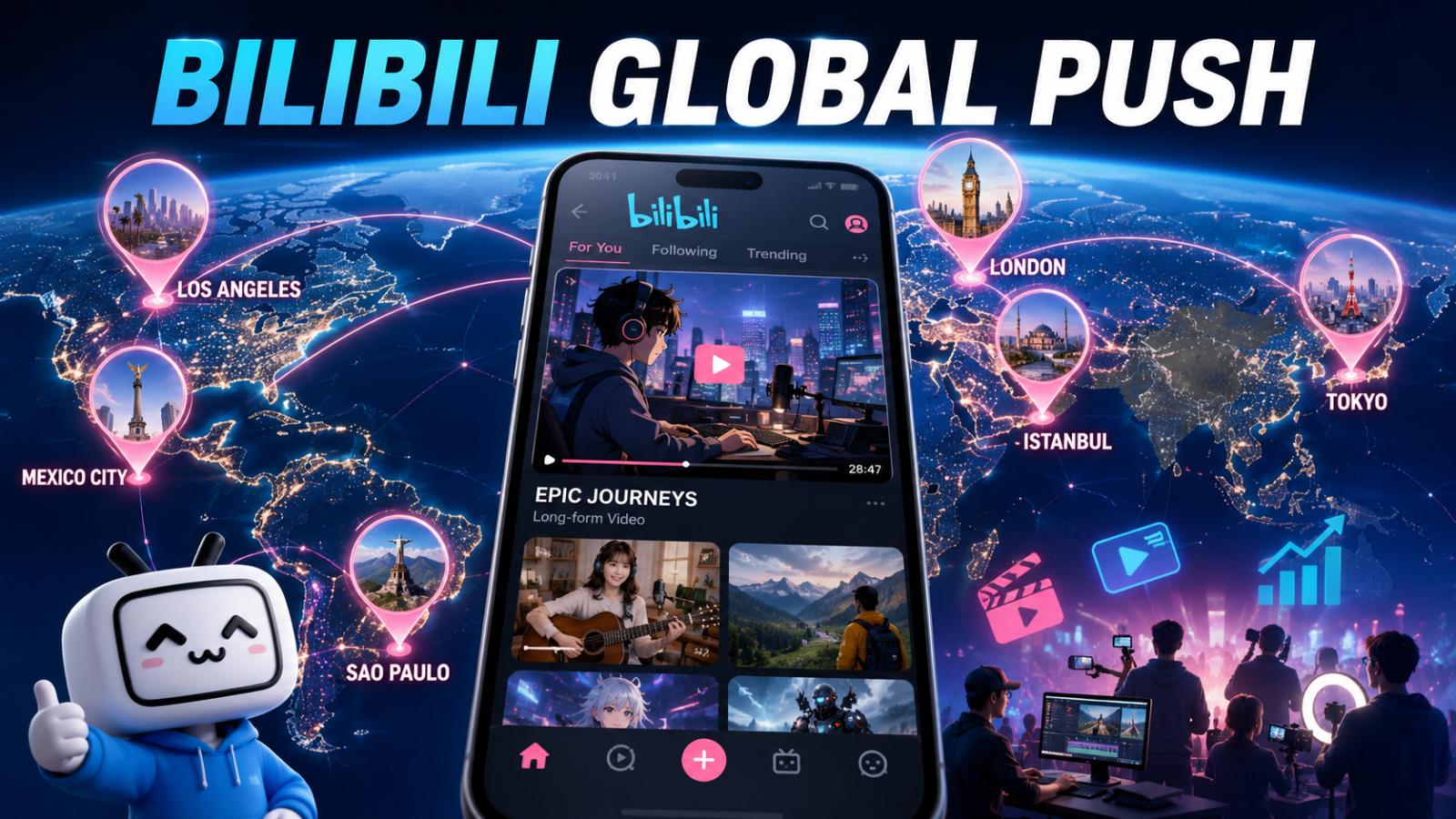
Bilibili is building overseas teams as part of the expansion. Job postings and recruitment material point to community and business-development roles in Los Angeles, London, Mexico City, São Paulo, Istanbul and Tokyo. The company is also developing AI-assisted moderation infrastructure through roles based in Singapore.
That strategy suggests Bilibili wants more than foreign viewers. It needs locally relevant creators, advertising relationships and moderation systems capable of operating across different languages and regulatory regimes.
The platform’s biggest distinction from TikTok is format. Bilibili developed around longer videos, gaming, animation, creator communities and its distinctive scrolling “danmu” comments. Its closer competitive comparison is therefore YouTube, even if its Chinese ownership inevitably raises some of the same regulatory questions that followed TikTok.
Bilibili India absence stands out
India does not appear among the initial cities identified in Bilibili’s overseas recruitment drive. That omission is notable given the country’s enormous internet and online-video audience.
It should not automatically be described as proof that Bilibili has formally decided never to enter India. The available evidence supports a narrower conclusion: India is not currently visible in the company’s announced international hiring priorities.
The regulatory background makes that unsurprising. On June 29, 2020, India blocked TikTok and 58 other mobile apps under Section 69A of the Information Technology Act, citing risks to sovereignty, national security and public order. Further rounds of restrictions followed later that year.
India ban reshaped the video market
The 2020 action removed TikTok from one of its largest markets and created an immediate opening in short-form video. Instagram Reels and YouTube Shorts subsequently became major destinations for Indian users and creators.
That outcome is worth remembering as Bilibili expands. Removing one foreign platform does not automatically create a domestic winner. Much of the audience and advertising opportunity can simply move to another international company.
Bilibili nevertheless presents a somewhat different policy question because its core strength is long-form creator content rather than a TikTok-style short-video feed.
YouTube rival faces global regulatory test
For Bilibili, international growth will depend on more than translating its interface. Operating across the US, Europe, Japan, Latin America and other markets requires decisions about data handling, moderation, creator payments and local speech rules.
Dropping identity verification for international sign-ups significantly lowers the barrier to joining. At the same time, it increases the importance of effective moderation and age, abuse and account-integrity safeguards.
India’s absence is therefore one of the more revealing details of Bilibili’s expansion. The company is testing how far a Chinese-born creator platform can travel internationally, while one of the world’s largest digital markets remains outside its visible first wave.