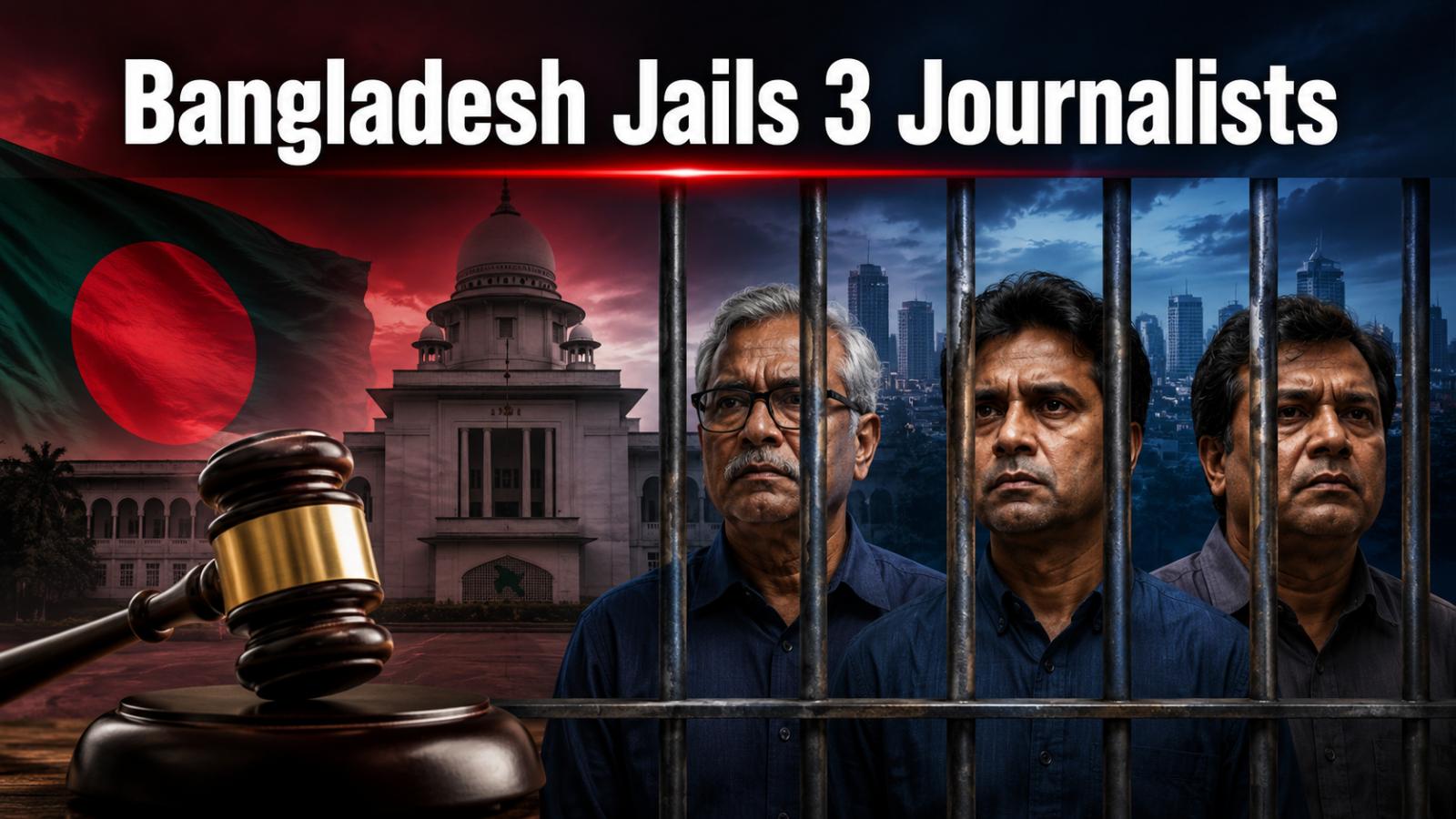
Bangladesh journalists jailed in a crimes-against-humanity case linked to the 2024 uprising have triggered renewed concern over press freedom. A special tribunal ordered Farzana Rupa, Mozammel Babu and Shyamal Dutta to remain in custody while investigators continue their case.
ICT press case sends journalists back to jail
Bangladesh’s International Crimes Tribunal-2 on Monday ordered the three senior journalists to be formally shown arrested and sent to jail in a case linked to the July 2024 uprising that ended Sheikh Hasina’s rule. The order followed their appearance before the tribunal after prison authorities had been directed to produce them.
The three are Mozammel Babu, former managing director and editor-in-chief of Ekattor TV; Farzana Rupa, a former principal correspondent and presenter at the broadcaster; and Shyamal Dutta, editor of Bhorer Kagoj and a former general secretary of the National Press Club.
All three had already spent lengthy periods in pre-trial detention over separate cases connected to the unrest that followed the 2024 mass protests. CPJ says Babu, Rupa and Dutta have been detained since August or September 2024.
Rupa Babu Dutta face serious allegations
Prosecutors allege the journalists helped incite or support actions against student demonstrators during the July 2024 uprising. According to CPJ, the case focuses partly on questions asked during a July 14 press conference where Hasina made remarks that protesters considered insulting before the violence escalated.
The allegations do not mean the journalists have been found guilty. Their lawyers and press freedom groups argue that asking questions, choosing editorial angles or producing critical coverage should not by themselves amount to criminal participation in crimes against humanity.
Babu and Rupa also face a separate tribunal case tied to their reporting on the 2013 Shapla Chattar crackdown. Prosecutors filed a formal charge sheet in July naming them alongside dozens of others.
Press freedom groups challenge the case
The Committee to Protect Journalists has sharply criticized the prosecutions and called for the journalists’ release. CPJ argues that editorial decisions, even if politically partisan or controversial, should not be criminalized without evidence of direct criminal responsibility.
The organisation has also raised concerns about prolonged detention. In April, CPJ said several journalists had spent more than 18 months in custody in murder cases without charge sheets substantiating the original allegations.
Human Rights Watch, ARTICLE 19, CIVICUS and Amnesty International have joined calls for Bangladesh to review cases involving journalists and ensure that criminal proceedings are not based solely on journalistic work.
2024 uprising still shapes Bangladesh media
The legal cases sit within a wider political transition that began after Hasina was removed from power in August 2024. Since then, the tribunal has been reconstituted and its mandate expanded to pursue cases linked to alleged abuses during the former government’s rule.
Press freedom groups say journalists viewed as sympathetic to the former Awami League government have faced criminal complaints and investigations, raising concern that political retaliation is becoming part of the accountability process.
The government, meanwhile, maintains that cases should proceed through the courts where prosecutors believe crimes may have occurred.
Journalism detention becomes democratic test
The case now raises a broader question for Bangladesh: how to pursue accountability for violence during the uprising without turning journalism itself into evidence of criminal complicity.
If prosecutors can establish direct participation in serious crimes, the courts will have to assess that evidence. But if the cases rest mainly on interviews, editorial choices or perceived political alignment, rights groups warn the precedent could chill independent reporting.
That makes the proceedings against Rupa, Babu and Dutta more than a legal dispute. They have become a major test of press freedom, due process and the credibility of Bangladesh’s democratic transition.