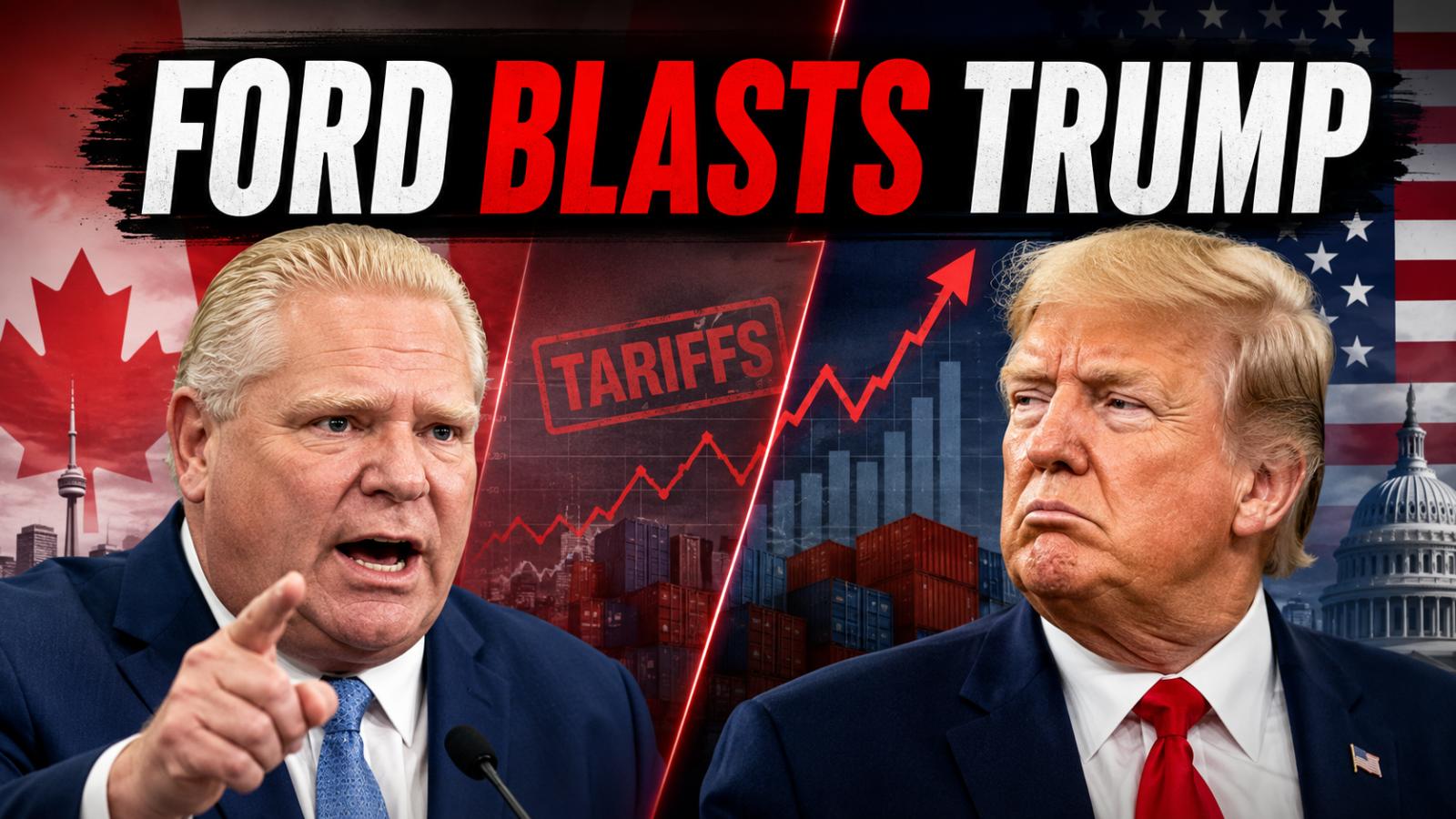
Ontario Premier Doug Ford sharply escalated his feud with US President Donald Trump, calling him a “bully,” “dictator” and “loser” as the Canada-US tariff dispute moved from trade negotiations into an increasingly personal political confrontation.
Ford Trump row turns personal
Ford made the remarks during a news conference in Hamilton-area Ontario on August 24, hours after Trump attacked him publicly. Trump described Ford as less charismatic and intelligent than his late brother, former Toronto mayor Rob Ford, and accused the Ontario premier of “bluster” over trade.
Ford answered by saying he would not take advice from someone he described as a bully and a dictator. He also mocked Trump’s business record and repeated an earlier radio remark telling the US president to “kiss my ass.”
The Ontario premier went further by saying Americans would feel the effects of Trump’s tariff policies and predicting voters would respond during the US midterm elections. His comments marked one of the most direct personal attacks on Trump from a senior Canadian political leader during the current trade dispute.
Canada tariffs deepen economic confrontation
The exchange comes days after Canada suspended trade negotiations with Washington. Prime Minister Mark Carney said last-minute changes to US proposals were “unfair” and “uneconomic” and called into question whether any agreement would be reliable.
Carney said the United States intended to impose 50% tariffs on roughly C$28 billion worth of Canadian goods and that Canada would respond dollar for dollar. Ottawa has also promised additional support for industries exposed to the trade conflict.
Trump has separately threatened higher tariffs on Canadian autos and other sectors, adding to pressure on Ontario, whose economy is deeply tied to cross-border vehicle manufacturing and US supply chains.
Ontario response could target US exports
Ford backed Carney’s decision not to accept what he considers a weak agreement and said Ontario should keep every retaliatory option available.
He has raised the possibility of using electricity exports as leverage if the dispute worsens. Ontario supplies power to customers in US states including Michigan, New York and Minnesota, making energy one of the province’s most visible pressure points.
Ford has also spoken about broader Canadian leverage involving critical minerals, uranium and potash. Those measures would carry risks for both countries because Canada-US trade is heavily integrated across manufacturing, energy and agriculture.
Carney talks collapse shifts political tone
The breakdown in negotiations has hardened Canada’s public position. Carney said Canada would not accept a deal “at any price or on any deadline” and argued that the country must reduce its economic dependence on the United States while expanding other export markets.
Trump, meanwhile, has said Canada depends heavily on the US and warned that consequences could become worse if Canadian leaders do not cooperate. That rhetoric has pushed the dispute beyond technical tariff negotiations and into questions of sovereignty and political pressure.
Ford Trump feud raises stakes before midterms
The immediate economic question is whether Ottawa and Washington return to negotiations or move deeper into retaliation. The political question is whether the increasingly personal Ford Trump feud makes compromise harder.
Ford’s references to the US midterms show how the dispute is already crossing into American domestic politics. If tariffs begin raising costs for manufacturers, consumers and border states, the Canada conflict could become an issue for voters as well as negotiators.