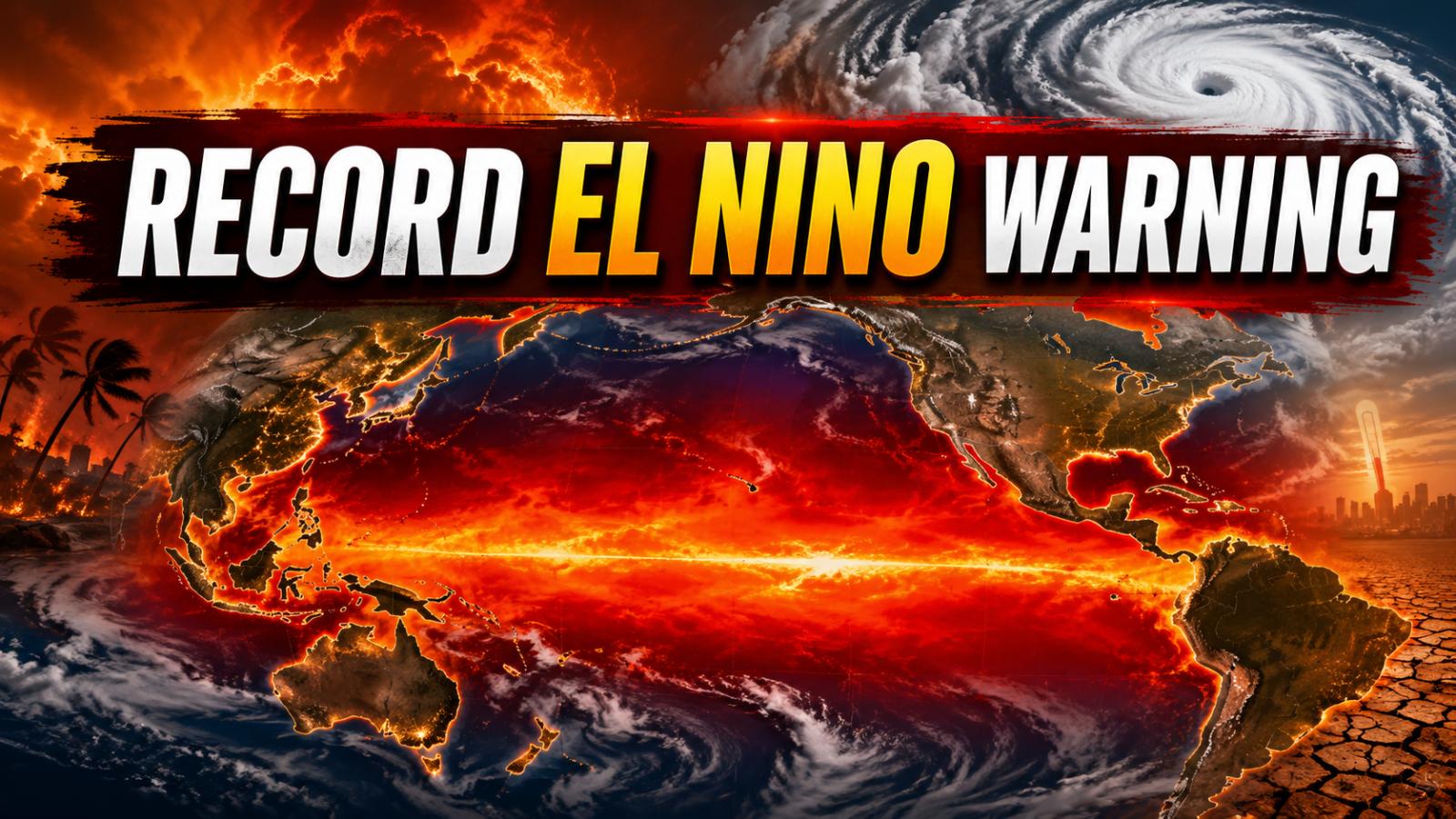
A powerful El Nino is strengthening across the tropical Pacific and could become the most intense event recorded during four decades of World Meteorological Organization monitoring. The WMO says there is a nearly 100% likelihood that the event will persist through February 2027, with major implications for global temperatures, rainfall and extreme weather.
El Nino 2026 could reach exceptional strength
The WMO said El Nino is now firmly established and is expected to intensify into a “very strong” event over the coming months before peaking toward the end of 2026.
WMO Secretary-General Celeste Saulo warned that if the current trajectory continues, the event could exceed anything seen since the organization’s modern monitoring framework began about four decades ago. The agency described its latest forecast as unusually decisive, with an exceptionally high likelihood of nearly 100% that El Nino will continue through the September-November 2026 and December 2026-February 2027 periods.
El Nino develops when surface waters in the central and eastern equatorial Pacific become unusually warm, disrupting atmospheric circulation and shifting rainfall and temperature patterns around the world.
Pacific warming signals further intensification
Ocean observations are showing exceptional warmth. WMO said sea-surface temperatures across the tropical Pacific are already well above normal, while subsurface temperatures in some areas were more than 8C above average during July and early August.
That large reservoir of warm water beneath the ocean surface could continue feeding the El Nino event in the months ahead. WMO forecasts also indicate above-normal temperatures are likely across most land areas during September-November 2026.
The agency has stressed that El Nino itself is a naturally occurring climate phenomenon. However, it is developing against a background of unusually warm global oceans and long-term human-driven climate change, which can amplify overall heat and increase the severity of some impacts.
Extreme heat, floods and drought risks increase
A very strong El Nino can dramatically alter rainfall patterns. Some areas may face prolonged drought, while others could experience intense rain, flooding and storms.
Agriculture, water supplies, public health and energy systems are among the sectors most exposed. WMO says the developing event could deliver major economic and humanitarian impacts, particularly in regions already vulnerable to food insecurity or water stress.
UN Secretary-General Antonio Guterres described the event as being “supersized” and warned that the world is entering dangerous territory as ocean and air temperatures continue to rise.
The previous strong El Nino of 2023-24 contributed to 2024 becoming the hottest year on record. WMO has cautioned that another global temperature record could be challenged as the current event peaks and its effects carry into 2027.
El Nino impacts could continue into 2027
Even after El Nino reaches its expected peak late in 2026, its effects may continue for months. Changes in rainfall, heat and ocean conditions can persist after the tropical Pacific begins to cool.
WMO and national meteorological agencies are therefore increasing early-warning and preparedness efforts. The focus is shifting from whether El Nino will intensify to how governments can limit damage to agriculture, health, water systems and vulnerable communities.
The event may not ultimately set an absolute record, but the WMO’s latest assessment makes one point clear: the world should prepare for an exceptionally strong El Nino with impacts likely to extend well into 2027.