MJ Akbar says the India Partition legacy remains a continuing tragedy, arguing that its political, strategic and social consequences still shape the subcontinent. In his book, he examines Gandhi’s faith, Jinnah’s politics, British colonialism and the role of religion in nationhood.
MJ Akbar says Partition remains a continuing tragedy for India
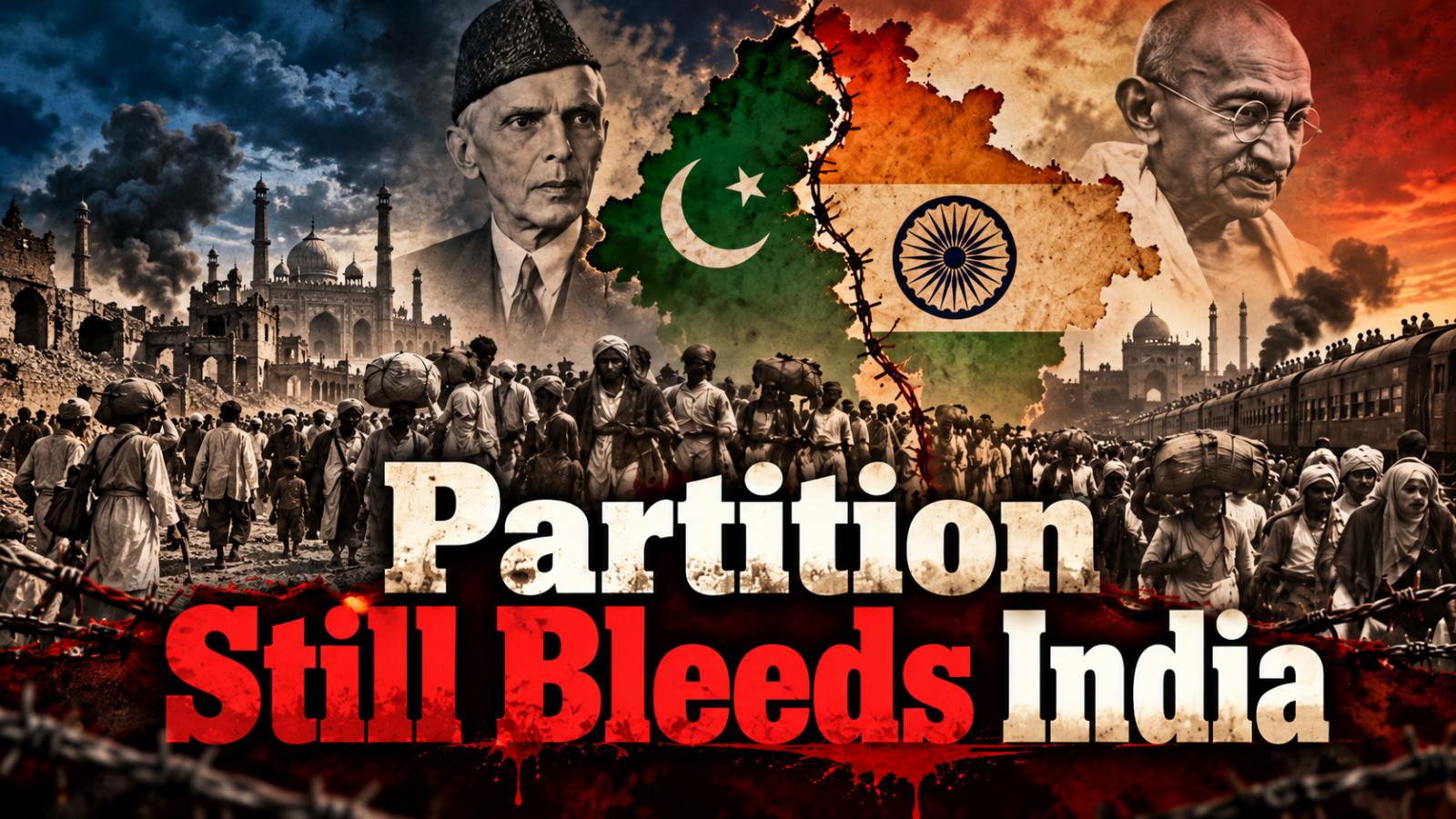
Veteran journalist, author and former parliamentarian MJ Akbar has described the India Partition legacy as a continuing tragedy whose consequences still influence the subcontinent. Discussing his book Gandhi's Hinduism: The Struggle Against Jinnah's Islam, he reflected on Gandhi's faith, Jinnah's politics, Britain's role and the relationship between religion and nationhood.
Akbar's book examines the political struggle that shaped the years leading to Partition and contrasts Gandhi's belief in a multi-faith India with Muhammad Ali Jinnah's demand for Pakistan. The publisher describes the work as an examination of the decisive political period between 1940 and 1947 and the competing ideas that shaped the subcontinent.
Gandhi faith and religious unity
Akbar argued that Gandhi viewed religion as a source of unity rather than separation. He said Gandhi's understanding of Hinduism allowed space for Islam, Christianity, Zoroastrianism and other faiths because all ultimately pointed toward the same creator.
That view, Akbar argued, made religious nationalism difficult to justify. Gandhi frequently sought Hindu-Muslim harmony and opposed the division of India on religious lines. Akbar's book also highlights Gandhi's belief that different religions could coexist within one civilisational framework. Everand
Jinnah politics and the Pakistan demand
Akbar offered a sharply critical assessment of Jinnah's political project, arguing that religion could not by itself provide a sufficient foundation for nationality. He pointed to the existence of many separate Muslim-majority and Arab states as evidence that shared faith does not automatically create one political nation.
He acknowledged Jinnah's political intelligence but argued that the campaign for Pakistan produced devastating human consequences. In Akbar's interpretation, the violence, displacement and long-term tensions surrounding Partition became inseparable from Jinnah's political legacy. These are Akbar's conclusions and remain part of a wider historical debate over responsibility for Partition.
British role in Partition
Akbar also placed significant responsibility on British colonial policy. He argued that colonial rule deepened religious divisions and distorted how Indians understood their own history.
His book gives particular attention to British policies that encouraged political separation along religious lines, including separate electorates and the political developments of the 1940s. The book's central argument is that British strategy, communal politics and competing nationalist visions all contributed to the eventual division of India.
Religion nation and India's lost potential
Akbar said the cost of Partition should not be measured only through military spending or recurring India-Pakistan tensions. He argued that the deeper loss was India's unrealised strategic and economic potential.
He suggested that an undivided subcontinent might have exercised greater influence across South Asia, West Asia and the wider region. That assessment is necessarily speculative, but it forms an important part of his broader argument that Partition altered India's geopolitical trajectory as well as its borders.
Akbar book asks readers to revisit history
Akbar said his purpose was to encourage readers to examine historical evidence rather than simply inherit political narratives. Gandhi's Hinduism: The Struggle Against Jinnah's Islam presents Partition as the outcome of competing ideas about faith, nationhood and political power.
His larger message is that the history of Partition is not merely about 1947. In his view, its effects continue through regional rivalry, communal debate and questions about national identity, making the subject central to understanding both India's past and its future.