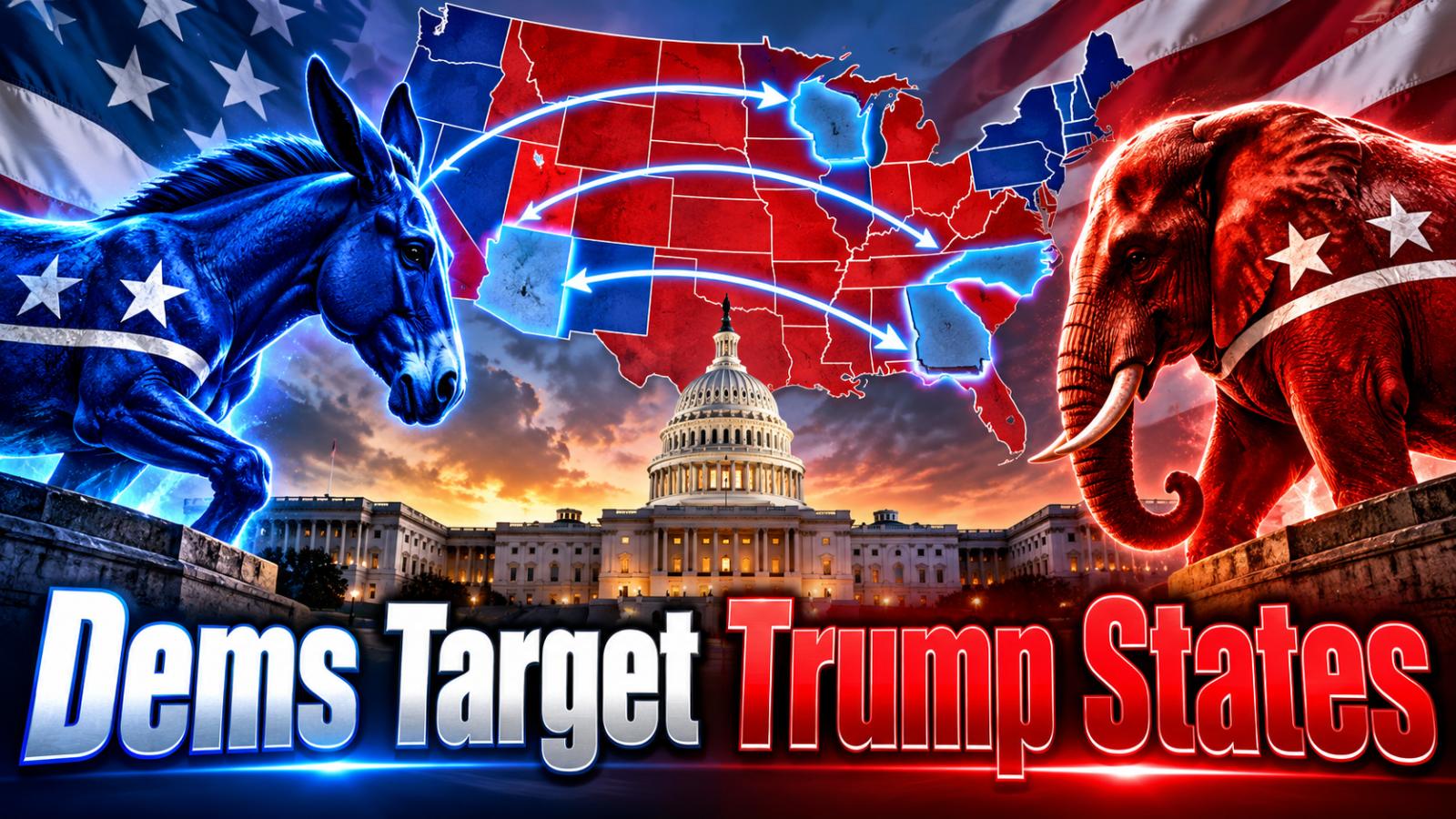
The 2026 Senate battlegrounds are expanding deep into states Donald Trump comfortably won in 2024. Ohio, Alaska, Iowa and Texas now headline a broader Democratic push, forcing Republicans to defend more territory as control of Congress hangs in the balance.
Democrats expand 2026 Senate map into Trump territory
The battle for control of the US Senate has grown far wider than Republicans expected, with Democrats competing seriously in several states Donald Trump won by double-digit margins in 2024.
Republicans currently hold a 53-47 Senate majority, including two independents who caucus with Democrats. Democrats need a net gain of four seats to take control in 2027, making every unexpected Republican vulnerability strategically important. Forecasts now show a map that extends well beyond the usual swing states.
Ohio race
Ohio has become one of the clearest tests of whether Democrats can reclaim ground in a state that moved sharply toward Republicans. Former Democratic Senator Sherrod Brown is challenging Republican Jon Husted in a special election that has been treated as a toss-up.
Early voting began October 6, with unusually strong interest as voters weigh inflation, foreign policy and control of Congress. Ohio also features competitive House contests, making it one of the most important states for both chambers.
Alaska race
Alaska has also become unexpectedly competitive. Republican Senator Dan Sullivan is facing former Democratic Representative Mary Peltola in a contest attracting national attention.
Recent polling has shown a very tight race, while Vice President JD Vance has travelled to Alaska to campaign for Sullivan, underscoring Republican concern about holding the seat. The state’s unusual election system and strong independent-voter bloc add further uncertainty.
Iowa race
Iowa has shifted strongly Republican over the past decade, but its open Senate race has moved into toss-up territory. Republican Representative Ashley Hinson is facing Democratic state Representative Josh Turek.
The contest matters because it shows how broader dissatisfaction can make a once-safe state competitive. Iowa Public Radio reported that the Cook Political Report moved the race from Lean Republican to Toss Up as Democrats increasingly viewed the seat as a realistic pickup opportunity.
Texas race
Texas may be the most politically significant surprise on the Democratic map. Republican Ken Paxton is running against Democrat James Talarico in a race that has become far more competitive than Republicans expected.
Recent polling has shown Talarico narrowly ahead in some surveys, while campaign spending has surged. A Democratic victory would represent a major political breakthrough in a state that has remained central to Republican national strategy for decades.
Red states stretch GOP resources
The larger Democratic strategy extends beyond those four core contests. Republicans are also being forced to pay attention to states including Kansas, Nebraska, Florida, Mississippi and Kentucky, even where Democrats remain clear underdogs.
That matters because competitive races require money, advertising and visits from national figures. A broader map can stretch Republican resources and reduce the party’s ability to concentrate spending only on traditional battlegrounds. Recent reporting has described the Democratic surge as strongest in some Republican-held states, complicating GOP Senate strategy.
The central question of the 2026 midterms is no longer simply whether Democrats can win in established swing states. It is whether dissatisfaction with the political and economic environment is strong enough to make heavily Trump-supporting states genuinely competitive—and whether that expanded battlefield can deliver the four-seat net gain Democrats need to control the Senate.