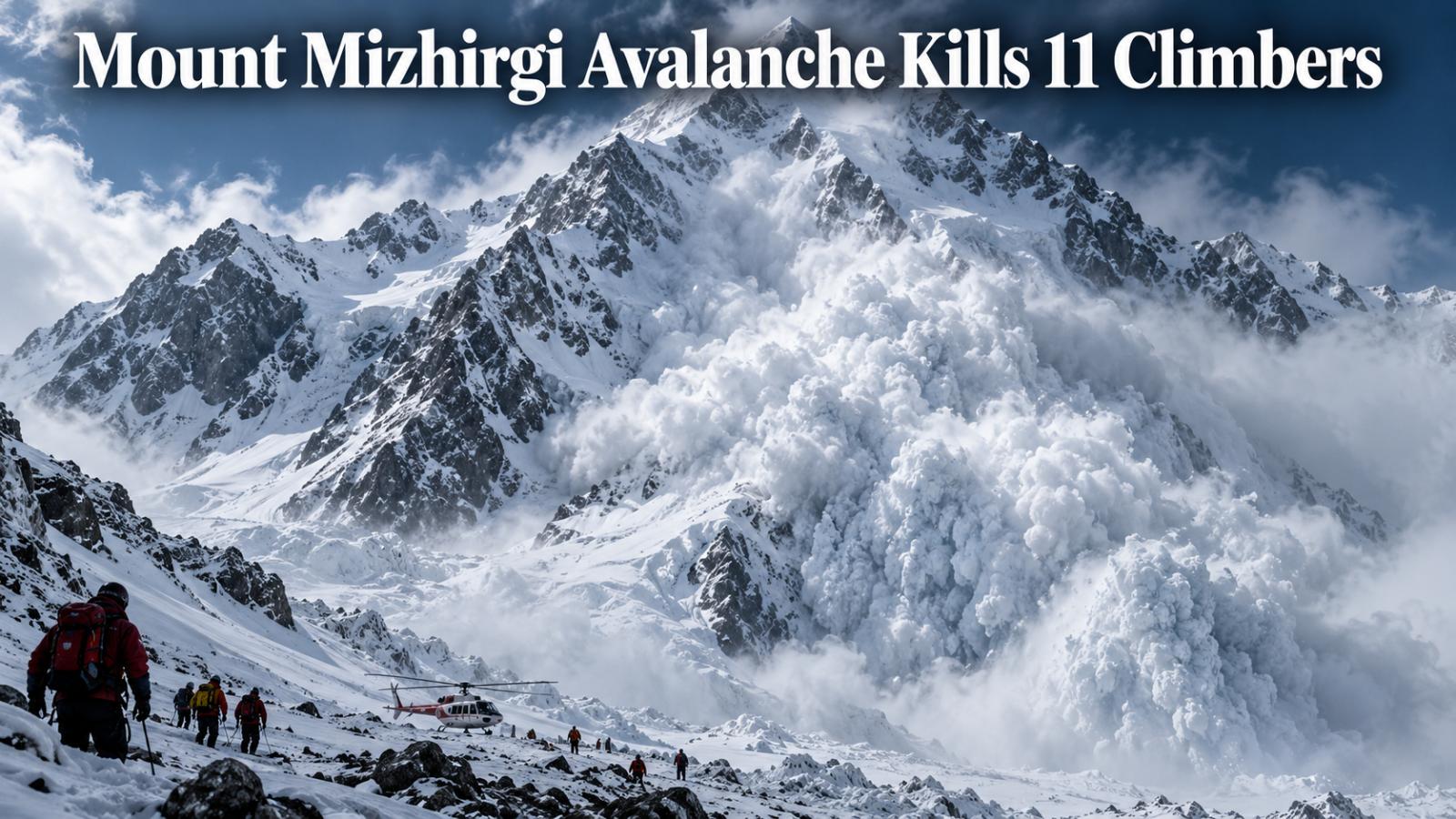
The Mount Mizhirgi avalanche in Russia’s Kabardino-Balkaria region killed at least 11 climbers, injured six and left six others missing after a group of 33 was struck. Emergency teams continued rescue operations in the North Caucasus despite difficult terrain and the threat of further avalanches.
Russia avalanche
At least 11 people were killed after an avalanche struck a group of climbers on Mount Mizhirgi in Russia’s Kabardino-Balkaria region in the North Caucasus. The avalanche came down at around 5 p.m. local time on Sunday, September 6, and hit a group of 33 climbers travelling through the mountain area.
According to the regional branch of Russia’s Emergency Situations Ministry, six climbers were injured and taken to medical facilities. Ten members of the group managed to descend from the mountain on their own, while the whereabouts of another six remained unknown as search efforts continued. The official figures were reported on Monday, September 7.
Rescue
More than 50 rescuers from several emergency units were involved in the operation. Teams faced steep mountain terrain, unstable snow and an ongoing avalanche risk, making access to some areas extremely difficult.
Officials said additional aerial support, including a Mi-8 helicopter, could be used when weather and safety conditions allowed. Emergency crews were working to locate the missing climbers while avoiding areas where another snow slide could put rescuers at risk.
Missing
Six climbers remained missing after the Mount Mizhirgi avalanche, while emergency workers continued searching the Bezengi Gorge and surrounding mountain routes. Authorities had not confirmed their condition as rescue teams tried to reach sections of the mountain affected by the avalanche.
The incident also prompted authorities to examine the circumstances surrounding the tragedy. Russian investigators opened a negligence case as officials worked to establish what happened before the climbers were caught in the avalanche.
Mizhirgi
Mount Mizhirgi is one of the prominent high-altitude peaks in the North Caucasus and rises above the mountainous Kabardino-Balkaria region. Its remote terrain and technically demanding climbing routes can create serious challenges for mountaineers, particularly when snow and weather conditions change rapidly.
The September 6 avalanche highlighted the dangers faced by climbers in high-altitude regions where rescue access can be limited. Authorities continued urging caution as unstable conditions remained a concern during the search operation.
Causes
An avalanche occurs when an unstable mass of snow, ice or debris suddenly moves down a steep slope. Heavy snowfall, wind-loaded snow, rapid warming and weak layers within the snowpack can increase avalanche risk.
Human activity can also trigger an unstable slope when climbers, skiers or snowmobilers disturb fragile snow layers. Because avalanches can accelerate quickly and bury people within seconds, mountain safety experts generally recommend checking local avalanche forecasts, weather conditions and route warnings before entering high-risk areas.