Saudi Arabia Advances Naval Alliance to Protect Red Sea Shipping
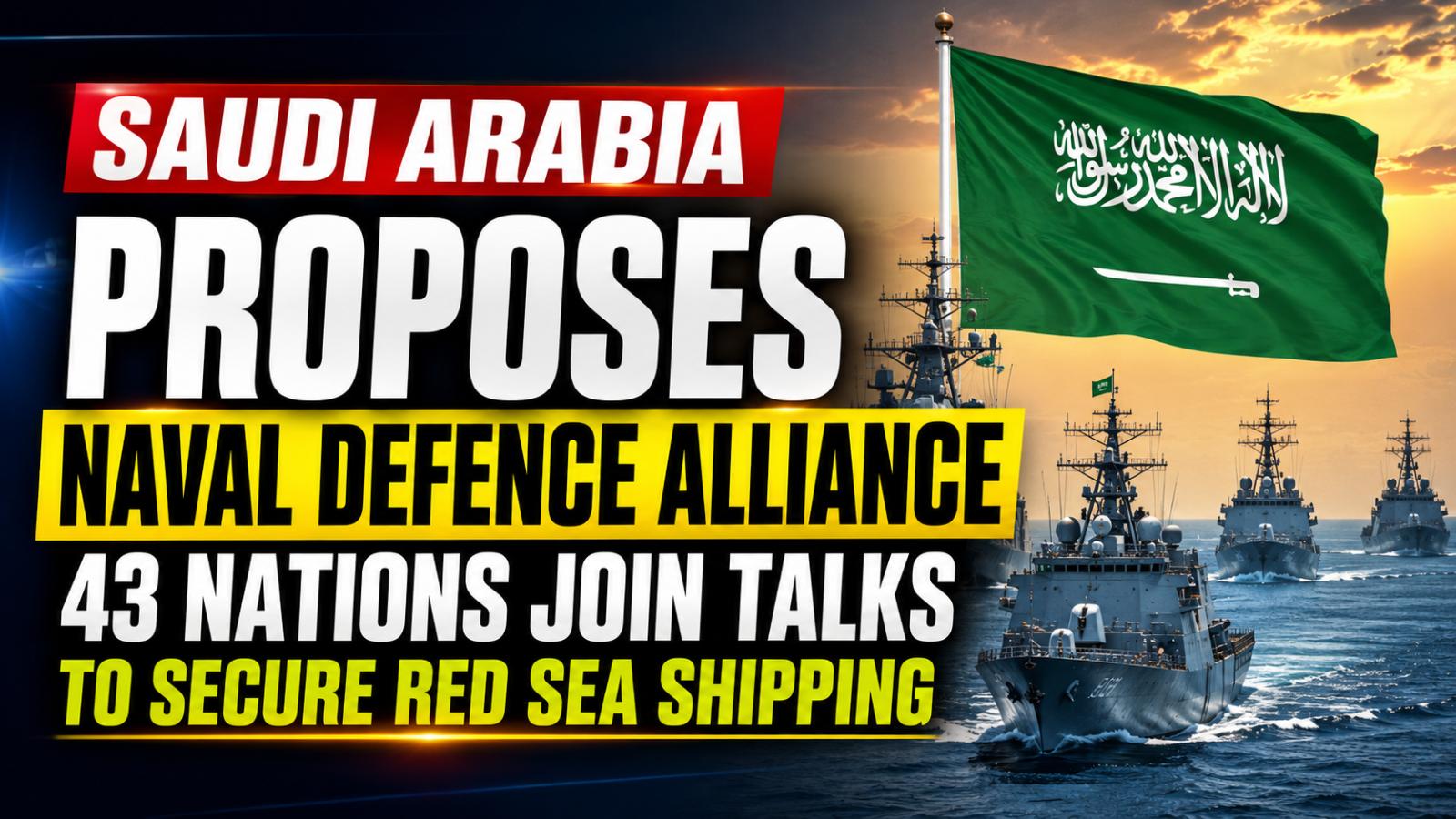
Saudi Arabia has advanced plans for a multinational naval defence alliance after representatives from 43 countries met in Riyadh to discuss Red Sea maritime security, global shipping protection and a legal charter for future cooperation. The plan targets threats facing major trade and energy routes.
Riyadh Defence Meeting Brings Together 43 Countries
Saudi Arabia hosted military representatives from 43 countries on Thursday, July 30, as part of its effort to establish a multinational maritime defence coalition. The European Union delegation to Saudi Arabia also attended the Riyadh defence meeting.
The Saudi Ministry of Defence said it invited 51 countries and organisations to take part. Chiefs of staff or their representatives examined the proposed alliance’s objectives, leadership structure and legal foundation.
Under the proposal, Saudi Arabia would act as the founding and leading country and would host the alliance’s headquarters. The framework would bring participating states together without replacing their national naval commands or existing security partnerships.
The ministry said the initiative aims to strengthen maritime security, protect freedom of navigation and secure international trade and energy supply routes.
Maritime Alliance Charter Takes Shape
Delegates discussed a draft founding charter and the legal framework required to establish the Saudi naval defence alliance. These talks are important because the coalition has not yet completed all the steps needed to become a fully operational military body.
The charter is expected to define how countries share information, coordinate maritime patrols and respond to threats against commercial ships. It must also address command responsibilities, membership rules and the legal limits of joint naval activity.
Saudi Arabia has presented the plan as a cooperative maritime security framework rather than an offensive military bloc. Fourteen countries, including Turkey, Pakistan, Egypt, Sudan and Djibouti, issued a joint statement supporting the proposed coalition, according to information attributed to the Saudi Defence Ministry.
Red Sea and Bab el-Mandeb Security
The proposed alliance would focus on important waterways such as the Red Sea, Bab el-Mandeb Strait and Gulf of Aden. These areas connect the Mediterranean region with the Indian Ocean and carry commercial goods, oil and other energy supplies between Asia, Europe and Africa.
The Bab el-Mandeb Strait remains especially important because vessels passing through the Suez Canal must normally cross it. Any serious disruption can delay deliveries, raise insurance costs and force shipping companies to use longer routes around Africa.
Saudi Arabia’s initiative follows renewed threats and attacks affecting vessels in the region. The European Union recently described Houthi threats to impose a maritime blockade on Saudi Arabia as a dangerous escalation and called for navigation to remain unrestricted in the Red Sea.
Global Shipping Protection Faces Practical Challenges
A multinational coalition could improve intelligence sharing, naval coordination and emergency responses. It may also reassure shipping companies that regional governments are prepared to protect major trade lanes.
However, the alliance will face difficult political and operational questions. Participating countries may disagree over command authority, rules of engagement and how directly the coalition should confront Iran-backed armed groups. Some governments may support freedom of navigation while avoiding deeper involvement in regional conflicts.
The European Union already operates the defensive naval mission ASPIDES to protect shipping in the Red Sea and surrounding waters. Saudi Arabia will therefore need to explain how its proposed coalition will cooperate with existing missions and avoid duplicated responsibilities.
The Riyadh discussions mark a significant step, but the coalition’s final membership, command structure and operational timeline remain unclear. Its success will depend on whether participating countries turn political support into sustained naval coordination.