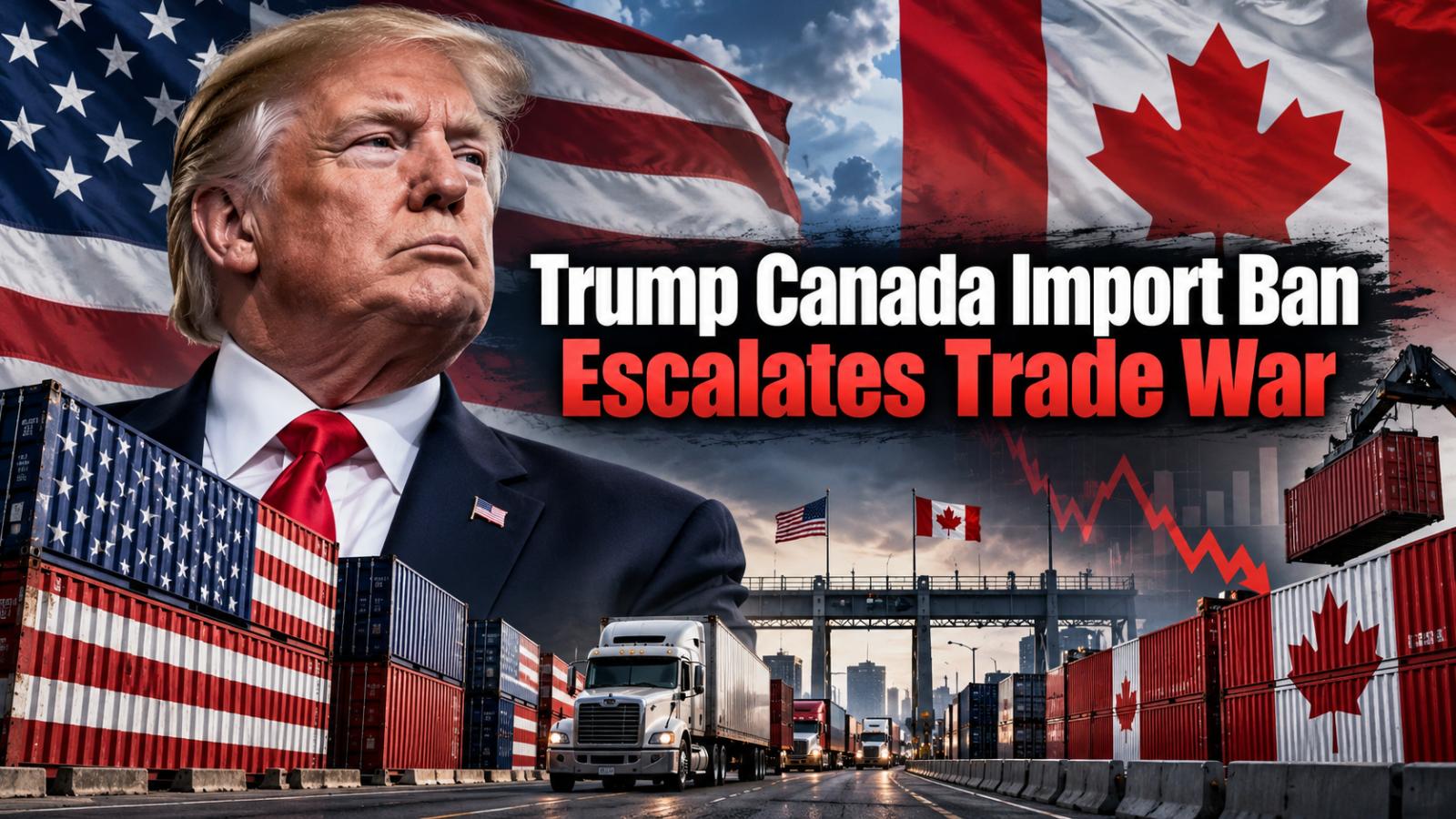
US President Donald Trump has escalated the dispute with Canada by announcing new restrictions on selected Canadian imports, while Ottawa has activated retaliatory tariffs on US goods. The measures deepen the US-Canada trade conflict and increase uncertainty for businesses on both sides of the border.
Tariffs Raise Pressure on Cross-Border Trade
The White House announced on September 8 that certain Canadian products facing additional duties will be excluded from importation into the United States from 12:01 a.m. Eastern Time on September 29, 2026. Separate presidential proclamations cover selected alcoholic beverages, dairy products and motor-vehicle-related goods.
Products imported before the new ban takes effect but not yet entered for consumption may continue to face the existing 50% tariff rather than the import prohibition, according to the presidential proclamations.
Dairy and Alcohol Become Key Flashpoints
The Trump administration has focused heavily on dairy and alcohol. The White House says Canada's tariff-rate quota system disadvantages US cheese exporters and argues that restrictions on American alcoholic beverages deny US producers equal market access. Those claims form part of the administration's justification for the new import restrictions.
Trump has framed the dispute around reciprocity, arguing that Canadian companies should not enjoy broad access to the US market while American farmers and businesses face barriers in Canada. His administration has also moved to restrict Canadian-origin products from federal purchasing channels.
Autos Add Another Layer to the Dispute
Motor vehicles and auto parts are another major point of contention. The White House says Canada's motor-vehicle tariff system disadvantages US auto and auto-parts exports compared with products from other countries. The administration had already imposed additional duties on selected Canadian automotive products before announcing the latest restrictions.
Canada Retaliates With New Tariffs
Canada's Department of Finance says retaliatory tariffs of 15%, 25% and 50% took effect on September 8 and cover about $27.6 billion in imports from the United States. Ottawa says the measures match US tariffs dollar for dollar and target sectors including steel, dairy, appliances, agricultural equipment, pulp and paper, plastics and electronics.
The Canadian government says the response follows US tariffs of 50% on roughly $27.6 billion in Canadian goods that took effect on August 22. Ottawa says its countermeasures are intended to protect Canadian workers and businesses while responding to US trade measures.
US Trade Tensions Could Intensify
The latest moves raise risks for companies that depend on integrated North American supply chains. Agriculture, manufacturing, automotive and consumer-goods businesses could face higher costs or reduced market access if the dispute continues.
The September 29 deadline now creates another pressure point in US-Canada negotiations. Whether the dispute escalates further will depend on future negotiations, policy changes and any additional retaliatory measures announced by Washington or Ottawa.