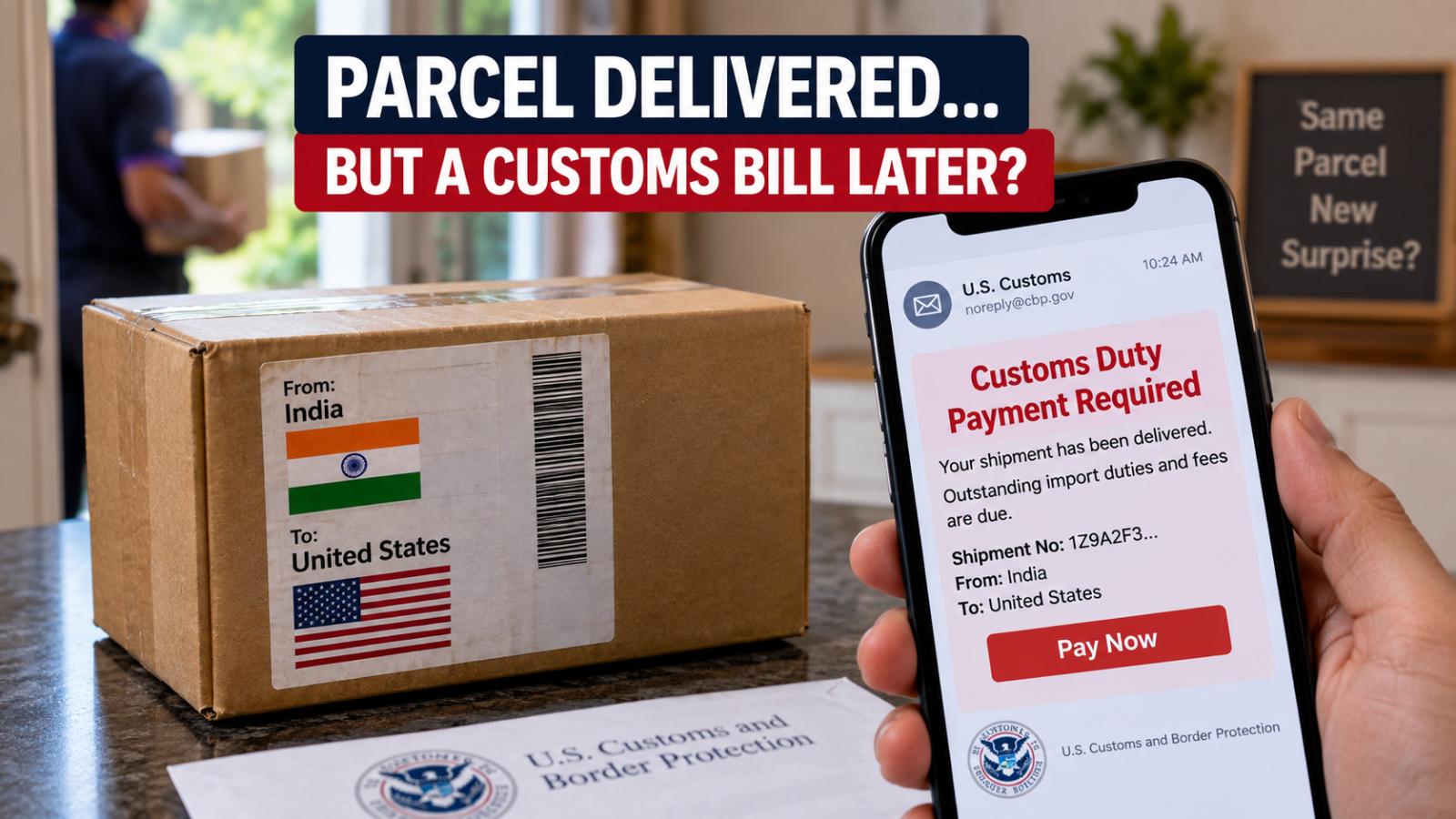
A customs bill after delivery can surprise U.S. recipients of parcels from India. Carrier billing practices, shipment paperwork and current U.S. import rules can allow duties and related charges to be invoiced after delivery, depending on who was listed to pay them.
Receiving a parcel from India does not necessarily mean every U.S. customs charge connected with the shipment has already been paid. Depending on the carrier, shipping instructions and customs processing, an import-duty invoice can sometimes reach the recipient after delivery.
Carriers can advance customs charges
International couriers often facilitate customs clearance by paying applicable duties and taxes to authorities and then collecting that amount from the responsible customer.
FedEx says an international shipment can designate the shipper, recipient or a third party to pay duties and taxes. If no party is selected, the recipient is generally treated as responsible. FedEx also states that recipients may receive an invoice by mail for outstanding duties and taxes.
DHL similarly explains that it may pay customs charges on behalf of a customer to facilitate clearance and then recover those amounts. Depending on the shipment arrangement, customers can be invoiced after delivery.
Why the bill may come later
A parcel can move through customs and the delivery network before the carrier completes its billing process. The shipping label or waybill also determines who was designated to bear duties and taxes.
A sender may believe charges were prepaid while the paperwork tells the carrier otherwise. FedEx notes that if a tax payment to a supplier is not clearly reflected in shipment documentation, the carrier may still charge the consignee.
That means a bill arriving after delivery is not automatically an error.
If the shipment was sent as a personal gift from India, check whether gifts from India to the U.S. may qualify for a customs-duty exemption.
New U.S. rules make low-value parcels important
The issue has become more relevant since the United States suspended broad duty-free de minimis treatment for shipments valued at $800 or less beginning August 29, 2025.
On February 20, 2026, the White House continued the suspension for shipments from all countries, including India. Applicable duties, taxes, fees and other charges can therefore apply regardless of whether a parcel previously would have qualified for the $800 exemption.
Check the invoice before paying
If the payment request arrived by email or text, learn how to check whether a customs duty message is real or a scam before entering payment details.
Recipients should match any customs bill with the parcel’s tracking number, sender and shipment details. They should also distinguish government duties from separate carrier clearance, advancement or processing fees.
Unexpected emails or text messages should be verified through the courier’s official website or customer-service channel rather than through an unfamiliar payment link. FedEx specifically warns customers to watch for suspicious customs-related payment requests.
The collection process can also vary by courier, so see who collects customs duty on India parcels through FedEx, UPS, DHL or USPS.
As India-to-U.S. parcels face a different customs environment than they did before August 2025, both senders and recipients should establish who will pay import charges before shipping instead of assuming delivery closes the customs process.