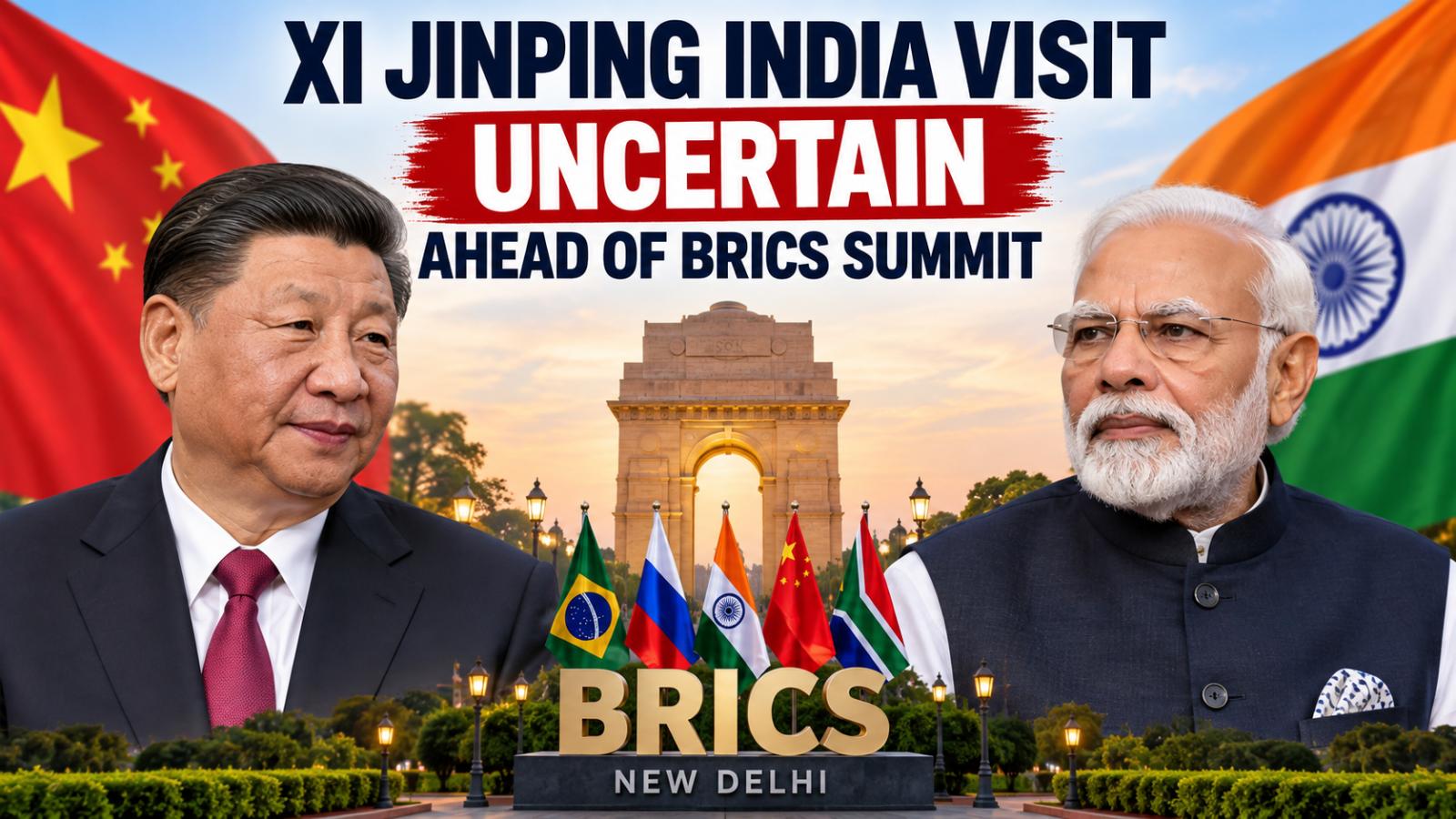
With the BRICS summit in New Delhi approaching, uncertainty continues over whether Chinese President Xi Jinping will travel to India for the high-profile gathering. Beijing has yet to officially confirm Xi’s participation, and there is also no announcement on a possible bilateral meeting with Prime Minister Narendra Modi.
China’s foreign ministry said it had no official information to share regarding the president’s travel plans. If Xi attends the summit, it would mark his first visit to India in seven years and could provide an important opportunity for the two Asian powers to demonstrate improving ties despite long-standing strategic differences.
India-China ties show signs of improvement
Relations between India and China have remained complicated for decades, shaped by the 1962 war and recurring disagreements along their disputed border. Tensions increased sharply following the Galwan Valley clash in 2020, in which 20 Indian soldiers and an undisclosed number of Chinese troops were killed.
However, diplomatic engagement has increased in recent years. Prime Minister Modi’s visit to China last year was viewed as an important step toward stabilising relations, particularly as both countries faced changing economic and geopolitical circumstances.
New Delhi has also eased some restrictions imposed on Chinese investment after the 2020 border tensions. The changes have mainly focused on areas including electronics, capital goods and solar manufacturing. India is also considering faster approvals for joint ventures involving Indian and Chinese companies in selected industries.
Modi and Xi briefly met earlier this month at a regional gathering in Kyrgyzstan. Beijing has since emphasised that the two countries should view each other as development partners rather than strategic threats.
India-China trade reaches record levels
Economic ties between the two nations have continued to expand despite political differences. Bilateral trade reportedly increased 12.4% last year to a record $155 billion, more than twice the level recorded a decade earlier.
Trade growth has remained strong this year as well, with commerce between the two countries rising around 23% during the first seven months compared with the same period last year.
At the same time, investment challenges remain. Chinese companies seeking to invest in India continue to face regulatory scrutiny, while Beijing is also reportedly examining proposed overseas investments more closely in sectors involving advanced manufacturing and sensitive technologies.
Businesses on both sides have also faced problems including delayed approvals, visa restrictions and limits involving industrial equipment.
Trust deficit remains major challenge
Despite renewed diplomatic engagement and growing trade, analysts believe a significant trust deficit continues to shape India-China relations.
Experts say both governments have incentives to improve economic cooperation, particularly as global trade conditions become more uncertain. However, progress is expected to remain gradual because of unresolved border issues, strategic competition and concerns over technology and investment.
A possible meeting between Xi Jinping and Prime Minister Modi during the BRICS summit could therefore become an important indicator of the future direction of bilateral relations.
While both sides appear interested in stabilising ties and expanding economic engagement, major breakthroughs may depend on whether diplomatic progress can translate into greater confidence on border, trade and investment issues.