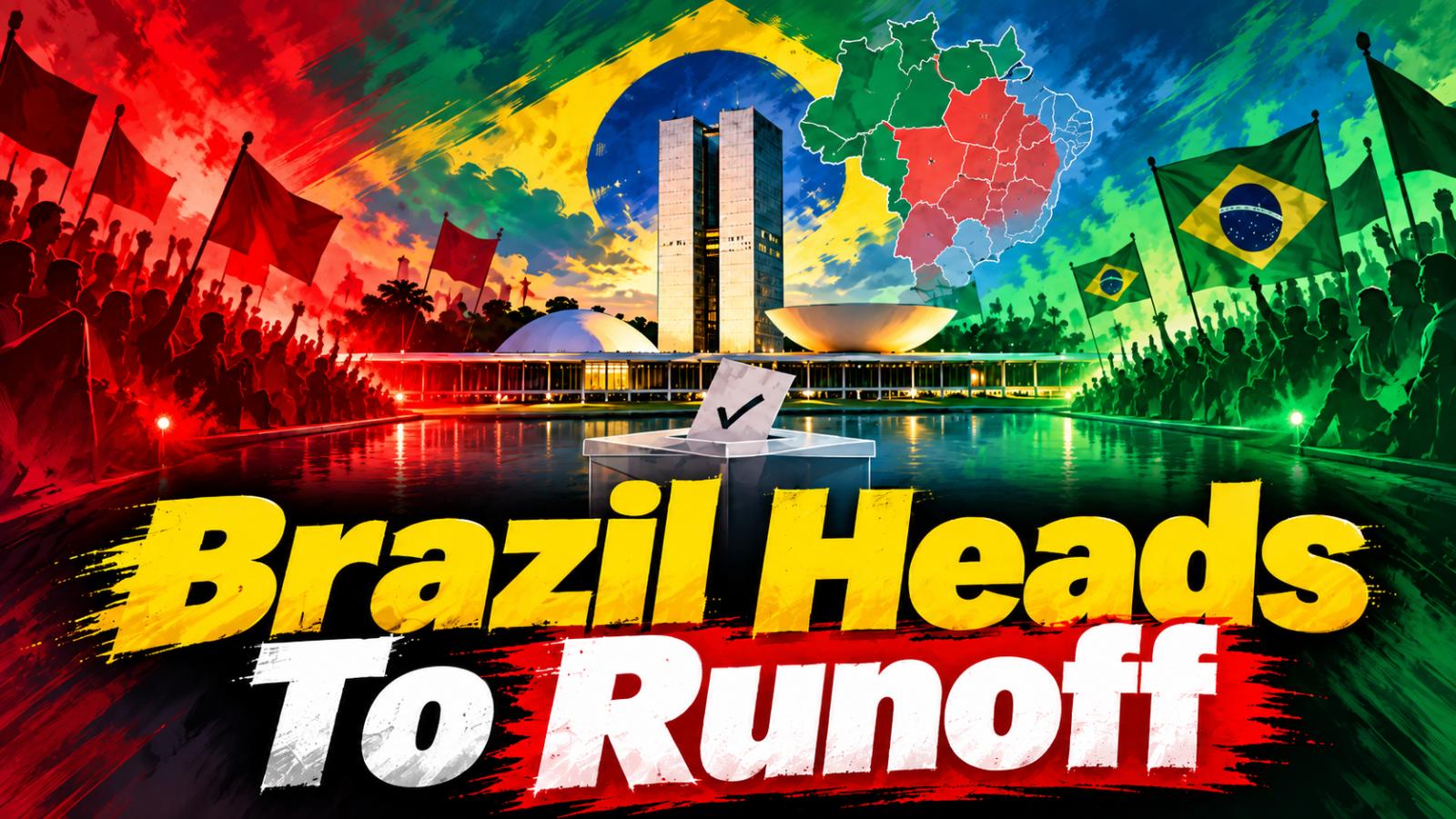
The Brazil election runoff will pit Sen. Flávio Bolsonaro against President Luiz Inácio Lula da Silva on October 25 after neither candidate crossed the 50% threshold. Bolsonaro’s surprise first-round lead overturned expectations from several pre-election polls and reshaped Brazil’s presidential race.
Flávio Lead
Right-wing Sen. Flávio Bolsonaro finished ahead of incumbent President Lula in Brazil’s October 4 presidential election, forcing the contest into a second round. With nearly all ballots counted, Bolsonaro secured roughly 47% of valid votes while Lula received about 45%, according to election results.
The result surprised analysts because several final opinion polls had shown Lula holding an advantage. Neither candidate won an absolute majority of valid votes, triggering a runoff on October 25 under Brazil’s electoral rules.
Flávio, 45, is the eldest son of former President Jair Bolsonaro and has positioned himself as the political heir to Brazil’s conservative movement. Jair Bolsonaro cannot contest the election and is serving a lengthy prison sentence following his conviction over efforts to overturn the result of the 2022 presidential election.
Lula Runoff
Lula, 80, is seeking an unprecedented fourth non-consecutive presidential term. After falling short of his expectations in the opening round, he struck a confident tone and presented the runoff as a fresh contest rather than a defeat.
His campaign has emphasized social programs, economic support for lower-income families and Brazilian sovereignty. Lula has also criticized external pressure from Washington and sought to portray himself as a counterweight to the growing influence of Trump-aligned conservative politics across Latin America.
The narrow first-round margin means Lula must now attract voters who backed smaller candidates while also strengthening turnout among working-class and younger voters.
October 25
Bolsonaro enters the second round with momentum after outperforming polling expectations. His campaign has focused heavily on crime, public security, conservative social policies and a more business-friendly economic agenda.
He has also promised tougher measures against organized crime, including expanded high-security prison capacity. His political identity remains closely connected to his father, but the first-round result indicates he has built an electoral base of his own.
Brazil’s electronic voting system delivered results rapidly after polls closed, and electoral authorities reported no major disruption capable of affecting the national outcome.
Brazil Vote
The October 25 contest carries consequences beyond Brazil. A Bolsonaro victory would strengthen the broader shift toward conservative governments in parts of Latin America and could lead to warmer relations with US President Donald Trump.
Lula represents a contrasting foreign-policy approach, emphasizing strategic independence and deeper ties with a wider group of global partners. The result could therefore influence Brazil’s relationships with the United States, China and other major economies.
Runoff Battle
Both campaigns now face a three-week battle for undecided voters and supporters of eliminated candidates. Bolsonaro begins the runoff with a narrow first-round advantage, but Brazil remains deeply polarized and the margin is small enough for either candidate to win.
The second-round vote will determine who leads Latin America’s largest economy for the next four years and whether Brazil continues under Lula’s leftist government or returns to Bolsonaro-style conservative leadership.