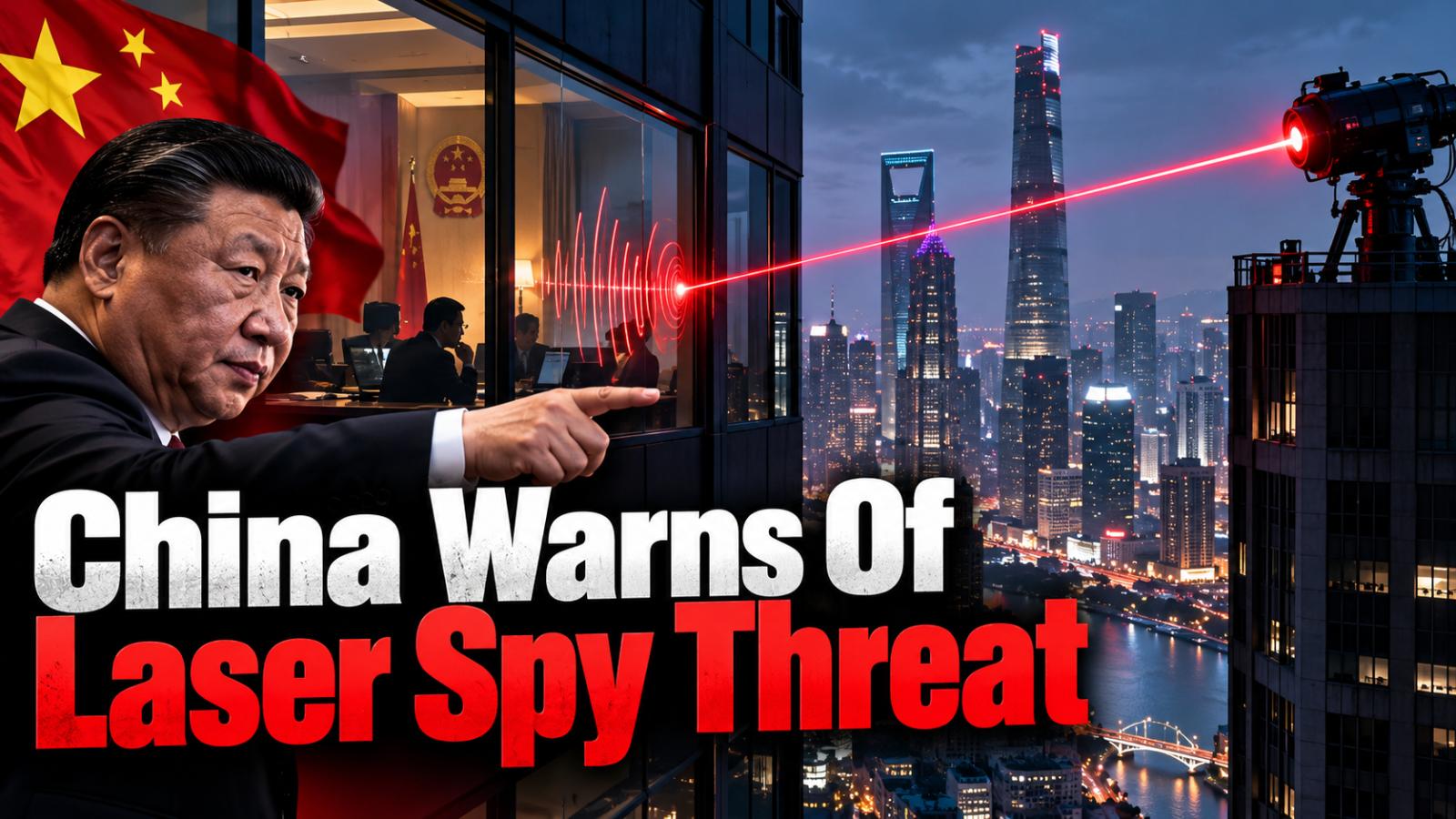
China warns of laser eavesdropping by foreign spies as officials raise concern over technology that could potentially capture conversations through window vibrations. The warning is also driving interest in laser detection systems, electromagnetic shielding curtains and broader counter-surveillance equipment.
Laser eavesdropping technology
China’s Ministry of State Security has warned government agencies and other organisations about a form of surveillance that uses laser-based sensing to monitor conversations from outside a building.
According to the ministry, sound inside a room can cause tiny vibrations in a glass window. A laser directed at that surface can potentially measure those movements and help reconstruct speech. Similar techniques are commonly described as laser microphone systems, although their effectiveness depends heavily on distance, line of sight, glass conditions and environmental interference.
Beijing has presented the technology as another reason for sensitive organisations to strengthen physical and electronic security rather than relying only on conventional cybersecurity measures.
China counter-surveillance market
Concerns over foreign spy activity are helping expand China’s market for counter-surveillance technology. Equipment reportedly in demand includes systems capable of detecting incoming laser beams, warning security teams and estimating the direction from which a beam originates.
Other products aim to identify suspicious wireless activity or locate signals from unfamiliar electronic devices. Government departments, military organisations and other institutions handling sensitive information are among the main potential customers for secrecy protection equipment.
Chinese companies in this sector are also looking beyond the domestic market, with some reportedly supplying security equipment to countries participating in the Belt and Road Initiative.
Electromagnetic shielding curtains
Another category receiving attention is electromagnetic shielding. Special curtains and materials are designed to reduce certain electronic signals entering or leaving sensitive rooms.
Security suppliers also offer equipment intended to detect or restrict unidentified Bluetooth and Wi-Fi connections. These products reflect a broader shift in surveillance protection: organisations now have to consider not only hidden microphones and cameras but also wireless devices, compromised hardware and remote sensing technologies.
China has previously restricted the use of some foreign-made devices in sensitive government workplaces because of national security concerns.
China counter-espionage law
Beijing has steadily expanded its legal and institutional focus on espionage. Amendments to China’s counter-espionage law broadened the scope of activities that authorities can investigate when they believe national security or state interests may be at risk.
The rules cover the transfer of sensitive documents and data and also extend espionage provisions to some cyberattacks targeting government organisations or critical infrastructure.
China says such measures are necessary to counter foreign intelligence threats. Critics, however, have raised concerns that broad definitions of national security can create uncertainty for individuals and companies operating in the country.
Foreign spy concerns
The latest laser warning comes as China continues to emphasise foreign intelligence risks while facing espionage allegations of its own overseas. Beijing has repeatedly rejected what it describes as exaggerated narratives about Chinese spying.
The wider issue is that surveillance technology is becoming harder to detect. Traditional security focused on microphones, cameras and physical infiltration, but modern threats can involve lasers, wireless signals, compromised devices and cyber tools.