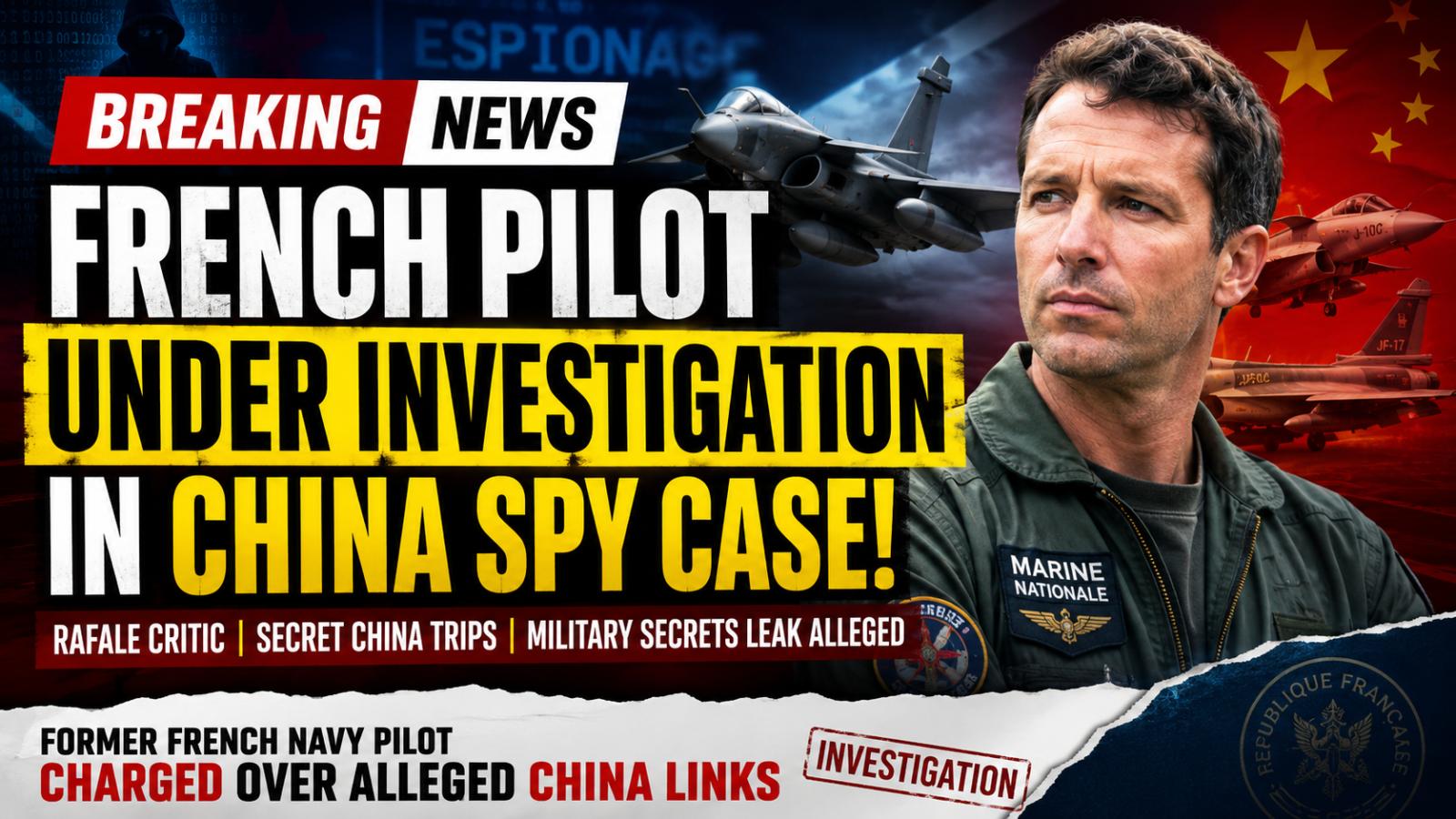
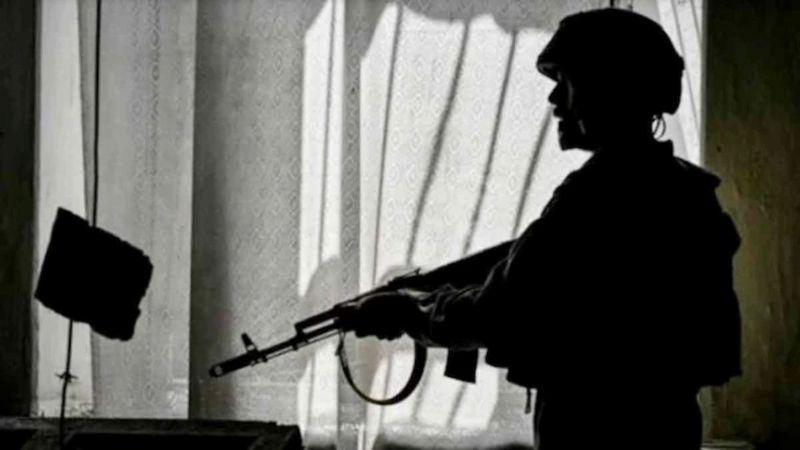
The French pilot China spy case has gained attention after former French Navy aviator Pierre-Henri Chuet was placed under investigation over alleged espionage links, undisclosed China visits, military pilot training and his earlier Rafale fighter controversy.
Pierre-Henri Chuet Investigation
The Frenc
The French pilot China spy case has gained attention after former French Navy aviator Pierre-Henri Chuet was placed under investigation over alleged espionage links, undisclosed China visits, military pilot training and his earlier Rafale fighter controversy.
Pierre-Henri Chuet Investigation
The Frenc
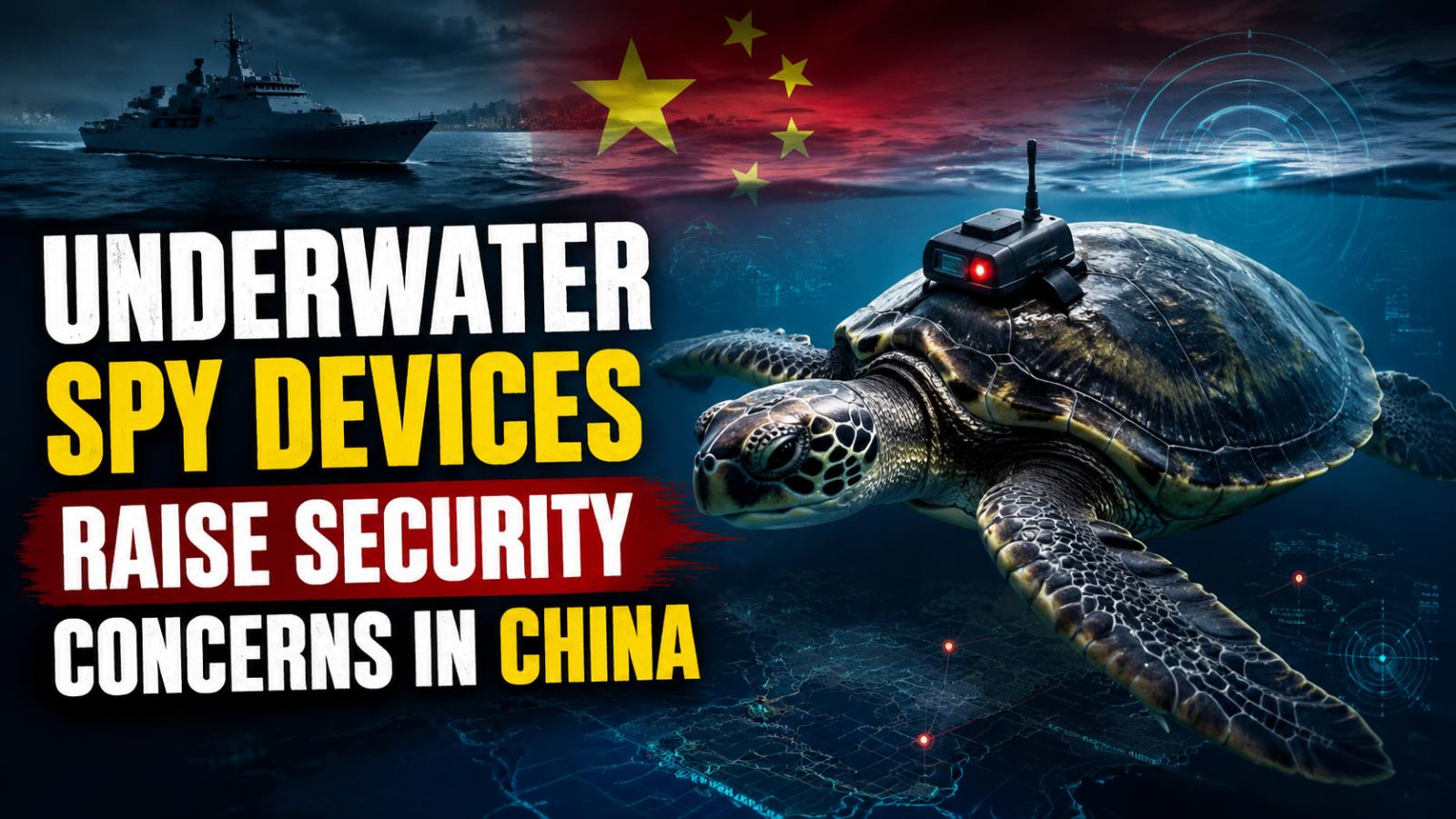
Reports emerging from Chinese security authorities have triggered discussion over the growing use of advanced underwater monitoring systems along coastal regions. The claims suggest that various marine-based platforms, including sensor-equipped aquatic life and autonomous devices, may be collecting detailed ocean data near sensitive shoreline zones. This includes measurements such as temperature shifts, salinity levels, and underwater current behavior, which can collectively reveal patterns of coastal activity.
How ocean data becomes strategically sensitive
Even basic environmental data, when collected continuously and processed at scale, can create highly detailed digital maps of underwater geography. These maps may outline seabed structures, shipping lanes, and depth variations close to ports. Security analysts note that such information, if accessed by external actors, could potentially be used to study movement patterns of naval or commercial vessels and identify infrastructure vulnerabilities without direct physical intrusion.
Expanding role of autonomous maritime technology
Modern ocean monitoring has moved far beyond traditional ship-based surveys. Technologies such as wave gliders, drifting sensor buoys, and autonomous underwater vehicles are now widely used for scientific research and environmental tracking. However, the same systems can also be adapted for intelligence collection, depending on their configuration and intent. This overlap between civilian research tools and security applications is creating growing uncertainty in how maritime technology is regulated and interpreted.
Security implications and policy response
Authorities have reportedly increased attention toward unusual devices and foreign-operated equipment in coastal waters. Guidance has been issued to local maritime workers to report unidentified floating or submerged objects that appear out of place. The situation reflects a broader global trend where environmental monitoring technologies are increasingly viewed through a security lens. As multiple nations expand their ocean data capabilities, the line between scientific exploration and strategic surveillance continues to blur, raising new challenges for coastal defense planning and international maritime trust.
Reports emerging from Chinese security authorities have triggered discussion over the growing use of advanced underwater monitoring systems along coastal regions. The claims suggest that various marine-based platforms, including sensor-equipped aquatic life and autonomous devices, may be collecting detailed ocean data near sensitive shoreline zones. This includes measurements such as temperature shifts, salinity levels, and underwater current behavior, which can collectively reveal patterns of coastal activity.
How ocean data becomes strategically sensitive
Even basic environmental data, when collected continuously and processed at scale, can create highly detailed digital maps of underwater geography. These maps may outline seabed structures, shipping lanes, and depth variations close to ports. Security analysts note that such information, if accessed by external actors, could potentially be used to study movement patterns of naval or commercial vessels and identify infrastructure vulnerabilities without direct physical intrusion.
Expanding role of autonomous maritime technology
Modern ocean monitoring has moved far beyond traditional ship-based surveys. Technologies such as wave gliders, drifting sensor buoys, and autonomous underwater vehicles are now widely used for scientific research and environmental tracking. However, the same systems can also be adapted for intelligence collection, depending on their configuration and intent. This overlap between civilian research tools and security applications is creating growing uncertainty in how maritime technology is regulated and interpreted.
Security implications and policy response
Authorities have reportedly increased attention toward unusual devices and foreign-operated equipment in coastal waters. Guidance has been issued to local maritime workers to report unidentified floating or submerged objects that appear out of place. The situation reflects a broader global trend where environmental monitoring technologies are increasingly viewed through a security lens. As multiple nations expand their ocean data capabilities, the line between scientific exploration and strategic surveillance continues to blur, raising new challenges for coastal defense planning and international maritime trust.
Former Arcadia Mayor Pleads Guilty
Former Arcadia Mayor Eileen Wang pleaded guilty on Friday, May 29, to acting as an illegal agent of the Chinese government. Wang admitted to promoting Beijing-backed content in the United States without notifying federal authorities, violating US law. She resigned earlier this month after being charged in April for acting on behalf of a foreign government. Prosecutors alle
Former Arcadia Mayor Pleads Guilty
Former Arcadia Mayor Eileen Wang pleaded guilty on Friday, May 29, to acting as an illegal agent of the Chinese government. Wang admitted to promoting Beijing-backed content in the United States without notifying federal authorities, violating US law. She resigned earlier this month after being charged in April for acting on behalf of a foreign government. Prosecutors alle
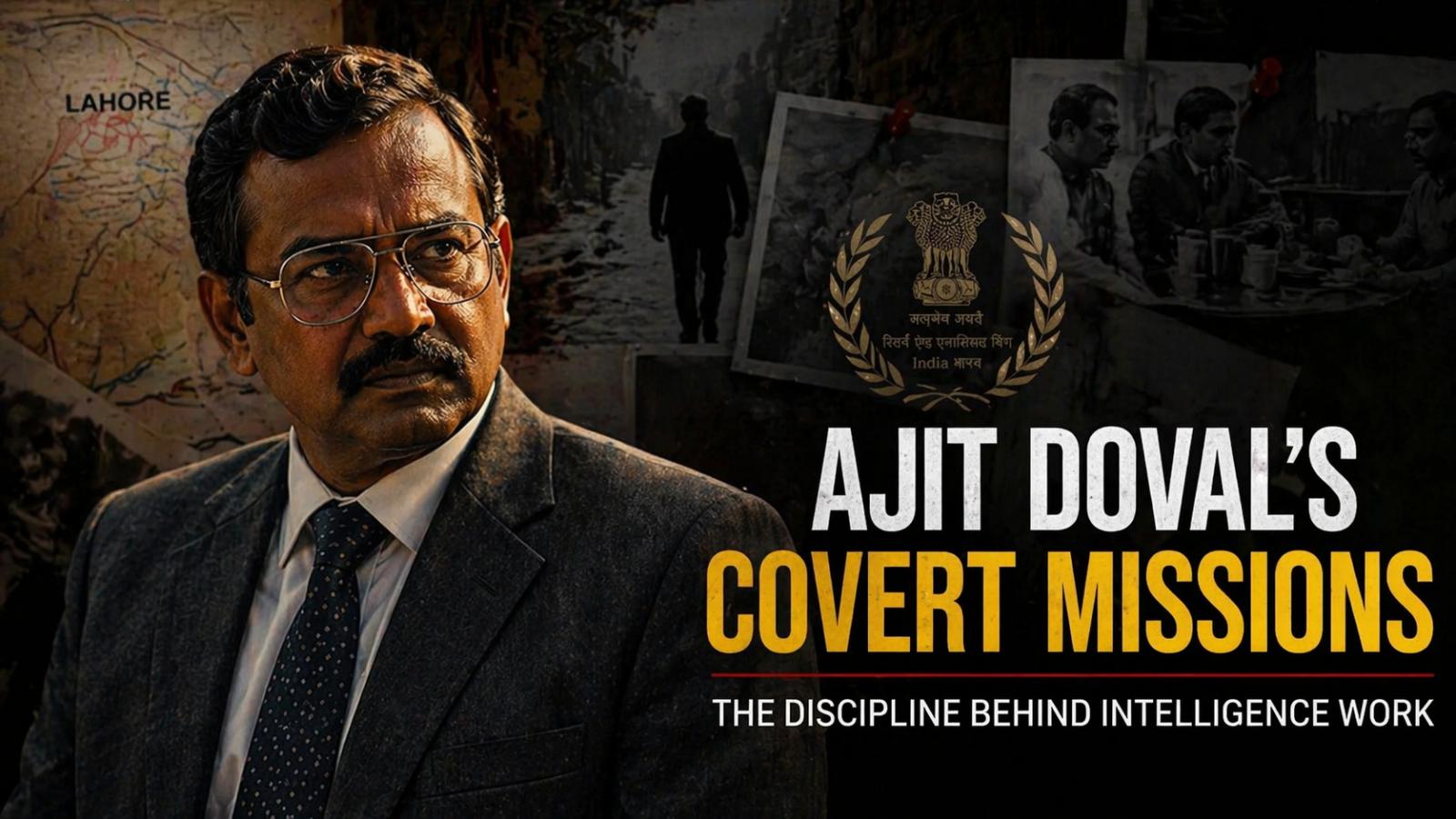
Ajit Doval’s reported deep-cover operations are widely regarded as a study in psychological resilience rather than physical confrontation. Operating within hostile environments, including extended periods in Pakistan, his work required a high degree of composure, adaptability, and continuous situational awareness. Public discussions often reference cities such as Lahore, though specific operational details remain classified. The available accounts suggest that Doval functioned under an assu
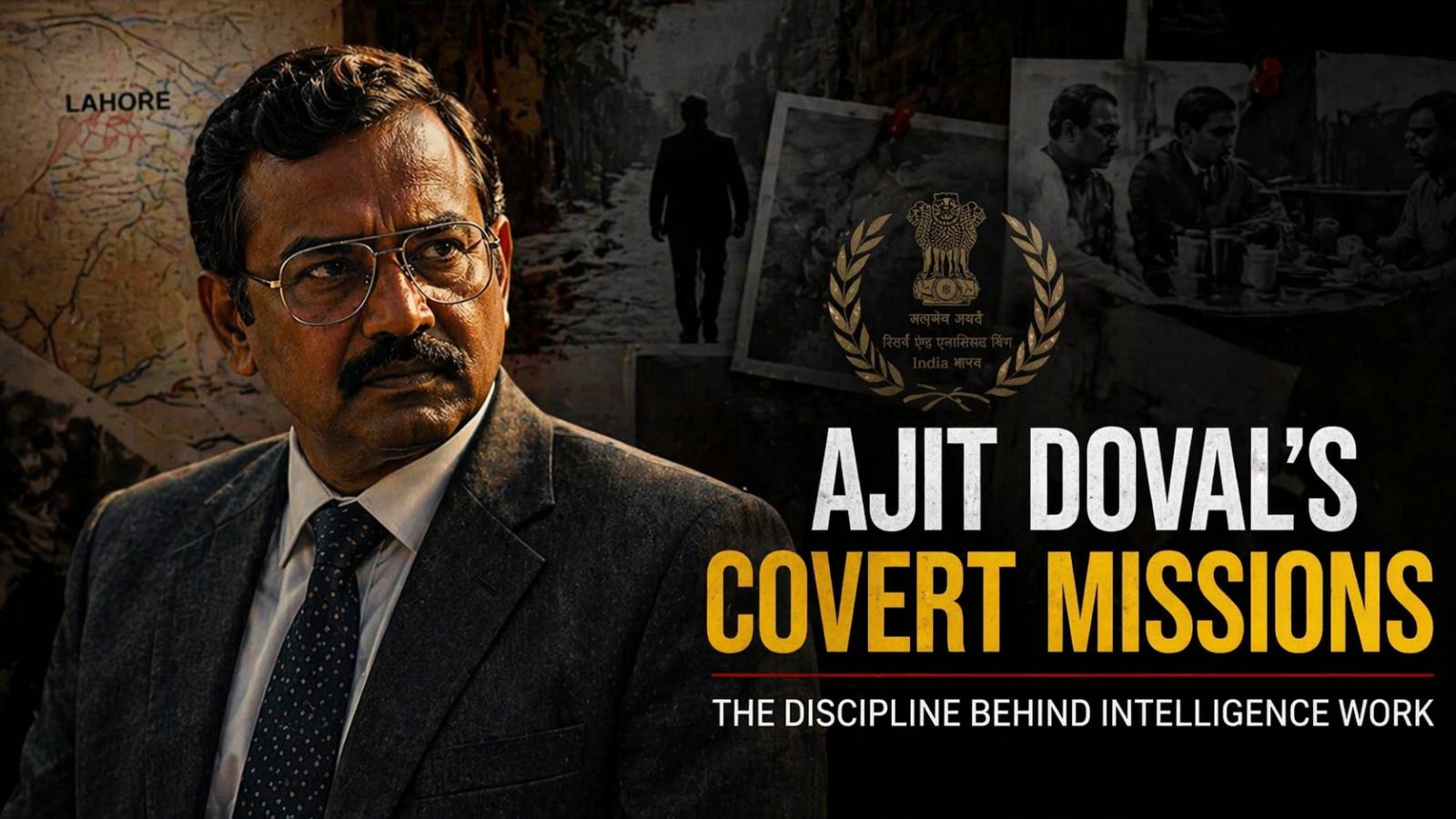
Ajit Doval’s reported deep-cover operations are widely regarded as a study in psychological resilience rather than physical confrontation. Operating within hostile environments, including extended periods in Pakistan, his work required a high degree of composure, adaptability, and continuous situational awareness. Public discussions often reference cities such as Lahore, though specific operational details remain classified. The available accounts suggest that Doval functioned under an assu
Ajit Doval’s reported deep-cover operations are widely regarded as a study in psychological resilience rather than physical confrontation. Operating within hostile environments, including extended periods in Pakistan, his work required a high degree of composure, adaptability, and continuous situational awareness. Public discussions often reference cities such as Lahore, though specific operational details remain classified. The available accounts suggest that Doval functioned under an assu
Ajit Doval’s reported deep-cover operations are widely regarded as a study in psychological resilience rather than physical confrontation. Operating within hostile environments, including extended periods in Pakistan, his work required a high degree of composure, adaptability, and continuous situational awareness. Public discussions often reference cities such as Lahore, though specific operational details remain classified. The available accounts suggest that Doval functioned under an assu
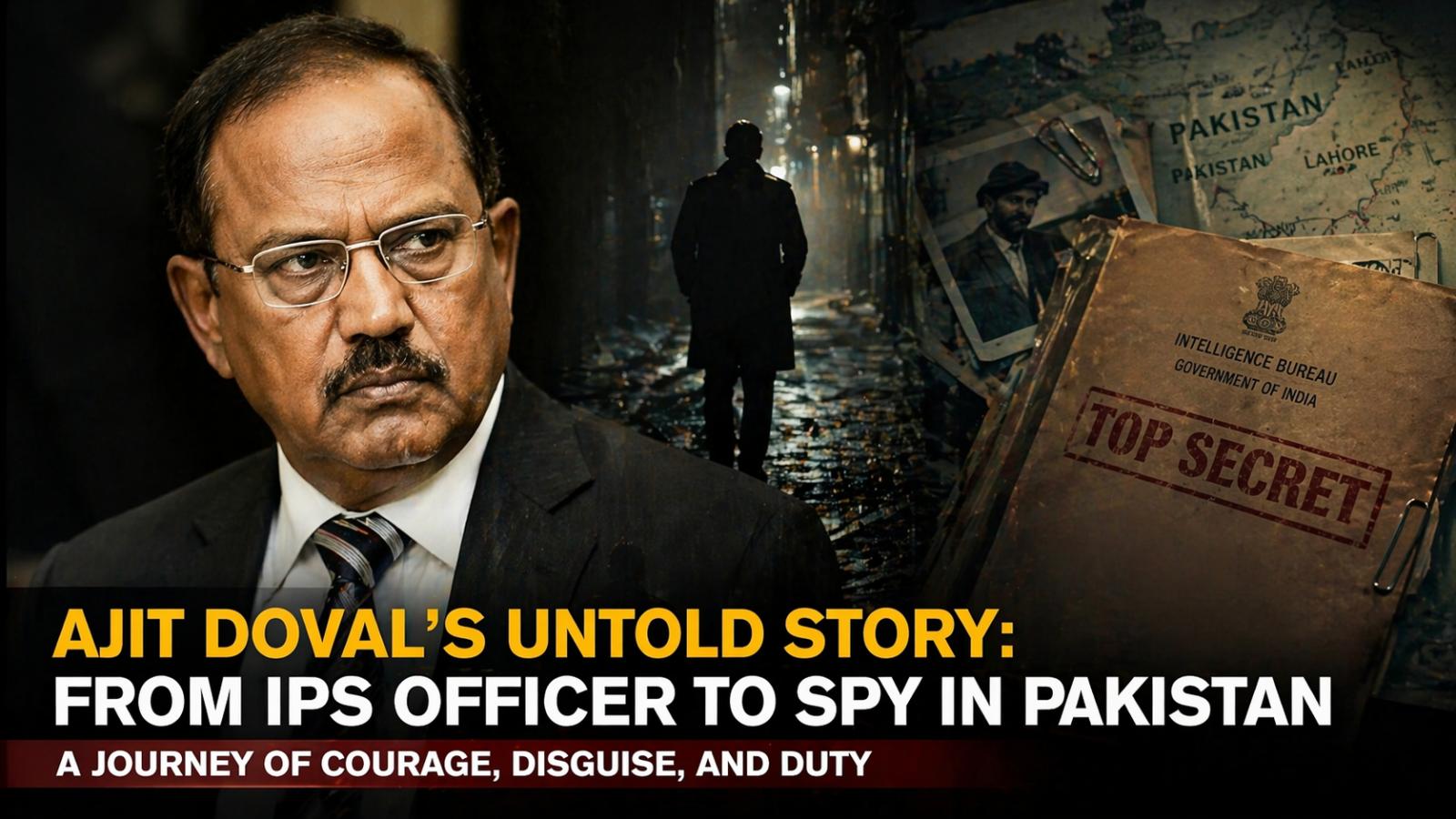
Ajit Doval began his professional journey as an officer in the Indian Police Service in 1968, serving in the Kerala cadre. Over time, he developed a reputation for managing insurgency-related challenges and complex law-and-order situations, which required a combination of tactical decision-making and psychological resilience. Rather than following a conventional policing career, he later transitioned into the Intelligence Bureau, moving into a domain where operational visibility is minimal but strategic impact is significant.
During the 1970s, Doval was reportedly assigned to a deep-cover intelligence mission in Pakistan, marking a critical phase in his career. The assignment extended over several years, demanding a sustained and disciplined approach to undercover work. To function effectively, he assumed a complete alternate identity, integrating into local society through language proficiency, cultural understanding, and adherence to social and religious practices. This level of immersion was essential for maintaining credibility and avoiding suspicion in a sensitive environment.
Operating in a foreign and potentially hostile setting required the development of a consistent personal narrative and the ability to establish relationships without drawing attention. Such assignments are typically conducted without direct support, placing significant responsibility on the individual operative. The risks associated with exposure are severe, emphasizing the need for precision, restraint, and continuous situational awareness. Intelligence gathering in these conditions often involves incremental efforts, where accurate information is collected over time rather than through rapid or visible actions.
The nature of such operations differs considerably from their portrayal in popular media. While films like Dhurandhar often depict espionage through fast-paced sequences and overt action, real-world intelligence work is characterized by patience, discretion, and long-term commitment. Doval’s reported experiences reflect the complexities of covert operations, where outcomes are rarely visible and details remain largely classified, underscoring the contrast between cinematic representation and operational reality.
Ajit Doval began his professional journey as an officer in the Indian Police Service in 1968, serving in the Kerala cadre. Over time, he developed a reputation for managing insurgency-related challenges and complex law-and-order situations, which required a combination of tactical decision-making and psychological resilience. Rather than following a conventional policing career, he later transitioned into the Intelligence Bureau, moving into a domain where operational visibility is minimal but strategic impact is significant.
During the 1970s, Doval was reportedly assigned to a deep-cover intelligence mission in Pakistan, marking a critical phase in his career. The assignment extended over several years, demanding a sustained and disciplined approach to undercover work. To function effectively, he assumed a complete alternate identity, integrating into local society through language proficiency, cultural understanding, and adherence to social and religious practices. This level of immersion was essential for maintaining credibility and avoiding suspicion in a sensitive environment.
Operating in a foreign and potentially hostile setting required the development of a consistent personal narrative and the ability to establish relationships without drawing attention. Such assignments are typically conducted without direct support, placing significant responsibility on the individual operative. The risks associated with exposure are severe, emphasizing the need for precision, restraint, and continuous situational awareness. Intelligence gathering in these conditions often involves incremental efforts, where accurate information is collected over time rather than through rapid or visible actions.
The nature of such operations differs considerably from their portrayal in popular media. While films like Dhurandhar often depict espionage through fast-paced sequences and overt action, real-world intelligence work is characterized by patience, discretion, and long-term commitment. Doval’s reported experiences reflect the complexities of covert operations, where outcomes are rarely visible and details remain largely classified, underscoring the contrast between cinematic representation and operational reality.
Iran’s parliament speaker Mohammad Bagher Ghalibaf warned on Tuesday that any attack targeting the country’s infrastructure would provoke an immediate and proportional response, as tensions continue to rise following recent US-Israel strikes that have escalated the Middle East conflict. In a message posted on the social media platform X, Ghalibaf said Iran would not hesitate to retaliate if its critical facilities were attacked, emphasizing that the country would respond according to what he
Iran’s parliament speaker Mohammad Bagher Ghalibaf warned on Tuesday that any attack targeting the country’s infrastructure would provoke an immediate and proportional response, as tensions continue to rise following recent US-Israel strikes that have escalated the Middle East conflict. In a message posted on the social media platform X, Ghalibaf said Iran would not hesitate to retaliate if its critical facilities were attacked, emphasizing that the country would respond according to what he
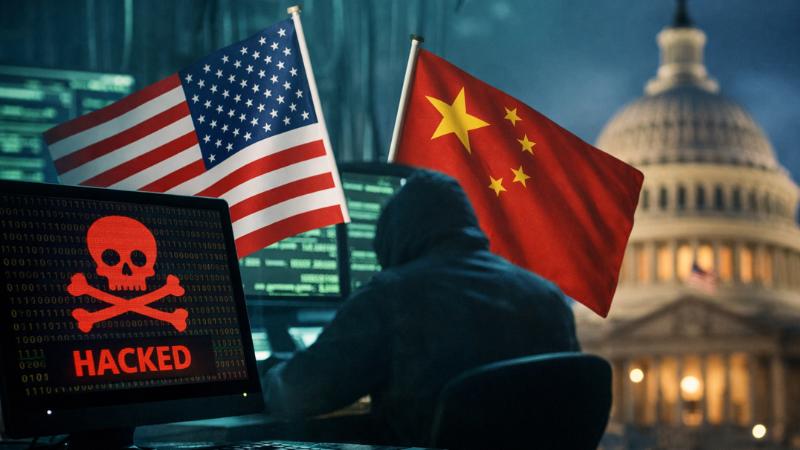
Chinese intelligence services have penetrated email systems used by staff members working for key committees in the United States House of Representatives, according to officials familiar with the matter, marking one of the most significant congressional cyber intrusions disclosed in recent years. The operation, known internally as Salt Typhoon, is described as part of a long-running cyber-espionage campaign attributed to China’s Ministry of State Security.
Sources with knowledge of the investigation said the breach affected email accounts used by congressional staff supporting the House China Committee, as well as aides associated with the Foreign Affairs Committee, the Intelligence Committee, and the Armed Services Committee. The unauthorized access was discovered in December, prompting federal authorities to begin a broader review of congressional digital security practices and potential exposure of sensitive communications.
Officials emphasized that the compromised accounts belonged to staffers rather than elected lawmakers, and it remains unclear whether the personal email accounts of members of Congress were accessed during the intrusion. Nonetheless, the targeting of committees responsible for national security, foreign policy, and intelligence oversight has raised concerns about the scale and intent of the operation. Investigators are continuing to assess what data may have been viewed or extracted and whether the intrusion enabled further access to internal government systems.
Salt Typhoon is believed to be part of a sustained cyber campaign that has targeted US communications infrastructure for several years. According to individuals familiar with the operation, the tools and methods linked to the campaign have allowed Chinese intelligence to exploit vulnerabilities in telecommunications networks, providing access to unencrypted phone calls, text messages, and voicemail traffic across the United States. In certain circumstances, the same infrastructure has reportedly been used to gain entry into email systems.
Security officials have also indicated that communications involving senior US government figures may have been intercepted as part of this broader effort, underscoring the persistent nature of the threat. While the full scope of the intercepted material has not been publicly detailed, authorities view the campaign as a strategic intelligence-gathering effort rather than a short-term or isolated attack.
The incident highlights ongoing challenges facing US institutions as foreign intelligence agencies increasingly rely on cyber tools to collect information. Lawmakers and security experts have repeatedly warned that congressional offices, which often operate with limited technical resources compared with executive branch agencies, can present attractive targets for sophisticated adversaries seeking insight into policy deliberations and legislative priorities.
Federal agencies responsible for cybersecurity and counterintelligence are coordinating with congressional officials to strengthen defenses, review access controls, and improve monitoring of digital systems. The breach is expected to intensify calls for additional investment in cybersecurity protections for legislative offices and for closer cooperation between Congress and national security agencies in responding to advanced cyber threats.
As investigations continue, officials have stressed that the episode serves as a reminder of the evolving nature of cyber espionage and the need for constant vigilance in protecting sensitive government communications.
Chinese intelligence services have penetrated email systems used by staff members working for key committees in the United States House of Representatives, according to officials familiar with the matter, marking one of the most significant congressional cyber intrusions disclosed in recent years. The operation, known internally as Salt Typhoon, is described as part of a long-running cyber-espionage campaign attributed to China’s Ministry of State Security.
Sources with knowledge of the investigation said the breach affected email accounts used by congressional staff supporting the House China Committee, as well as aides associated with the Foreign Affairs Committee, the Intelligence Committee, and the Armed Services Committee. The unauthorized access was discovered in December, prompting federal authorities to begin a broader review of congressional digital security practices and potential exposure of sensitive communications.
Officials emphasized that the compromised accounts belonged to staffers rather than elected lawmakers, and it remains unclear whether the personal email accounts of members of Congress were accessed during the intrusion. Nonetheless, the targeting of committees responsible for national security, foreign policy, and intelligence oversight has raised concerns about the scale and intent of the operation. Investigators are continuing to assess what data may have been viewed or extracted and whether the intrusion enabled further access to internal government systems.
Salt Typhoon is believed to be part of a sustained cyber campaign that has targeted US communications infrastructure for several years. According to individuals familiar with the operation, the tools and methods linked to the campaign have allowed Chinese intelligence to exploit vulnerabilities in telecommunications networks, providing access to unencrypted phone calls, text messages, and voicemail traffic across the United States. In certain circumstances, the same infrastructure has reportedly been used to gain entry into email systems.
Security officials have also indicated that communications involving senior US government figures may have been intercepted as part of this broader effort, underscoring the persistent nature of the threat. While the full scope of the intercepted material has not been publicly detailed, authorities view the campaign as a strategic intelligence-gathering effort rather than a short-term or isolated attack.
The incident highlights ongoing challenges facing US institutions as foreign intelligence agencies increasingly rely on cyber tools to collect information. Lawmakers and security experts have repeatedly warned that congressional offices, which often operate with limited technical resources compared with executive branch agencies, can present attractive targets for sophisticated adversaries seeking insight into policy deliberations and legislative priorities.
Federal agencies responsible for cybersecurity and counterintelligence are coordinating with congressional officials to strengthen defenses, review access controls, and improve monitoring of digital systems. The breach is expected to intensify calls for additional investment in cybersecurity protections for legislative offices and for closer cooperation between Congress and national security agencies in responding to advanced cyber threats.
As investigations continue, officials have stressed that the episode serves as a reminder of the evolving nature of cyber espionage and the need for constant vigilance in protecting sensitive government communications.
Anna Chapman, once dubbed Russia’s most glamorous secret agent, is back in the spotlight more than a decade after her dramatic exposure and expulsion from the United States in a high-profile spy swap. The former undercover operative has been appointed as the head of the newly launched Museum of Russian Intelligence, a state-linked institution associated with President Vladimir Putin’s foreign intelligence service. The move marks her return to the inner circles of Russia’s security and i
Anna Chapman, once dubbed Russia’s most glamorous secret agent, is back in the spotlight more than a decade after her dramatic exposure and expulsion from the United States in a high-profile spy swap. The former undercover operative has been appointed as the head of the newly launched Museum of Russian Intelligence, a state-linked institution associated with President Vladimir Putin’s foreign intelligence service. The move marks her return to the inner circles of Russia’s security and i
Punjab Police have arrested Jasbir Singh, a popular YouTuber behind the channel Jaan Mahal, for his alleged involvement in a Pakistan-backed espionage network. Singh, who boasts more than 1.1 million subscribers, was detained on Wednesday by the State Special Operations Cell (SSOC) in Mohali, based on what officials described as “actionable intelligence.”
Singh, a resident of Mahlan village in Pu
Punjab Police have arrested Jasbir Singh, a popular YouTuber behind the channel Jaan Mahal, for his alleged involvement in a Pakistan-backed espionage network. Singh, who boasts more than 1.1 million subscribers, was detained on Wednesday by the State Special Operations Cell (SSOC) in Mohali, based on what officials described as “actionable intelligence.”
Singh, a resident of Mahlan village in Pu
A Central Reserve Police Force (CRPF) jawan has been arrested in Delhi on serious charges of espionage, having allegedly shared classified information with Pakistan Intelligence Officers (PIOs) since 2023. The jawan, identified as Moti Ram Jat, was posted in Pahalgam, Jammu and Kashmir, until just six days before a major terror attack in the area that claimed the lives of 26 civilians.
The arrest was carried out by the National Investigation Agency (NIA), which is now examining whet
A Central Reserve Police Force (CRPF) jawan has been arrested in Delhi on serious charges of espionage, having allegedly shared classified information with Pakistan Intelligence Officers (PIOs) since 2023. The jawan, identified as Moti Ram Jat, was posted in Pahalgam, Jammu and Kashmir, until just six days before a major terror attack in the area that claimed the lives of 26 civilians.
The arrest was carried out by the National Investigation Agency (NIA), which is now examining whet
Indian authorities have arrested eight individuals across three states in a major crackdown on an alleged spy network linked to Pakistan's Inter-Services Intelligence (ISI). The arrests, made in the aftermath of the deadly Pahalgam terror attack that claimed 26 lives, span across Haryana, Punjab, and Uttar Pradesh. Officials believe the arrested individuals were involved in sharing sensitive information with Pakistani handlers through various channels, inc
Indian authorities have arrested eight individuals across three states in a major crackdown on an alleged spy network linked to Pakistan's Inter-Services Intelligence (ISI). The arrests, made in the aftermath of the deadly Pahalgam terror attack that claimed 26 lives, span across Haryana, Punjab, and Uttar Pradesh. Officials believe the arrested individuals were involved in sharing sensitive information with Pakistani handlers through various channels, inc
Eugene Spector, a US citizen originally born in Russia, was sentenced to 15 years in a Russian maximum-security prison this week after being convicted of espionage. According to Russia's Federal Security Service (FSB), Spector passed sensitive biotechnology and biomedical information to the United States, including state secrets, for the purpose of creating a genetic screening system targeting the Russian population. Spector had been serving a separate sentence for bribery before the espi
Eugene Spector, a US citizen originally born in Russia, was sentenced to 15 years in a Russian maximum-security prison this week after being convicted of espionage. According to Russia's Federal Security Service (FSB), Spector passed sensitive biotechnology and biomedical information to the United States, including state secrets, for the purpose of creating a genetic screening system targeting the Russian population. Spector had been serving a separate sentence for bribery before the espi