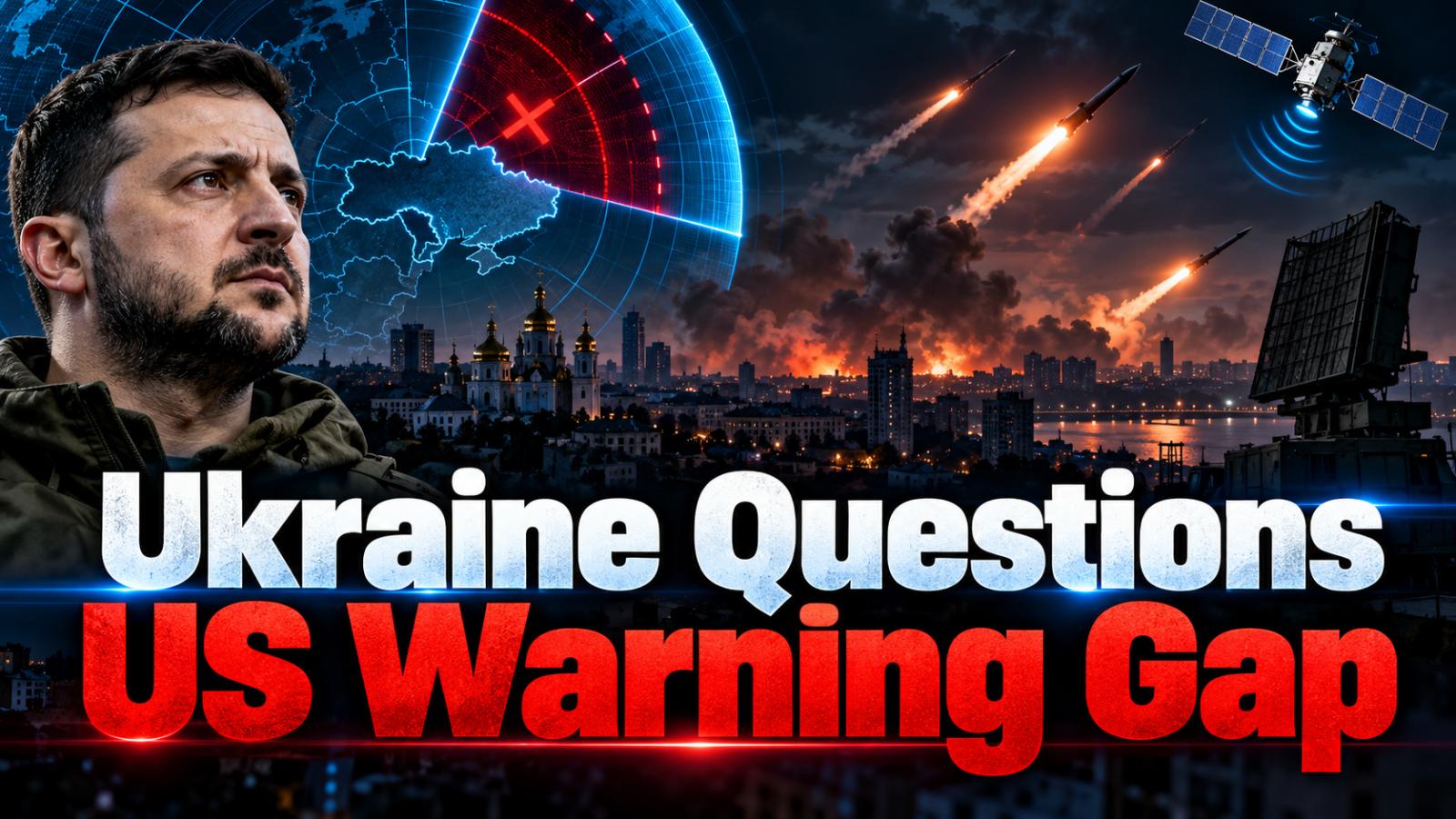
US intelligence warning gap raises concern in Ukraine after Kyiv said it received no advance notice from partners before Russian ballistic missile attacks. Questions over US intelligence sharing with Ukraine and reported Starshield restrictions have added uncertainty as Russia intensifies strikes on critical infrastructure.
Russian missile strikes on Ukraine
Ukraine faced another large-scale wave of Russian attacks this week, with President Volodymyr Zelenskyy saying ballistic missiles and more than 120 drones and loitering munitions targeted energy facilities and other critical infrastructure.
Zelenskyy said around 600,000 people lost electricity as a result of the latest assault. Officials also reported deaths and injuries as emergency crews responded to damaged residential and energy sites.
The attacks have renewed concern about Ukraine's ability to receive enough warning to activate air defence systems and move civilians to safety before fast-moving ballistic missiles arrive.
US intelligence sharing with Ukraine
The most sensitive question involves advance intelligence supplied by Ukraine's partners. Zelenskyy said Ukraine did not receive its usual warning before some of the latest missile launches.
Ukrainian officials have questioned an explanation that technical or weather-related problems caused the gap. Claims that Washington may have deliberately withheld a warning remain allegations and have not been publicly established by the US government.
President Donald Trump has denied that Washington stopped intelligence cooperation, saying the United States continues to share intelligence with Kyiv while seeking an end to the Russia-Ukraine war.
Starshield restrictions in Ukraine
Concerns increased after Ukrainian military personnel also reported problems involving Starshield satellite terminals used for battlefield communications.
Officials said restrictions affecting terminals while in motion could complicate drone operations, reconnaissance, frontline logistics and communications. Ukraine's Defence Ministry has been working with US officials, SpaceX and NATO partners while testing alternative communication systems.
The developments are particularly important because satellite connectivity has become deeply integrated into Ukraine's military operations.
Zelenskyy calls for US response
Zelenskyy has urged Washington and other allies to respond strongly to Russia's continuing missile and drone campaign. His government argues that intelligence cooperation is not simply an offensive military tool but an important part of protecting civilians from incoming attacks.
The Ukrainian president travelled to Britain for talks with Prime Minister Andy Burnham and other officials as Kyiv sought additional military and diplomatic support.
At the same time, Washington continues to push for steps that could reduce escalation, creating tension over how military assistance and intelligence should be used while negotiations remain uncertain.
Ukraine early-warning concerns
The immediate dispute does not prove that the United States has ended intelligence support for Ukraine. Officials familiar with the situation have described the missing warnings as isolated incidents rather than a complete suspension.
Still, even a temporary early-warning gap can carry serious consequences when ballistic missiles can reach targets within minutes. Combined with questions over Starshield access, the episode highlights Ukraine's continued dependence on Western intelligence, satellite communications and air-defence cooperation.