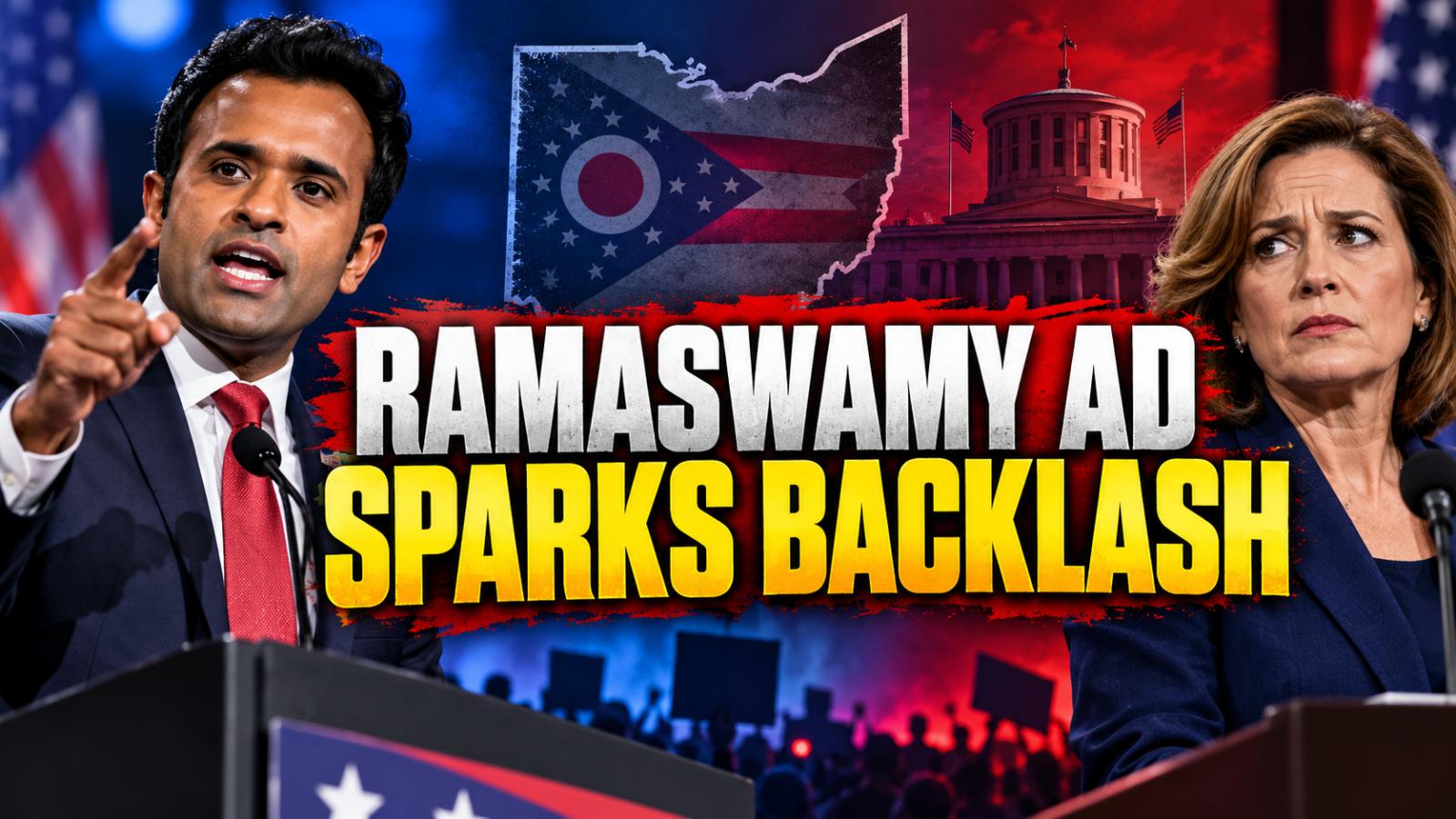
Ramaswamy ad featuring Amy Acton’s mother sparks backlash in Ohio’s governor race after Donna Arthur criticised her estranged daughter in a campaign video. Acton’s brother condemned the ad, while Vivek Ramaswamy defended his campaign’s role as questions grew over its origins and political impact.
Amy Acton family dispute
A campaign video featuring Democratic gubernatorial candidate Amy Acton’s estranged mother has pushed a painful family history into the centre of Ohio’s 2026 election.
In the video, Donna Arthur calls Acton a liar and disputes aspects of her past. Acton has previously spoken publicly about alleged sexual abuse by her now-deceased stepfather when she was a child. Court records cited by her campaign show that he was charged in 1978 with raping Acton when she was between 10 and 12 years old. He pleaded not guilty, and the case did not result in a conviction after he and Arthur reportedly left Ohio.
Acton has said she became estranged from her mother after the case.
Ramaswamy defends campaign ad
Republican candidate Vivek Ramaswamy acknowledged that the controversial video came from his campaign and defended its use.
He argued that people who knew Acton closely had raised questions about her character and record. His campaign also said the public deserved to hear concerns about her credibility before deciding who should become governor.
Acton’s brother, Philip Stearns, strongly rejected that defence. He accused the Ramaswamy campaign of exploiting childhood sexual abuse for political advantage and said their mother remained married to the man accused of abusing Acton until his death.
Ad disclosure questions
The video first circulated widely on social media, where its source was initially unclear. It did not carry the type of sponsorship disclosure commonly seen on television political advertising.
That raised questions about how the ad was produced, authorised and distributed. The Ramaswamy campaign later publicly accepted responsibility for it.
The controversy highlights a broader challenge in modern political advertising: provocative material can spread rapidly online before voters know who created it or how its claims should be evaluated.
Childhood abuse allegations resurface
The campaign dispute has revived intensely personal allegations from Acton’s childhood.
Acton has previously described being separated from her mother following the abuse allegations and later living with her father. Her campaign says she had no further relationship with her mother after the court proceedings.
Because the allegations involve childhood sexual abuse and a criminal case that did not produce a conviction, they require careful attribution. The available record establishes that charges were filed, but it does not support presenting every allegation as a proven criminal finding.
Ohio governor race reaction
The ad has generated sharp criticism as Ramaswamy and Acton compete in a closely watched Ohio governor election.
Political commentators have argued that using Acton’s family history could backfire by shifting attention from policy differences to questions about campaign judgment. The controversy also comes as Vice President JD Vance prepares to campaign in Ohio for Ramaswamy.
Acton, a former Ohio health director, has gained attention in recent polling, increasing the stakes for both campaigns ahead of the midterms.
The episode may ultimately become a test of whether voters reward aggressive personal attacks or view the ad as crossing a line. In a race already shaped by national politics, the backlash has ensured that campaign ethics and personal history are now part of the Ohio governor contest.