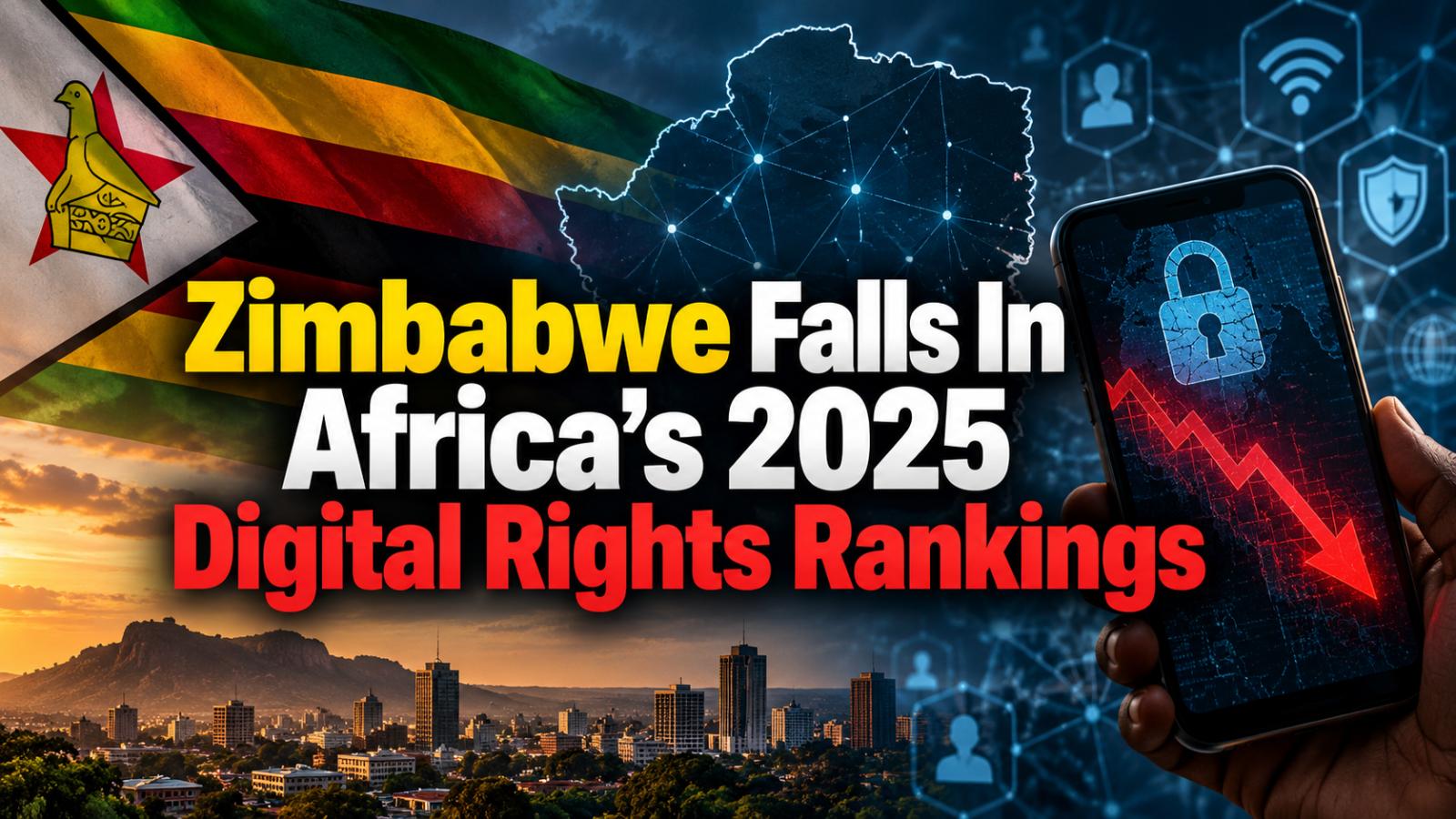
Zimbabwe has slipped four positions in Africa's latest digital rights assessment, raising concerns about freedom of expression, privacy and online safety. The LONDA 2025 Digital Rights and Inclusion in Africa Report, published by Paradigm Initiative in April 2026, evaluated 29 countries using 12 indicators covering internet access, human rights and digital inclusion.
Zimbabwe Digital Rights Ranking 2025
Zimbabwe received 34 out of 60 points, unchanged from 2024. However, its position fell from ninth to joint 13th in the official ranking, placing it alongside Tunisia and The Gambia.
The report classified Zimbabwe as moderately compliant with African digital rights principles. South Africa led the assessment with 47 points, followed by Ghana and Namibia.
The findings indicate that Zimbabwe has made some progress in maintaining internet connectivity, but important legal and policy challenges remain unresolved.
Zimbabwe Internet Freedom Concerns
The report recorded no nationwide internet shutdown in Zimbabwe during 2025, a positive development for internet access and communication.
However, Paradigm Initiative raised concerns about restrictions on freedom of expression, particularly laws criminalising false information and statements considered insulting to the president.
The assessment also documented arrests involving journalists and citizens, including cases connected to political criticism. Such incidents can discourage public debate and lead to self-censorship.
Zimbabwe Online Gender-Based Violence
Technology-facilitated gender-based violence remains another major concern. Women, including journalists and human rights advocates, continue to face online harassment, threats and intimidation.
The report found gaps in Zimbabwe's existing laws, particularly the Domestic Violence Act, which does not adequately address several forms of digital abuse.
It recommended reforms consistent with Resolution 522 of the African Commission on Human and Peoples' Rights to strengthen protection against cyberstalking, online harassment and related violations.
Zimbabwe Privacy and Surveillance Laws
Zimbabwe's surveillance framework also attracted scrutiny over the collection and monitoring of personal information.
The report raised concerns about insufficient independent oversight of surveillance activities and privacy risks associated with biometric identity systems.
Although Zimbabwe has a Cyber and Data Protection Act, the assessment called for stronger safeguards, public consultations and human rights impact assessments before introducing new surveillance technologies.
Zimbabwe Digital Rights Reforms
Paradigm Initiative urged Zimbabwe to review restrictive speech laws, strengthen privacy protections and improve online safety mechanisms for children.
The report also recommended transparent reporting by technology companies, better access to information and wider internet connectivity for underserved communities.
Zimbabwe's unchanged score suggests that existing improvements have not yet addressed deeper structural weaknesses. The assessment provides a benchmark for lawmakers, civil society and regulators working to strengthen the country's digital rights protections.